

South Korea's Big Vote!
Images

2022 Republic Of Korea Presidential Election, Municipal Level Divisions


Geopolitical Crossroads and National Identity
South Korea, strategically positioned in Northeast Asia, is a nation shaped by a complex geopolitical landscape and a rich, resilient history. Its geography, a peninsula bordered by powerful neighbors and the sea, has profoundly influenced its development and foreign policy. The capital, Seoul, stands as a testament to its rapid modernization, a sprawling metropolis that blends ancient palaces with futuristic architecture, serving as the nation's political, economic, and cultural heart.
The country's economic prowess, particularly in technology and manufacturing, is globally recognized. The 2022 presidential election was not merely a domestic affair but a moment where South Korea charted its course amidst regional tensions and global challenges, with its leadership choice resonating internationally.
The Mechanics of a Tight Race
The 2022 South Korean presidential election was characterized by an unusually contentious electoral process, even before the general election. The constitution mandates a single, non-renewable five-year term for the president, meaning incumbent Moon Jae-in was ineligible to seek re-election. This created an open field, intensifying competition.
Both the ruling Democratic Party and the main opposition People Power Party (PPP) experienced turbulent primary elections. The Democratic Party saw internal friction as Lee Jae Myung secured the nomination over Lee Nak-yon, who initially contested the results. Similarly, the PPP's primary was marked by clashes between frontrunner Yoon Suk Yeol and party chairman Lee Jun-seok, highlighting deep-seated party dynamics.
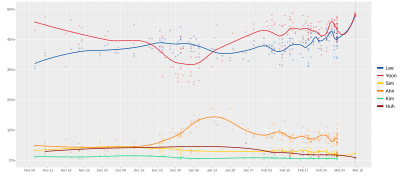
The emergence of other candidates, such as Ahn Cheol-soo of the People Party and Sim Sang-jung of the Justice Party, further complicated the political landscape, though Ahn eventually withdrew and endorsed Yoon, a strategic move in the closing days of the campaign.
Echoes of Discontent
The campaign trail in 2022 was dominated by pressing socio-economic issues that exposed deep divisions within South Korean society. Economic inequality, a persistent concern, was at the forefront, with candidates proposing various solutions to address wealth disparities. The nation's recovery from the ongoing COVID-19 pandemic was another critical focus, encompassing public health strategies and economic stimulus.
Notably, antifeminist sentiment emerged as a significant and polarizing issue, particularly among younger male voters, influencing campaign rhetoric and voter sentiment. Housing affordability in major urban centers, especially Seoul, also fueled public frustration and became a central theme. Analysts observed a pervasive tone of negativity and division throughout the campaign, reflecting a highly polarized electorate and record-low approval ratings for the leading candidates, underscoring a public weariness with traditional politics.
A Historic Mandate
The 2022 South Korean presidential election concluded as the closest in the nation's history, with Yoon Suk Yeol of the People Power Party narrowly defeating Lee Jae Myung. While Yoon secured the most overall votes and won key urban areas like Seoul, he lost in populous regions such as Gyeonggi Province and Incheon. A particularly striking outcome was the fact that, for the first time in a direct presidential election, the national winner failed to carry Jeju Province, a region traditionally considered a bellwether.
This result underscored the deep regional and ideological divides within the country. The election's outcome signaled a shift in political power and set the stage for a new presidential administration to tackle the complex challenges facing South Korea, including economic recovery, social equity, and foreign policy.
The Long Shadow of Political Turmoil
The aftermath of the 2022 election saw significant political developments, including the eventual impeachment and removal from office of President Yoon Suk Yeol in 2025. This unprecedented event led to a snap election, in which Lee Jae Myung, the runner-up from 2022, successfully bid for the presidency. This sequence of events highlights the volatility of South Korean politics and the profound impact of presidential decisions and public trust on the nation's leadership.
The impeachment and subsequent election of Lee Jae Myung represent a dramatic chapter in South Korea's democratic journey, demonstrating the power of the electorate and the checks and balances within its governmental system.
See also
Frequently Asked Questions
What was the 2022 South Korean presidential election about?+
Who won the 2022 South Korean presidential election?+
Why was the 2022 election so close?+
What were the main topics that candidates talked about?+
How long does a South Korean president serve?+
Based on content from Wikipedia · Licensed under CC BY-SA 4.0