

2020 Singaporean general election
Images

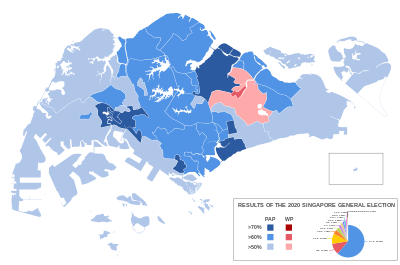
Electoral boundaries during the Singapore general elections 2020



The Electoral Mandate in a Time of Crisis
The 2020 Singaporean general election, held on July 10, was a pivotal moment, marking the fifteenth parliamentary election since self-governance in 1959 and the thirteenth since independence in 1965. The election was called by President Halimah Yacob on June 23, on the advice of Prime Minister Lee Hsien Loong, and saw an expansion of parliamentary seats from 89 to 93. This increase aimed to ensure more representative governance.
However, the defining characteristic of this election was its unprecedented context: the global COVID-19 pandemic. This public health emergency fundamentally altered traditional electoral practices, forcing a re-evaluation of campaign strategies and public engagement. The pandemic not only dictated the logistical challenges of conducting an election but also elevated health and economic stability to the forefront of voter concerns, creating a unique electoral environment where established political norms were tested against the exigencies of a global crisis.
The outcome would reflect how the electorate perceived the government's handling of these multifaceted challenges.
Pandemic Politics
The COVID-19 pandemic served as the central axis around which the 2020 Singaporean general election campaign revolved. The incumbent People's Action Party (PAP) strategically positioned its narrative around its perceived success in managing the crisis. Their campaign emphasized proactive measures such as securing essential supplies like face masks and rapidly scaling up testing infrastructure, framing these actions as evidence of competent governance and national resilience.
In stark contrast, opposition parties seized upon the pandemic as a critical point of scrutiny. They voiced strong criticisms regarding the government's response, particularly highlighting the disproportionately high number of COVID-19 cases within foreign worker dormitories, which raised questions about living conditions and worker welfare. Furthermore, the Ministry of Health's shifting guidance on mask usage became a point of contention, fueling public debate about transparency and the reliability of official information.
Beyond the immediate health crisis, other significant issues that resonated with voters included the persistent concerns over the cost of living, the escalating challenge of housing affordability, the pressures of population growth, and the complexities of immigration policies, all of which contributed to a nuanced electoral discourse.
Innovations in Engagement
In adherence to social distancing measures mandated by the COVID-19 pandemic, the traditional practice of large-scale physical election rallies was suspended. This necessitated innovative approaches to political communication. Mediacorp, Singapore's national broadcaster, introduced constituency political broadcasts, a novel televised platform designed to allow candidates from various parties to present their manifestos and engage with voters. This shift from direct, in-person interaction to a mediated, broadcast format represented a significant departure from established electoral traditions.
Despite these unprecedented logistical and communicative challenges, the 2020 election witnessed a remarkable surge in voter participation. The voter turnout was the highest recorded since 1997, underscoring the electorate's commitment to democratic processes even amidst a global health crisis. This high turnout indicated a strong desire among citizens to exercise their franchise and influence the nation's direction, demonstrating the resilience of democratic engagement.
Electoral Outcomes and Shifting Political Dynamics
The results of the 2020 Singaporean general election confirmed the People's Action Party's (PAP) continued dominance, securing their fifteenth consecutive term in government with 83 out of the 93 elected seats. However, the election also signaled a notable shift in the political landscape. The Workers' Party (WP) achieved a significant electoral breakthrough, capturing 10 seats.
Crucially, the WP's performance in the six constituencies it contested against the PAP was particularly impactful: they secured 50.5% of the vote in these areas. This outcome marked a historic moment, as it was the first general election since Singapore's independence where the PAP did not secure the combined popular vote in constituencies where a single opposition party was its sole challenger. Moreover, the election saw more than one million votes cast for parties other than the PAP, or cast as invalid votes, further illustrating a growing diversification of political preferences and a potential challenge to the PAP's long-standing hegemonic position.
This election demonstrated a growing appetite for alternative political voices and a more robust opposition presence.
See also
Frequently Asked Questions
What made the 2020 Singaporean general election different from previous ones?+
How did the pandemic change the way candidates talked to voters?+
Why did the People's Action Party focus on mask supplies and testing during the campaign?+
What other problems were important to voters besides COVID-19?+
Did many people vote in the 2020 election?+
Based on content from Wikipedia · Licensed under CC BY-SA 4.0