

2019 Maharashtra Legislative Assembly Election
Images

2019 Maharashtra Legislative Assembly Election Result Map
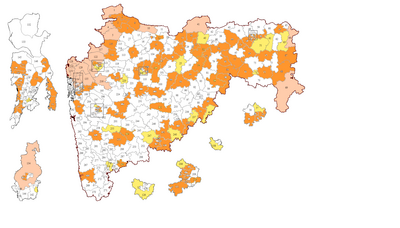


The Electoral Mandate and the Unraveling Alliance
The 2019 Maharashtra Legislative Assembly election, held on October 21, 2019, saw a voter turnout of 61.4%, indicating significant public engagement in shaping the state's governance. The election aimed to fill all 288 seats in the Assembly, the body responsible for state legislation. The results initially favored the incumbent National Democratic Alliance (NDA), a coalition led by the Bharatiya Janata Party (BJP) and its long-standing partner, the Shiv Sena.
They secured a combined majority, suggesting a continuation of their rule. However, this apparent victory was short-lived. Deep-seated disagreements emerged between the BJP and Shiv Sena over the distribution of power and ministerial portfolios, particularly concerning the Chief Ministership.
The Shiv Sena insisted on a '50-50 formula' for power-sharing, which the BJP reportedly rejected, leading to the dissolution of their pre-election alliance and a profound political crisis.
President's Rule and the Shocking Swearing-In
The inability of any single party or pre-election alliance to stake a claim to form a government within the stipulated timeframe plunged Maharashtra into a constitutional quandary. Consequently, President's Rule was imposed on the state, suspending the Legislative Assembly and placing its administration under the direct control of the central government. This period of uncertainty was dramatically punctuated on November 23, 2019, when Devendra Fadnavis of the BJP was sworn in as Chief Minister, and Ajit Pawar, a prominent leader from the Nationalist Congress Party (NCP), took the oath as Deputy Chief Minister.
This move was widely seen as a political maneuver to circumvent the Shiv Sena and NCP's efforts to form a government. However, this administration proved exceptionally fragile, lacking the necessary majority support in the Assembly.
The Rise of the Maha Vikas Aghadi and its Challenges
The Fadnavis-Pawar government's tenure was exceedingly brief. Facing intense political pressure and legal challenges, both Fadnavis and Pawar resigned on November 26, 2019, just three days after taking office, before a floor test could be conducted. This paved the way for an unexpected political alignment.
On November 28, 2019, a new coalition, the Maha Vikas Aghadi (MVA), was formed. This alliance comprised the Shiv Sena, the NCP, and the Indian National Congress, three parties with historically different ideologies. Uddhav Thackeray, the leader of Shiv Sena, was sworn in as the Chief Minister, marking a significant shift in Maharashtra's political landscape. The MVA government successfully completed its term, navigating various political and administrative challenges.
Internal Dissent and the Subsequent Government Change
The MVA government's stability was tested in June 2022 when a significant internal rebellion erupted within the Shiv Sena. A faction of MLAs, led by Eknath Shinde, defected from the party, citing ideological differences and dissatisfaction with the leadership's direction. This defection led to the resignation of Chief Minister Uddhav Thackeray.
Following intense political negotiations, Eknath Shinde, in alliance with the BJP, formed a new government, with Devendra Fadnavis returning as Deputy Chief Minister. This sequence of events underscores the fluid nature of political alliances in India and the potential for internal party dynamics to trigger significant governmental changes, even after a clear electoral mandate.
See also
Frequently Asked Questions
What was the voter turnout in the 2019 Maharashtra election?+
Which parties were in the National Democratic Alliance that won the election?+
Why did the alliance between BJP and Shiv Sena break after the election?+
Who became Chief Minister after the first government fell?+
What happened to the government in 2022?+
Based on content from Wikipedia · Licensed under CC BY-SA 4.0