

2012 Summer Olympics
Images

Rowing at the 2012 Summer Olympics – Men's coxless pair Final A (4)


London's Triumphant Third Act
The 2012 Summer Olympics, officially designated the Games of the XXX Olympiad, marked a significant moment for London, England, as it became the first city in modern history to host the Summer Games for a third time, following its previous successful bids in 1908 and 1948. The selection process, culminating on July 6, 2005, in Singapore, saw London, championed by figures like Sebastian Coe and Ken Livingstone, triumph over formidable bids from cities including Moscow, New York, Madrid, and Paris.
This victory was not merely about hosting an event; it was a strategic endeavor aimed at regeneration and leaving a lasting legacy, particularly in the East London area.
Architecting the Games
A cornerstone of the London 2012 bid was its ambitious commitment to sustainability and urban regeneration. The construction efforts centered on a vast 200-hectare (490-acre) Olympic Park in Stratford, East London, transforming a former industrial wasteland into a vibrant hub. This project emphasized the use of recycled materials, the creation of new habitats, and the development of long-term community infrastructure, including housing and transport links.
The Games also strategically integrated existing world-class venues with new constructions, demonstrating a balanced approach to development and resource management. This focus on environmental responsibility set a new benchmark for future Olympic Games.
A Milestone in Inclusivity and Athletic Prowess
The 2012 Games were a landmark for global inclusivity. A record 10,518 athletes from 206 National Olympic Committees (NOCs) participated. Most notably, Saudi Arabia, Qatar, and Brunei sent female athletes for the first time, achieving the milestone of every eligible nation having sent women competitors to at least one Olympic Games.
Furthermore, women's boxing debuted, and for the first time in Olympic history, every sport featured female participants. Athletically, the United States topped the medal table with 105 medals (48 gold), while Michael Phelps cemented his status as the most decorated Olympian of all time, surpassing his previous medal count.
Cultural Resonance and Organizational Acclaim
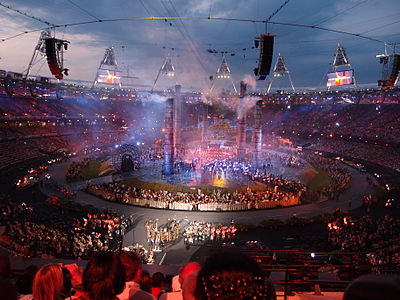
The Games garnered widespread international acclaim for their exceptional organization and the palpable enthusiasm of the British public, volunteers, and military personnel. The opening ceremony, a critically lauded production directed by Academy Award winner Danny Boyle, was celebrated for its artistic vision and its ability to encapsulate British culture and history. The event's success was also attributed to the leadership of IOC President Jacques Rogge, under whom these Games were the final major event of his tenure, preceding the presidency of Thomas Bach.
The overall sentiment described the Games as 'happy and glorious,' reflecting a profound cultural and social impact.
See also
Frequently Asked Questions
What made the 2012 London Olympics special for the city?+
How did the 2012 Games help the environment?+
Why were there more women athletes in 2012?+
Who won the most medals at the 2012 Olympics?+
Who directed the opening ceremony and why was it special?+
Based on content from Wikipedia · Licensed under CC BY-SA 4.0