

1907 World Series
Images
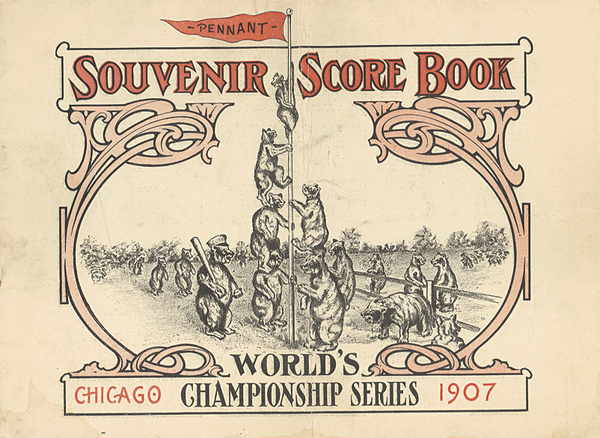
1907 World Series


![Bowl Shaped Objects Scattered Outside A Building, Yunnan, China [1922] Joseph F. C. Rock [RESTORED]](https://live.staticflickr.com/2500/4126608199_71a23fefbc_n.jpg)


The Genesis of a Championship
The 1907 World Series represented the fourth iteration of baseball's ultimate championship, a nascent tradition solidifying its place in American sports culture. This particular series pitted the National League champion Chicago Cubs against the American League champion Detroit Tigers. For the Cubs, it was a crucial opportunity for redemption after a devastating loss in the 1906 World Series.
Their motivation to secure their first championship was exceptionally high, fueled by the sting of the previous year's defeat. The Tigers, conversely, entered the series with a burgeoning superstar in Ty Cobb, a player whose aggressive style and exceptional hitting prowess were already making him a formidable force. Cobb's presence added a significant narrative layer, as he was embarking on a career that would see him become one of baseball's all-time greats, beginning his streak of batting championships in this very series.
The stage was set for a compelling contest that would not only crown a champion but also reveal the evolving strategies and rivalries of early 20th-century baseball.
Strategic Warfare
The logistical and strategic elements of the 1907 World Series were as noteworthy as the on-field play. The series schedule was designed to accommodate fans in both cities, with games initially slated for Chicago and then Detroit. However, an early tie in Game 1 disrupted the planned progression, delaying the series' relocation to Detroit until Game 4.
This scheduling quirk underscored the evolving nature of championship series logistics. More critically, the Cubs demonstrated a masterful tactical approach. Their pitching staff exhibited remarkable control, limiting the Tigers to a mere three runs across the four victories.
This defensive solidity was complemented by an aggressive baserunning game; the Cubs swiped an impressive 18 bases. This tactic of disrupting the Tigers' rhythm and exploiting their defensive lapses proved highly effective, showcasing a proactive and opportunistic style of play that was a hallmark of successful teams during this era.
The Cobb Conundrum and Cubs' Pitching Prowess
A central dynamic of the 1907 World Series was the confrontation between the Cubs' formidable pitching and the electrifying talent of Detroit's Ty Cobb. Cobb, already a league leader in batting, represented the offensive threat the Cubs needed to neutralize. His reputation preceded him, and his ability to consistently hit and manufacture runs was a significant challenge.
However, the Cubs' pitching staff, characterized by its depth and effectiveness, managed to stifle Cobb and the rest of the Tigers' lineup. The low run total allowed by the Cubs in their victories speaks volumes about their ability to execute their game plan against a potent offense. This pitching dominance was not merely about preventing hits; it was about controlling the game's tempo and denying the Tigers opportunities to build momentum, a testament to the strategic importance of pitching in this era of baseball.
A Landmark Victory
The culmination of the 1907 World Series saw the Chicago Cubs achieve their first-ever championship title, defeating the Detroit Tigers in four games with one tie. This victory was more than just a trophy; it was a significant milestone that resonated within the sport. It validated the Cubs' consistent performance and marked a turning point after their previous year's disappointment.
The series was officiated by a compact, two-man umpiring crew, Hank O'Day and Jack Sheridan, a common practice at the time that highlighted the evolving professionalization of the game. The Cubs' triumph established them as a premier franchise and contributed to the growing lore of the World Series as a definitive test of baseball supremacy. This championship laid a foundational piece of history for the Cubs and influenced perceptions of team strategy and player impact in the early 20th century.
Legacy and Evolution of the Game
The 1907 World Series, while a historical event, offers insights into the evolution of baseball strategy and player development. The Cubs' victory, characterized by strong pitching and aggressive baserunning, demonstrated effective tactics that transcended individual brilliance. The presence of Ty Cobb, already a dominant hitter, foreshadowed the era of superstar players and the increasing importance of individual performance metrics.
The series also highlights the relatively early stage of the World Series as a cultural phenomenon; its scheduling and format were still being refined. The fact that it was only the fourth iteration meant that its traditions and expectations were still being established. Examining this series provides a window into the foundational dynamics of modern professional baseball, showing how early strategies and player archetypes began to shape the game we know today, influencing everything from team construction to fan engagement.
See also
Based on content from Wikipedia · Licensed under CC BY-SA 4.0