

1903 World Series
Images

1903 World Series


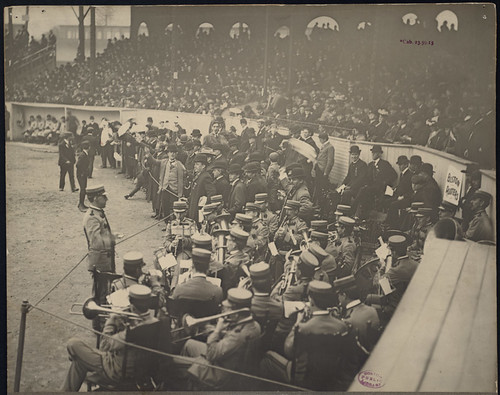


Forging a Championship Tradition
The 1903 World Series was not merely a baseball game; it was the culmination of a burgeoning rivalry between the established National League (NL) and the ambitious American League (AL), founded just two years prior. The AL's aggressive pursuit of talent and its eventual recognition by the NL in 1903 created the conditions for this ultimate contest. The series pitted the Boston Americans, representing the AL's claim to major league status, against the storied Pittsburgh Pirates, NL champions.
This best-of-nine format was designed to definitively prove which league's champion was superior. The logistical challenges of the era, including travel and stadium capacities, shaped the series' structure, with games alternating between Boston and Pittsburgh (Allegheny City). The immense public interest generated by this clash underscored baseball's growing cultural significance and the deep desire for a unified, definitive championship.
Athletic Prowess and Personal Struggles
The 1903 World Series showcased both the heights of baseball talent and the pressures that accompany elite competition. The Boston Americans relied on the formidable pitching of Cy Young and Bill Dinneen. Dinneen's Game 2 performance, striking out 11 Pirates, was a remarkable feat that surpassed Phillippe's Game 1 effort.
For the Pittsburgh Pirates, the series was defined by the uncharacteristic struggles of Honus Wagner. Widely regarded as one of baseball's all-time greats, Wagner was hampered by injuries, leading to a .222 batting average and a league-leading six errors. His profound disappointment was evident in his subsequent refusal to have his portrait displayed in a 'Hall of Fame' for batting champions, famously stating, 'I was too bum last year.' This vulnerability humanized the legendary player and highlighted the immense psychological toll of high-stakes performance.
Pittsburgh's Deacon Phillippe, despite a teammate's unusual shoulder injury from trap shooting, heroically pitched five complete games.
Dramatic Reversals and Peculiar Field Conditions
The narrative of the 1903 World Series is indelibly marked by an extraordinary comeback. The Pittsburgh Pirates seized an early advantage, leading the series three games to one. This seemingly insurmountable deficit set the stage for one of baseball's most celebrated comebacks, as the Boston Americans rallied to win the next four consecutive games, securing the championship.
This feat was so rare that it would not be replicated in the World Series until the 1925 series and has only occurred a handful of times since. Adding a layer of unique historical flavor were the playing conditions at Pittsburgh's Exposition Park. Due to overflow crowds pushing the outfield boundaries, a peculiar 'ground-rule triple' was instituted: any batted ball that rolled under the spectator rope was automatically ruled a triple.
This unusual rule contributed to an astonishing 17 ground-rule triples being hit during the four games played in Pittsburgh, a testament to the unique circumstances of the era.
Legitimizing the Game and Shaping Future Spectacle
The 1903 World Series served as a critical inflection point for professional baseball. Its primary significance lay in its role as a powerful validation for the American League. By defeating the National League champions, the Boston Americans demonstrated that the AL possessed talent and competitive parity, effectively ending the debate over its legitimacy and solidifying the two-league structure that persists today.
This success fueled demand for future World Series competitions, transforming it from a novelty into an indispensable annual event. Beyond league validation, the series generated unprecedented fan engagement, exemplified by Boston's 'Royal Rooters' whose fervent support, including the singing of 'Tessie,' became a notable aspect of the series. Furthermore, the financial arrangements, where the losing Pirates players received a larger share of gate receipts than the winners, offer a fascinating glimpse into early professional sports economics and owner-player relations, highlighting a different era of profit sharing.
See also
Based on content from Wikipedia · Licensed under CC BY-SA 4.0