

1648: A Year of Big Changes!
Images

Westfaelischer Friede In Muenster (Gerard Terborch 1648)





The Temporal Divide
The year 1648 presented a fascinating temporal anomaly: it was a leap year in both the Julian and Gregorian calendars, yet these systems were not synchronized. The Gregorian calendar, adopted by Catholic states, was ten days ahead of the Julian calendar, still in localized use in various regions until as late as 1923. This discrepancy wasn't merely a minor inconvenience; it reflected deeper divisions in European society and the slow, uneven adoption of scientific and administrative reforms.
The year's designation as the 648th year of the 2nd millennium and the 48th year of the 17th century places it at a critical juncture, bridging the early modern period with emerging global dynamics. This temporal fragmentation underscores the complex realities of communication, trade, and governance in the 17th century, where shared understanding of time was not a given.
Demographic Crossroads
Compelling historical analysis suggests that 1648 may represent a rare instance of global human population decline. This hypothesis emerges from the context of profound global instability that characterized the preceding decades. The collapse of the Ming Dynasty in China, a cataclysmic event that led to widespread famine and conflict, and the protracted Thirty Years' War in Europe, which decimated populations through warfare, disease, and starvation, were major contributing factors.
These were not isolated incidents but interconnected crises that strained resources and disrupted societies worldwide. The potential population dip in 1648 serves as a stark reminder of humanity's vulnerability to large-scale conflict and systemic collapse, prompting reflection on the resilience and fragility of human civilization.
The Westphalian Settlement
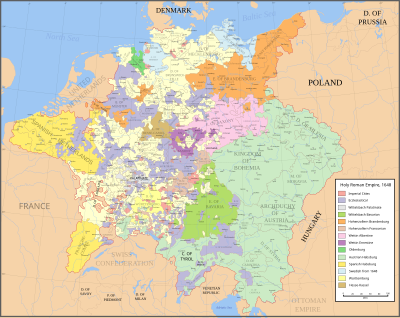
The paramount event of 1648 was the conclusion of the Thirty Years' War, a conflict that had reshaped the political and religious landscape of Europe. The Peace of Westphalia, a series of treaties negotiated in the cities of Münster and Osnabrück, brought this devastating war to an end. More than just a cessation of hostilities, Westphalia is widely regarded as a foundational moment in the development of the modern state system.
It enshrined the principle of state sovereignty, asserting the right of rulers to govern their territories free from external interference, particularly from religious authorities like the Pope. This shift from a religiously-defined order to one based on secular, territorial authority profoundly influenced international law and diplomacy, establishing a framework for state-to-state relations that persists, albeit in evolved forms, to this day.
Legacy and Enduring Relevance of 1648
The year 1648's significance extends far beyond its immediate historical context. The Peace of Westphalia established norms of non-intervention and territorial integrity that continue to be central tenets of international relations, even as they are frequently challenged. The treaties also played a role in the secularization of politics, diminishing the direct influence of religious institutions in state affairs and paving the way for Enlightenment thought.
Furthermore, understanding the potential demographic trends of 1648 offers valuable insights into the long-term impacts of conflict and societal disruption on population dynamics, a critical area of study for contemporary global challenges. The year serves as a powerful case study in how devastating conflict can ultimately lead to the redefinition of political order and the pursuit of more stable, albeit imperfect, international systems.
See also
Frequently Asked Questions
What was special about the calendars in 1648?+
Why is 1648 called a year of big changes?+
What is the Peace of Westphalia?+
Did the year 1648 affect the world’s population?+
Who used the Gregorian calendar in 1648?+
Based on content from Wikipedia · Licensed under CC BY-SA 4.0