

Yerupaja
Images

File:Flight from Lima to Quito - some of the Huayhaush range peeking through the clouds, possibly including Yerupaja (6635m) the 2nd highest peak in Peru - (26591316850).jpg
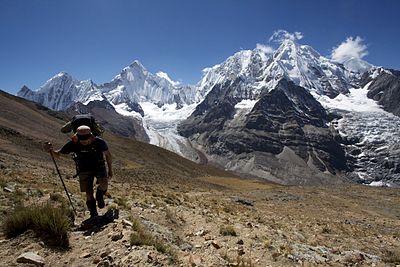


Geological Majesty and Climatic Extremes
Yerupaja, with its imposing elevation of 6,635 meters (21,768 feet), is a titan of the Cordillera Huayhuash, a sub-range of the Peruvian Andes renowned for its rugged beauty and technical climbing routes. Geologically, the Andes are a product of the Nazca Plate subducting beneath the South American Plate, a process that has uplifted and continues to shape these colossal mountains. Yerupaja's summit is characterized by steep, often ice-covered rock faces and extensive glacial systems.
The climate is unforgiving, with extreme cold, low atmospheric pressure, and unpredictable weather patterns, including frequent storms and high winds. These conditions necessitate meticulous preparation and a deep respect for the mountain's power, making it a serious objective for experienced alpinists.
The Allure of a Technical Climb
Yerupaja is not merely a high mountain; it is a significant technical climbing challenge. Its various routes, particularly the Northwest Ridge and the East Face, are considered among the most demanding in the Andes. Ascents require proficiency in ice climbing, rock climbing, and mixed climbing, often on vertical or overhanging terrain.
The mountain's notorious reputation stems from its objective dangers, including serac fall, avalanches, and the sheer difficulty of the rock and ice. Expeditions typically last several weeks, involving extensive acclimatization, establishing high camps, and carefully managing resources. The summit success rate is relatively low, underscoring the mountain's formidable nature and the high level of skill and commitment required.
Ecological Significance within Huascarán National Park
Yerupaja is a prominent feature within Huascarán National Park, a UNESCO World Heritage site established to protect the unique ecosystems of the Cordillera Blanca and Cordillera Huayhuash. This park harbors a remarkable biodiversity, including Andean condors, vicuñas, and a variety of high-altitude flora adapted to the harsh conditions. The glaciers on Yerupaja and surrounding peaks are vital sources of freshwater for downstream communities and ecosystems.
The park's conservation efforts are crucial for maintaining the ecological balance of this high-Andean environment, and Yerupaja stands as a symbol of its wild, pristine character. Responsible tourism and climbing practices are essential to minimize human impact on this fragile landscape.
Historical Ascents and Mountaineering Legacy
The first ascent of Yerupaja was achieved in 1950 by a German expedition led by Walter Frentz, who reached the summit via the Northwest Ridge. This marked a significant milestone in Andean mountaineering history. Subsequent ascents have explored more challenging routes, pushing the boundaries of what is considered possible in high-altitude technical climbing.
The mountain has been a testing ground for generations of climbers, contributing to the evolution of alpinism techniques and equipment. The history of Yerupaja's ascents is interwoven with the broader narrative of exploration and human endeavor in one of the world's most spectacular mountain ranges.
Modern Relevance and Conservation Challenges
In contemporary times, Yerupaja continues to attract elite mountaineers, drawn by its technical allure and the pristine beauty of its environment. However, the region faces increasing pressures from climate change, which is causing glaciers to recede at an alarming rate, impacting water resources and potentially altering climbing conditions. Furthermore, the growing popularity of adventure tourism, while economically beneficial, requires careful management to prevent environmental degradation.
Sustainable practices, adherence to park regulations, and ongoing research into the effects of climate change are critical for preserving Yerupaja and its surrounding ecosystem for future generations of climbers and nature enthusiasts.
See also
Frequently Asked Questions
What is Yerupaja?+
Why is Yerupaja so hard to climb?+
Where is Yerupaja located?+
When was the first time people reached the top of Yerupaja?+
How do the glaciers on Yerupaja help people and animals?+
Based on content from Wikipedia · Licensed under CC BY-SA 4.0