

Winterthur
Images

Armorial bookplate of the Pfau family of Winterthur, Switzerland with inscriptions; woodcut portrait of Johannes Frisius (1505-1565)
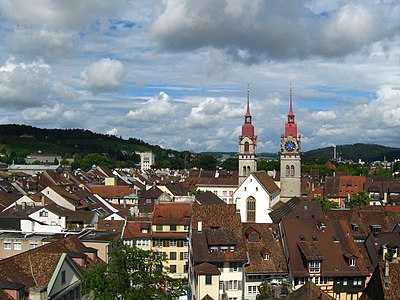


Winterthur's Strategic Geographic and Economic Positioning
Winterthur occupies a strategically vital position within the canton of Zurich in northern Switzerland. As the country's sixth-largest city by population, with over 120,000 residents, it commands significant regional influence. Its role as a 'service and high-tech industrial satellite city' within the broader Zurich Metropolitan Area is crucial.
This designation highlights its function as a key economic engine, providing specialized services and advanced manufacturing capabilities that complement Zurich's global financial status. Located approximately 20 kilometers northeast of Zurich, Winterthur benefits from excellent connectivity, making it an attractive location for businesses and residents alike. Its economic landscape is characterized by a strong emphasis on innovation and technological development, distinguishing it as a modern industrial center.
A Hub of Connectivity
The city's infrastructure is a defining characteristic, particularly its advanced transportation network. Winterthur's railway station is a testament to its importance, ranking as the fourth busiest in Switzerland. This high volume of passenger and freight traffic underscores its role as a central node in the national rail system.
The station's efficiency and connectivity are further enhanced by its proximity to Zurich Airport, facilitating international travel and trade. Moreover, Winterthur is a critical junction for Switzerland's motorway system. The A1 motorway, a major east-west artery, intersects with the A4 and A7 motorways here.
This confluence of major road networks provides seamless access to domestic and international destinations, including direct rail links to Germany. This robust transportation ecosystem is fundamental to Winterthur's economic vitality and its status as a regional hub.
The Industrial Fabric and Economic Drivers
Winterthur's economy is deeply rooted in its identity as a high-tech industrial center. The city has cultivated a reputation for excellence in advanced manufacturing and technological innovation. This focus has attracted a diverse range of industries, contributing to a resilient and dynamic economic base.
The presence of high-tech enterprises fosters a skilled workforce and encourages continuous development and research. The city's economic strategy leverages this industrial strength to attract investment and create high-value jobs. As a satellite city, Winterthur plays a pivotal role in the economic ecosystem of the Zurich Metropolitan Area, offering specialized industrial capacity that supports the region's overall economic growth and competitiveness on a global scale.
Cultural Identity and Linguistic Landscape
The cultural identity of Winterthur is shaped by its linguistic heritage and its status as a thriving urban center. The official language is German, but the everyday spoken language is a distinct local variant of Swiss German, specifically Zurich German. This linguistic diversity reflects the rich cultural tapestry of Switzerland.
The common local abbreviation 'Winti' signifies a strong sense of local pride and community among its inhabitants. While the source material focuses on geography and economy, the large population and its role as a service hub imply a vibrant cultural scene, with amenities and activities catering to a diverse populace. This blend of tradition and modernity defines the character of Winterthur.
Governance and Educational Foundations
As a significant city within the canton of Zurich, Winterthur operates under the Swiss federal system of governance, which emphasizes decentralization and local autonomy. While specific details of its municipal government are not provided in the source, it is understood that Swiss cities have well-established administrative structures responsible for public services, urban planning, and local economic development. Furthermore, Winterthur's role as a service and industrial hub necessitates a strong educational infrastructure.
The presence of a large population and advanced industries implies a commitment to education and vocational training, ensuring a skilled workforce capable of supporting its high-tech sectors. This focus on education is fundamental to maintaining its competitive edge and fostering future innovation.
See also
Frequently Asked Questions
What is Winterthur known for?+
Why is Winterthur an important train station?+
How can you travel from Winterthur to other places?+
Where do people in Winterthur speak?+
Why do people call Winterthur "Winti"?+
Based on content from Wikipedia · Licensed under CC BY-SA 4.0