

Windmill
Images
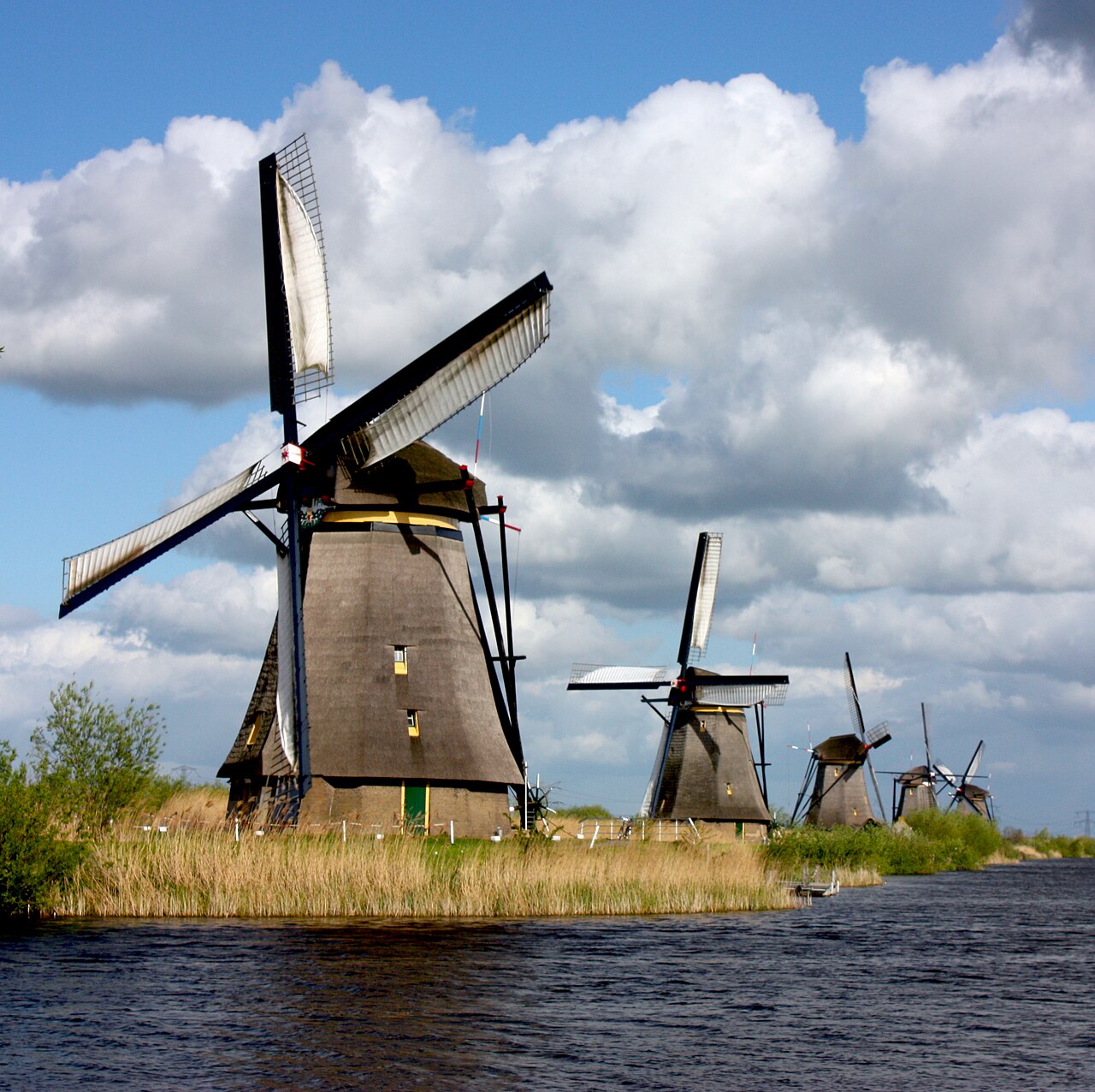
Windmill
Origins and Early Innovations
The windmill represents one of humanity's earliest and most ingenious methods for harnessing renewable energy. While the exact origins are debated, the first documented windmills, known as panemone windmills, emerged in Persia between the 7th and 9th centuries CE. These early machines featured vertical sails rotating around a horizontal shaft, primarily utilized for grinding grain.
This design was effective but limited in its efficiency and application. A significant leap occurred with the development of the horizontal-axis windmill, which became prevalent in Europe by the 12th century. This design, with sails rotating perpendicular to the wind, proved far more adaptable and powerful.
The Dutch, in particular, became masters of windmill technology, developing sophisticated designs for water management. Their iconic tower mills and post mills were instrumental in reclaiming vast tracts of land from the sea, creating polders that transformed their nation's geography and economy. These early windmills were not just simple machines; they were complex engineering solutions that required an understanding of aerodynamics, mechanics, and structural integrity.
The Engine of Industry
The widespread adoption of windmills had a transformative effect on pre-industrial societies. Economically, they revolutionized agriculture by mechanizing the laborious process of grain milling. This increased food production efficiency, supporting larger populations and enabling specialization in other crafts.
Windmills also played a critical role in industrial processes beyond milling. They powered sawmills, fulling mills (for cloth production), and paper mills. Perhaps their most dramatic impact was in water management.
In regions like the Netherlands, windmills were essential for draining marshlands and preventing floods, allowing for the creation of arable land and the expansion of settlements. This ability to control water was fundamental to the nation's survival and prosperity. The presence of windmills often indicated a region's economic vitality and technological advancement, serving as the primary source of mechanical power before the advent of steam and later electricity.
How Windmills Work
The fundamental principle behind a windmill is the conversion of wind's kinetic energy into rotational mechanical energy. The large sails, or blades, are aerodynamically shaped to create lift when wind flows over them, similar to an airplane wing. This lift force, combined with drag, generates torque, causing the rotor to spin.
The angle of the sails is crucial and could often be adjusted. In traditional windmills, the windshaft, a large wooden beam, connects the rotor to the internal gearing. This gearing system could then be used to drive various mechanisms: millstones for grinding, pumps (like scoop wheels or Archimedes screws) for lifting water, or even saws.
Many windmills featured sophisticated control systems. Tower mills, for instance, had a cap that could be rotated to keep the sails facing into the wind, maximizing energy capture. Smock mills and post mills also had mechanisms for orientation.
Furthermore, the amount of sailcloth exposed could be adjusted, or sails could be reefed, to control the mill's speed and prevent damage in high winds. This intricate design allowed for efficient and safe operation across varying wind conditions.
Beyond the Farm
While often associated with grinding grain and pumping water, windmills served a surprisingly diverse range of functions throughout history. They powered early industrial processes, such as sawing timber, crushing ore, and producing oil from seeds. In some coastal areas, windmills were adapted for salt production.
The ingenuity extended to their structural forms: post mills, where the entire body of the mill rotated on a central post; tower mills, with a fixed stone or brick tower and a rotating cap; and smock mills, similar to tower mills but with a tapering wooden or metal cap. The legacy of the windmill extends far beyond its historical utility. It laid the groundwork for modern wind turbine technology, which now generates significant amounts of electricity.
The principles of aerodynamics and energy conversion developed for these early machines are still relevant. Studying windmills offers insights into early engineering, the development of renewable energy technologies, and the profound ways humans have adapted to and shaped their environments using natural forces.
Go deeper
Based on content from Wikipedia · Licensed under CC BY-SA 4.0