

Wimbledon Station: Where Trains and Trams Meet!
Images

Wimbledon Station


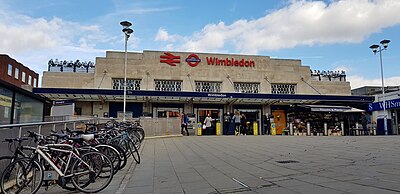


The Strategic Importance of a Multimodal Hub
Wimbledon station is far more than a simple transit point; it is a sophisticated nexus of urban and suburban mobility, uniquely positioned as the sole London station offering direct interchange between the London Underground and the Tramlink system. This strategic integration facilitates seamless travel for a diverse range of passengers, from daily commuters to international visitors. The station serves as a critical junction for the District line of the London Underground, two prominent National Rail operators (South Western Railway and Thameslink), and the entirety of the London Tramlink network.
Its existence alleviates pressure on more central London hubs and provides essential connectivity for the southwestern suburbs, making it an indispensable component of Transport for London's vast network. The station's design and operational complexity reflect its pivotal role in managing high passenger volumes and diverse service patterns.
Architectural and Operational Complexity
The station's infrastructure is defined by its 11 distinct platforms, each meticulously allocated to specific services to optimize passenger flow and operational efficiency. Platforms 1–4 are dedicated to the London Underground's District line, ensuring a clear separation from other rail traffic. Platforms 5 and 8 cater to the high-frequency inner suburban services of South Western Railway, a key artery for local commuters.
Platform 9 serves as a crucial stop for Thameslink, a vital cross-London service that connects the region to destinations far beyond the capital. Uniquely, platforms 10a and 10b are exclusively for Tramlink services, highlighting the station's multimodal integration. Platforms 6 and 7, adjacent to the faster main lines, are typically reserved for express and outer suburban South Western Railway services.
Their limited use by these services, except during specific events or times, underscores the station's role in managing different speeds and service types within a constrained urban environment.
Adaptive Infrastructure
Wimbledon station demonstrates remarkable adaptability, particularly during the annual Wimbledon Tennis Championships. While platforms 6 and 7 are generally bypassed by express and outer suburban South Western Railway services, their operational status is temporarily elevated during the tournament. This strategic activation allows for increased capacity and direct access for the influx of spectators attending the prestigious event.
The implementation of sliding gates through safety fencing in March 2014 further illustrates ongoing efforts to manage passenger flow and safety, especially during peak demand periods. This seasonal surge in activity underscores the station's capacity to respond to extraordinary demand, showcasing its importance not just for daily transit but also for facilitating major cultural and sporting events.
Geographic Significance and Connectivity
Situated in London fare zone 3, Wimbledon station occupies a strategic geographic position 7 miles 19 chains (11.6 km) from London Waterloo along the South West Main Line. This location makes it a critical gateway for passengers travelling between the central London core and the wider suburban and outer-lying areas of southwest London and beyond. Its fare zone classification influences ticketing and travel costs, positioning it as a key hub for both inner-city commuters and those travelling from further afield.
The station's connectivity extends its influence beyond mere passenger transport, impacting local economies and the daily lives of a significant population segment by providing access to employment, education, and leisure opportunities across a broad geographic area.
Evolution and Future Implications
While the provided text focuses on the current state of Wimbledon station, its existence implies a history of development and planning to accommodate evolving transport needs. The integration of Tramlink, a relatively modern addition to London's transport landscape, signifies a forward-thinking approach to urban mobility, aiming to provide sustainable and efficient alternatives to traditional rail and road transport. The station's continued operation and potential for future upgrades reflect its enduring importance.
As London continues to grow and its transport demands shift, stations like Wimbledon, with their integrated multimodal capabilities, will likely play an even more crucial role in shaping the city's future connectivity and sustainability initiatives.
See also
Based on content from Wikipedia · Licensed under CC BY-SA 4.0