

Whitefly: Tiny Flying Pests!
Images
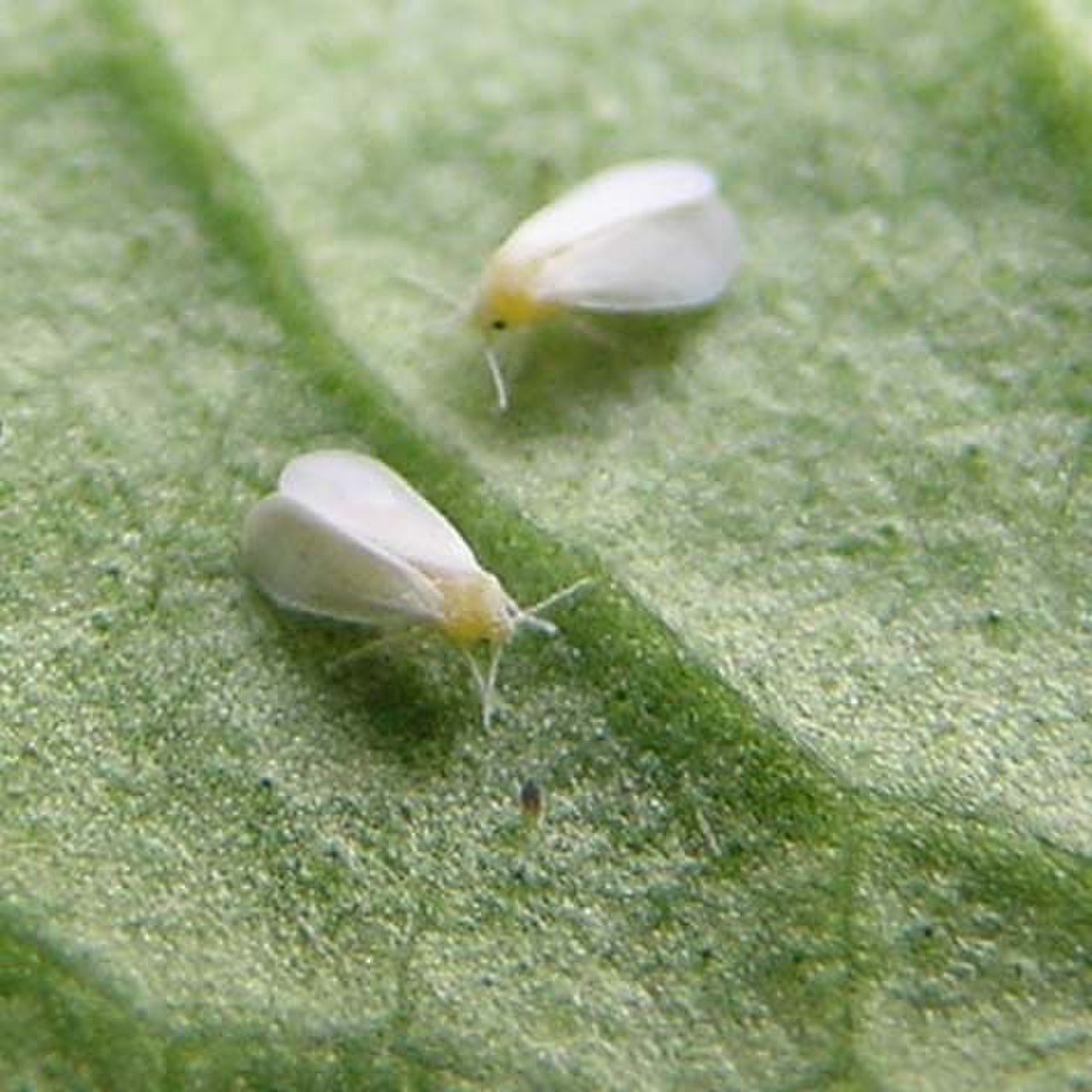
Whitefly
The Ubiquitous Whitefly
Whiteflies, belonging to the superfamily Aleyrodoidea within the order Hemiptera, are a diverse group comprising over 1,500 described species, with many more yet to be identified. They are cosmopolitan, thriving in tropical, subtropical, and temperate climates, and are particularly prevalent in greenhouses where controlled environments favor their rapid reproduction. Morphologically, adult whiteflies are small, typically 1-3 mm in length, characterized by two pairs of powdery, white wings that give them their common name.
Their bodies are often flattened, allowing them to hide effectively on the undersides of leaves. Key distinguishing features include their short antennae and the presence of a prominent 'cornicle' or 'caudal' structure, though these are less developed than in aphids. Their mouthparts are adapted for piercing and sucking, enabling them to access plant vascular tissues.
The family Aleyrodidae is further divided into several subfamilies, reflecting significant evolutionary divergence and host plant specializations.
Feeding Ecology and Pathogen Transmission
Whiteflies are obligate phloem feeders, meaning they exclusively consume the nutrient-rich sap transported through the phloem vessels of plants. This specialized diet involves inserting their stylets (mouthparts) deep into plant tissues to reach the phloem. The continuous extraction of sap can lead to severe physiological stress in host plants, manifesting as chlorosis (yellowing), leaf distortion, reduced photosynthesis, and decreased yield or quality of fruits and flowers.
Beyond direct feeding damage, many whitefly species are vectors for a wide array of plant viruses, including begomoviruses (geminiviruses), criniviruses, and carlaviruses. These viruses can cause devastating diseases, often exacerbating the damage caused by the whiteflies themselves and leading to significant crop losses. Furthermore, the 'honeydew' they excrete provides a substrate for the growth of sooty mold fungi, which can further impair plant health by blocking sunlight and reducing gas exchange.
Life Cycle Dynamics and Population Explosions
The life cycle of whiteflies is characterized by rapid development, particularly under optimal temperature conditions, which contributes to their pest status. The cycle typically involves four nymphal instars and a pupal stage before the emergence of the winged adult. Eggs are usually laid in clusters or spirals on the underside of leaves.
The first nymphal instar, often called the 'crawler,' is mobile and seeks a suitable feeding site. Subsequent instars are sessile, becoming increasingly flattened and scale-like as they feed and grow. The pupal stage is a quiescent phase where metamorphosis occurs.
Under favorable temperatures (often between 20-30°C), the entire life cycle from egg to adult can be completed in as little as 3-4 weeks. This short generation time, coupled with the potential for multiple overlapping generations per year, allows whitefly populations to increase exponentially, leading to severe infestations if not managed.
Ecological Significance and Integrated Pest Management Strategies
While many whitefly species are considered agricultural pests, they also play a role in natural ecosystems, serving as a food source for various predators and parasitoids. However, their economic impact is substantial, affecting a broad spectrum of crops including vegetables (tomato, pepper, cucumber), cotton, and ornamental plants. Effective management relies on Integrated Pest Management (IPM) strategies that combine multiple approaches to minimize reliance on chemical pesticides.
These include cultural practices (e.g., crop rotation, sanitation), biological control (utilizing natural enemies like parasitic wasps such as Encarsia formosa, ladybugs, and lacewings), physical barriers (e.g., row covers, screens), and the judicious use of selective insecticides or insecticidal soaps and oils. Monitoring populations through sticky traps is crucial for early detection and timely intervention. Understanding the complex interactions between whiteflies, their host plants, and their natural enemies is key to developing sustainable control programs.
See also
Frequently Asked Questions
What are whiteflies and why are they called "tiny flying pests"?+
How do whiteflies eat plants and why does it hurt the plants?+
Why do whiteflies make honeydew and what is sooty mold?+
How fast do whiteflies grow and how many generations can they have in a year?+
Are there any good things about whiteflies?+
Based on content from Wikipedia · Licensed under CC BY-SA 4.0