

White-handed Gibbon
Images
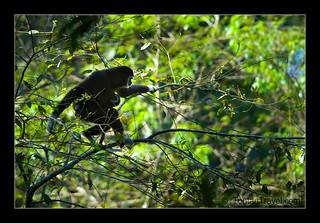
White-handed gibbons


Ecological Niche and Arboreal Adaptations
The white-handed gibbon, scientifically classified as Hylobates lar, occupies a crucial ecological niche within the tropical evergreen forests of Southeast Asia, spanning regions such as Thailand, Malaysia, Sumatra, and parts of western Indonesia. These primates are quintessential arboreal specialists, dedicating their entire existence to the forest canopy.
Their morphology is exquisitely adapted for a life of perpetual motion amongst the branches. Possessing exceptionally long arms relative to their body size, they are masters of brachiation, a form of locomotion involving swinging from branch to branch with remarkable speed and efficiency, reaching speeds of up to 56 km/h (35 mph) during their aerial transit. This specialized movement allows them to navigate their complex three-dimensional environment with unparalleled agility, covering significant distances between feeding sites and avoiding terrestrial predators.
Their white hands and feet, along with a characteristic white band above the eyes, serve as key identifying features, distinguishing them within their diverse primate communities. Their activity patterns are diurnal, with peak activity and vocalizations occurring in the early morning hours, a critical period for territorial defense and social bonding.
Dietary Ecology and Foraging Strategies
The dietary strategy of the white-handed gibbon is predominantly frugivorous, with fruits, particularly figs, forming the cornerstone of their diet. This preference positions them as significant seed dispersers within their ecosystem, playing a vital role in forest regeneration and plant community structure. However, their diet is not exclusively fruit-based; they exhibit opportunistic omnivory, supplementing their intake with young leaves, flowers, buds, and occasionally insects, larvae, and bird eggs.
This dietary flexibility is crucial for survival, enabling them to adapt to seasonal variations in fruit availability and other food resources. Their foraging behavior is intrinsically linked to their arboreal lifestyle, utilizing their acrobatic skills to access the most nutritious and accessible food sources high in the canopy. They are remarkably efficient at extracting moisture from their food, meaning they rarely need to descend to ground level to drink, thus minimizing exposure to ground-dwelling predators and other risks.
Social Structure, Communication, and Reproduction
White-handed gibbons typically form small, stable, monogamous family units, comprising a breeding pair and their immature offspring. These social groups are fiercely territorial, and vocal communication plays a paramount role in maintaining these territories and reinforcing pair bonds. Both males and females engage in elaborate, synchronized duets, often performed at dawn.
These complex vocalizations serve multiple functions: they delineate territorial boundaries, warn off potential rivals, and strengthen the social cohesion between mates. The reproductive cycle involves the birth of a single infant, which is altricial and remains in close contact with the mother, clinging to her belly for transport and protection. Parental care is extensive, with young gibbons remaining dependent for several years, during which they acquire essential foraging techniques, social behaviors, and navigational skills necessary for survival in the rainforest.
This prolonged period of dependency highlights the importance of stable family structures for successful offspring rearing.
Conservation Challenges and Ecological Significance
The white-handed gibbon is currently classified as Endangered by the IUCN, facing an acute threat of extinction primarily driven by anthropogenic pressures. Habitat loss and fragmentation represent the most significant drivers of their population decline. The relentless expansion of agricultural plantations (especially palm oil), logging operations, and infrastructure development in Southeast Asia is leading to the systematic destruction and degradation of the rainforest ecosystems upon which gibbons depend.
This habitat loss results in reduced food availability, limited breeding opportunities, and increased isolation of gibbon populations, hindering gene flow and increasing vulnerability. Furthermore, gibbons are susceptible to hunting for bushmeat and capture for the illegal pet trade. Effective conservation strategies necessitate a multi-pronged approach, including the protection and restoration of critical forest habitats, the establishment of wildlife corridors to facilitate connectivity between fragmented populations, and robust anti-poaching enforcement.
Raising public awareness and engaging local communities in conservation efforts are also paramount to ensuring the long-term survival of this iconic primate and the health of the rainforest ecosystems they inhabit.
See also
Frequently Asked Questions
What does a white-handed gibbon look like?+
How fast can a white-handed gibbon swing?+
What do white-handed gibbons eat?+
Why do white-handed gibbons sing at dawn?+
Where do white-handed gibbons live?+
Based on content from Wikipedia · Licensed under CC BY-SA 4.0