

Whippet (bicycle)
Images
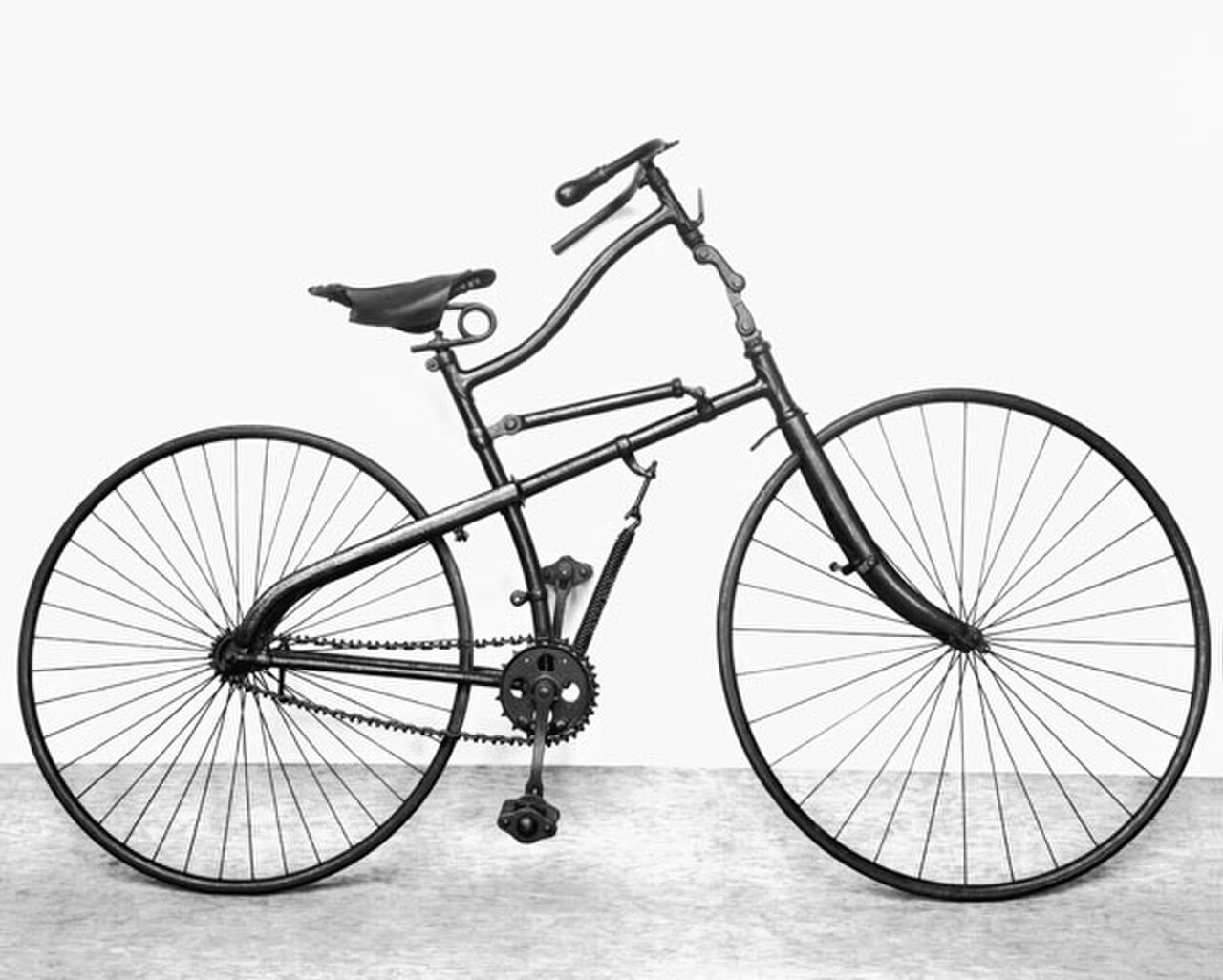
Whippet (bicycle)
The Whippet's Contribution to Bicycle Ergonomics
The Whippet bicycle, emerging from the workshops of Linley and Briggs in London around 1885-1888, represents a crucial evolutionary step in bicycle design, particularly concerning rider comfort. At a time when cycling was gaining popularity but often remained a physically demanding activity due to rough road conditions and rigid frame designs, the Whippet introduced a notable innovation: frame suspension. This was achieved through the strategic integration of springs within the bicycle's frame.
This wasn't merely a cosmetic addition; it was a functional design choice aimed at mitigating the impact of vibrations and shocks transmitted from the ground to the rider. By absorbing these disturbances, the Whippet offered a demonstrably smoother and more comfortable riding experience compared to many contemporary bicycles. This focus on ergonomics was forward-thinking, anticipating the modern emphasis on rider comfort and efficiency that characterizes bicycle engineering today.
The Whippet’s design philosophy underscored the potential for bicycles to be not just a means of transport, but a more refined and accessible form of recreation and personal mobility.
A Technological Leap
The innovation narrative of the Whippet bicycle extends beyond its suspension system to a groundbreaking development in drivetrain technology. In the summer of 1894, Linley and Briggs equipped the Whippet with an early external derailleur system, a feature that was exclusively available on their bicycles. This mechanism was revolutionary for its time, enabling riders to select between two distinct gear ratios.
This was a significant departure from the single-speed configurations that dominated the bicycle market. The ability to change gears offered substantial advantages: easier pedaling on inclines and the capacity for greater speed on descents and flat terrain. Coupled with a freewheel hub, which allowed the rider to coast without pedaling, this system provided a level of versatility and control previously unavailable.
This early derailleur was a precursor to the sophisticated multi-speed gearing systems that are now standard on virtually all modern bicycles, marking the Whippet as a key player in the early adoption of variable gearing.
Contextualizing the Whippet
The Whippet bicycle emerged during a dynamic period in the history of personal transportation. The late Victorian era saw rapid advancements in mechanical engineering, and the bicycle was a prime beneficiary of this progress. The 'safety bicycle,' with its two equal-sized wheels and chain drive, had largely replaced the precarious 'ordinary' or 'penny-farthing' bicycle, making cycling safer and more accessible.
However, comfort remained a significant challenge. The Whippet's sprung frame directly addressed this, offering a tangible improvement in ride quality. Its introduction of an early derailleur system also placed it at the forefront of drivetrain innovation.
While rudimentary by today's standards, this system demonstrated the practical benefits of variable gearing, influencing subsequent designs and contributing to the evolution of the bicycle into a more adaptable and efficient machine. The Whippet, therefore, stands as an important example of how Victorian engineers were actively experimenting with and refining bicycle technology to enhance performance and user experience.
Legacy and Influence on Modern Bicycles
While specific production numbers and widespread adoption figures for the Whippet are not extensively documented, its innovations hold considerable historical significance. The concept of frame suspension, pioneered by the Whippet, laid conceptual groundwork for the sophisticated suspension systems found on modern mountain bikes and road bikes, which dramatically improve control and comfort over varied terrains. Similarly, the Whippet's early derailleur system was a critical step in the long journey towards the highly efficient and precise gear systems used today.
It proved the viability and desirability of multi-speed bicycles, encouraging further development in this area. The Whippet’s existence highlights a period of intense experimentation and competition among bicycle manufacturers, each striving to create a superior product. Its contributions, though perhaps overshadowed by later, more refined technologies, were instrumental in shaping the trajectory of bicycle design, making them more comfortable, versatile, and ultimately, more popular.
See also
Frequently Asked Questions
What is a Whippet bicycle?+
How did the Whippet make riding smoother?+
What was special about the Whippet's gears?+
When was the Whippet made in London?+
Why were the Whippet's springs important?+
Based on content from Wikipedia · Licensed under CC BY-SA 4.0