

Wavelength: The Wiggles of Light!
Images
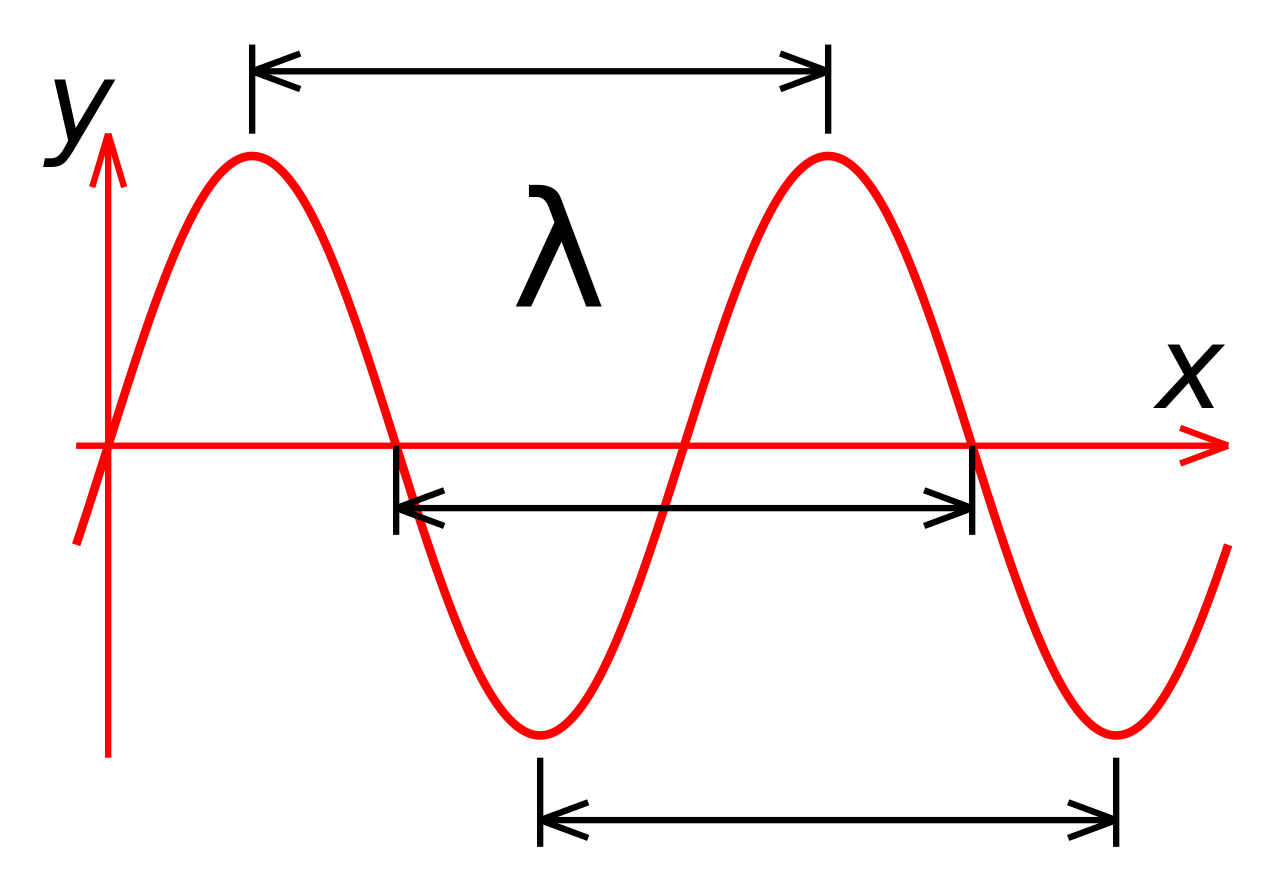
Wavelength
Defining Wavelength
Wavelength, denoted by the Greek letter lambda (λ), is a fundamental characteristic of any wave. It quantifies the spatial period of a periodic wave, representing the distance over which the wave's shape repeats. For transverse waves, like light, it's typically measured from crest to crest or trough to trough.
For longitudinal waves, like sound, it's the distance between successive compressions or rarefactions. This seemingly simple measurement is crucial because it directly correlates with other wave properties, such as frequency and energy, and dictates how waves interact with matter and propagate through space. Understanding wavelength is key to comprehending phenomena ranging from optical illusions to the behavior of subatomic particles.
The Electromagnetic Spectrum
The electromagnetic (EM) spectrum encompasses all forms of EM radiation, ordered by their wavelengths. This spectrum is vast, with wavelengths ranging from kilometers for extremely low-frequency radio waves to picometers (trillionths of a meter) for gamma rays. Visible light occupies a narrow band within this spectrum, from approximately 380 to 750 nanometers (nm).
Within this visible range, different wavelengths correspond to different colors: red light has the longest wavelengths (around 620-750 nm), while violet light has the shortest (around 380-450 nm). Beyond visible light, shorter wavelengths include ultraviolet (UV), X-rays, and gamma rays, which carry more energy and can be ionizing. Longer wavelengths include infrared (IR), microwaves, and radio waves, which carry less energy and are used extensively in communication and heating.
Acoustic Waves and Wavelength
In acoustics, wavelength is intrinsically linked to frequency and the speed of sound. The relationship is defined by the equation: speed of sound (v) = frequency (f) × wavelength (λ). This means that for a given medium where the speed of sound is constant, wavelength and frequency are inversely proportional.
High-frequency sounds (short wavelengths) are perceived as high-pitched, while low-frequency sounds (long wavelengths) are perceived as low-pitched. The speed of sound varies significantly depending on the medium's density and elasticity; it travels faster in solids than in liquids, and faster in liquids than in gases. This variation impacts the perceived wavelength of a sound at a specific frequency when it travels through different materials.
Applications and Implications
The study of wavelength has profound implications across numerous scientific and technological fields. In optics, wavelength determines phenomena like diffraction, interference, and the colors produced by thin films or gratings. Lasers, for instance, emit light of a very specific, narrow wavelength, enabling precise applications in surgery, data storage, and manufacturing.
In telecommunications, different wavelengths of radio waves and microwaves are allocated for various services, from broadcasting to mobile phone networks. At the quantum level, wavelength becomes even more critical. The de Broglie wavelength relates a particle's momentum to its wave-like properties, a concept fundamental to quantum mechanics and the understanding of phenomena like electron diffraction.
The precise control and manipulation of wavelengths are central to modern scientific inquiry and technological innovation.
Historical Context and Measurement Evolution
The concept of light as a wave, and thus having a wavelength, was established through experiments by scientists like Thomas Young in the early 19th century, who demonstrated interference patterns. Later, James Clerk Maxwell's theory of electromagnetism unified electricity, magnetism, and light, describing light as an electromagnetic wave with a specific wavelength. The precise measurement of wavelengths has evolved dramatically, from early spectroscopic techniques using prisms and gratings to modern interferometry and advanced detectors.
The development of tools like the spectrophotometer allows for the accurate analysis of light's spectral composition, crucial for fields such as chemistry, astronomy, and materials science. The ability to measure and manipulate wavelengths has been a driving force in scientific progress.
Go deeper
Frequently Asked Questions
What is a wavelength and why is it important?+
How does wavelength relate to the colors we see in a rainbow?+
Why do high‑pitched sounds have short wavelengths?+
What happens to a wave’s wavelength when it travels through a solid instead of a gas?+
How do scientists use special wavelengths in technology?+
Based on content from Wikipedia · Licensed under CC BY-SA 4.0