

Vostok 1: The First Trip to Space!
Images

Boctok (Vostok)

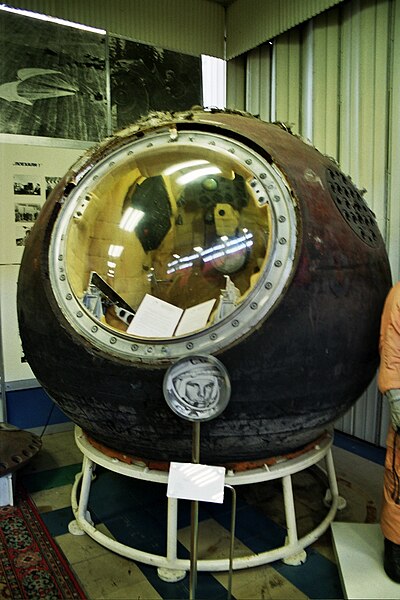


A New Era Dawns
The launch of Vostok 1 on April 12, 1961, from the Baikonur Cosmodrome was a watershed moment in human history, initiating the era of human orbital spaceflight. Piloted by Yuri Gagarin, a Soviet cosmonaut, the Vostok 3KA spacecraft completed a single orbit around the Earth, a feat that captivated the world and signaled a significant advancement in the Space Race. This mission was not merely a technological achievement; it was a profound demonstration of human capability and ambition, pushing the boundaries of exploration and scientific understanding.
The success of Vostok 1 validated the Soviet Union's early lead in space exploration and inspired generations to look towards the stars.
The Physics of Orbit
The Vostok 1 mission's core scientific objective was to achieve and maintain orbital velocity, allowing the spacecraft to circle the Earth. The flight lasted precisely 108 minutes, during which Gagarin experienced the unique conditions of space. The spacecraft's trajectory brought it as low as 169 kilometers (105 miles) above the Earth's surface at its perigee, offering a unique perspective of our planet's atmosphere and geography.
This controlled descent into the upper atmosphere and subsequent orbit demonstrated a mastery of orbital mechanics and reentry procedures, albeit with a novel landing technique that would be refined in later missions.
Engineering for the Unknown
The Vostok 3KA capsule, the vehicle for Gagarin's historic flight, was a testament to Soviet engineering prowess under immense pressure. Designed for a single orbit, its spherical shape was chosen for aerodynamic stability during reentry. It housed Gagarin in a pressurized environment, equipped with basic life support systems and controls.
The capsule's design prioritized reliability for this groundbreaking mission, with extensive testing and preparation preceding the launch. The success of Vostok 1 underscored the effectiveness of its design, even as it highlighted areas for future improvement in crew comfort and landing systems.
A Separate Descent
A distinctive feature of the Vostok 1 mission was its landing procedure. At an altitude of approximately 7 kilometers (23,000 feet), Gagarin ejected from the Vostok capsule and descended separately via parachute. This method, while effective for ensuring the cosmonaut's safe return, differed from the integrated landings of later spacecraft.
The capsule itself also deployed a parachute for a softer impact on the ground. This approach was a critical safety measure for the early Vostok program, allowing for the recovery of both the cosmonaut and the spacecraft, and providing invaluable data for subsequent missions.
Global Impact and Legacy
The successful completion of the Vostok 1 mission had profound global implications. It not only demonstrated the Soviet Union's technological superiority at the time but also ignited a renewed sense of wonder and possibility worldwide. Gagarin became an international hero, symbolizing humanity's drive to explore the cosmos.
The mission's data and experience were foundational for the entire Vostok program and subsequent Soviet crewed missions, contributing significantly to the ongoing development of space exploration technology and our understanding of human physiology in space. Vostok 1 remains a pivotal event, forever marking the beginning of humanity's journey into the final frontier.
See also
Frequently Asked Questions
What was Vostok 1 and why was it important?+
Who was the first person to fly in Vostok 1?+
How long did the Vostok 1 flight last and how far did it go?+
How did Yuri Gagarin return to Earth after the orbit?+
Why did the Vostok 1 mission matter for future space travel?+
Based on content from Wikipedia · Licensed under CC BY-SA 4.0