

The Amazing Venezuelan Bolívar!
Images

Venezuela - Léon Bourgeois - Ordre de Simón Bolívar




From Gold Standard to Economic Volatility
The Venezuelan bolívar (VEB) was established in 1879, initially operating under a bimetallic standard (gold and silver), reflecting a period of relative monetary stability in Venezuela. For much of the 20th century, it maintained a strong position, partly due to its peg to the United States dollar, which facilitated international trade and investment. This era fostered an image of the bolívar as a dependable currency.
However, this stability began to erode significantly in the 1980s, marked by the 'Viernes Negro' (Black Friday) in 1983, which signaled the start of a prolonged period of devaluation. Decades of reliance on oil revenues, coupled with fiscal policies and external economic shocks, laid the groundwork for the severe inflationary pressures that would later define the currency's trajectory, fundamentally altering its perception and utility.
The Mechanics of Monetary Overhauls
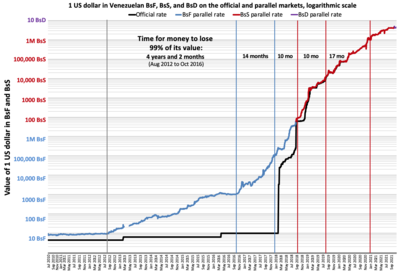
Venezuela's struggle with runaway inflation necessitated drastic measures, leading to multiple currency redenominations. The first major overhaul occurred on January 1, 2008, with the introduction of the 'bolívar fuerte' (VEF), replacing the old bolívar (VEB) at a ratio of 1 VEF to 1,000 VEB. This was an attempt to simplify accounting and restore confidence by reducing the number of zeros.
However, persistent inflation quickly diminished the 'hard bolívar's' value. A more dramatic redenomination followed on August 20, 2018, introducing the 'bolívar soberano' (VES), where 100,000 VEF became 1 VES. The most recent significant change was the 'new monetary expression' on October 1, 2021, which launched the 'bolívar digital' (VED) at a staggering rate of 1 VED to 1,000,000 VES.
This means 1 VED is equivalent to 100 trillion (10^14) of the pre-2008 bolívares. These successive redenominations, while technically simplifying numerical representation, underscore the deep-seated economic instability and the government's attempts to manage the consequences of hyperinflation.
Hyperinflation's Grip
Venezuela has endured prolonged periods of hyperinflation, a condition where the inflation rate exceeds 50% per month. This economic crisis has had devastating effects, eroding purchasing power, discouraging savings, and leading to widespread economic hardship. The government's attempts to control the exchange rate, including maintaining a subsidized rate that became increasingly detached from market realities, fueled parallel markets and further distorted the economy.
Since 2016, the country has experienced hyperinflation for substantial periods, culminating in the widespread adoption of foreign currencies, primarily the US dollar, for daily transactions. This phenomenon, known as currency substitution, signifies a profound loss of confidence in the national currency and highlights the challenges of economic management under extreme inflationary pressure. Goods and services are often priced in dollars, even if payments can technically be made in bolívares.
The Bolívar's Enduring Relevance Amidst Dollarization
Despite the pervasive use of the US dollar and, to a lesser extent, the euro and Colombian peso, the Venezuelan bolívar remains the official legal tender. The government continues to issue and manage bolívar denominations, including the digital bolívar. The coexistence of official bolívar transactions alongside widespread dollarization presents a complex economic landscape.
It reflects a dual economy where official policies and market realities diverge significantly. The bolívar's story serves as a critical case study in monetary policy, the devastating impact of hyperinflation, and the adaptive strategies populations employ when their national currency faces existential challenges. Understanding these dynamics is crucial for comprehending Venezuela's contemporary economic situation and the broader implications for emerging economies.
See also
Frequently Asked Questions
What is the Venezuelan bolívar?+
Why did Venezuela change the name of its money many times?+
How many old bolívares are needed to get one new digital bolívar?+
What is hyperinflation and how does it affect people in Venezuela?+
Do people in Venezuela still use the bolívar to buy things?+
Based on content from Wikipedia · Licensed under CC BY-SA 4.0