

Upper House: The Super-Seniors of Government!
Images

Upper House, Madeley



Defining the Upper House
An upper house, also known as a senate or a second chamber, is a fundamental component of a bicameral legislative system. It functions alongside a lower house, typically with distinct characteristics regarding membership, powers, and selection methods. Historically and often presently, upper houses are designed to be smaller and less powerful than their lower counterparts.
This asymmetry is intentional, aiming to create a deliberative body that can provide a more measured and considered review of legislation. The lower house, often more directly representative of the populace and with broader legislative initiative, can be seen as the primary engine of lawmaking, while the upper house serves as a crucial filter and revisory mechanism. The existence of an upper house is a defining feature of bicameralism, contrasting with unicameral systems where a single legislative body holds all power.
The specific balance of power between the two houses is a critical aspect of a nation's constitutional design, influencing the pace and nature of policy development.
Historical Trajectories
The concept of an upper house has evolved significantly from its historical antecedents. Early forms, such as the Roman Senate or the House of Lords in England, often represented aristocratic or hereditary privilege. These bodies were designed to safeguard the interests of the established elite and to act as a conservative force against rapid social or political change.
Over time, as democratic ideals gained prominence, the rationale for upper houses shifted. Many hereditary or appointed upper houses were reformed or replaced by elected bodies, mirroring the democratic principles of the lower house. However, the principle of having a second chamber to provide a different perspective persisted.
Modern upper houses often aim to represent regional interests (like the U.S. Senate representing states equally), provide a platform for experienced individuals or experts who may not be directly elected, or act as a safeguard against the tyranny of the majority by ensuring thorough debate and consensus-building. This evolution reflects a continuous effort to balance representation, expertise, and stability within legislative structures.
The Indispensable Role
The significance of an upper house extends beyond mere structural redundancy; it is a vital mechanism for governmental accountability and effective policymaking. Its primary function is to act as a check and balance against the potential excesses or oversights of the lower house. By requiring legislation to pass through two distinct bodies, the system encourages more thorough scrutiny, debate, and amendment.
This process helps to refine laws, identify unintended consequences, and ensure that legislation is robust, equitable, and aligned with the broader interests of the nation. Furthermore, upper houses can provide a forum for specialized knowledge and experience, bringing a depth of insight that might be less prevalent in a more politically charged lower house. They can also serve as a stabilizing influence, promoting consensus and preventing hasty decisions driven by short-term political pressures.
In essence, the upper house contributes to the legitimacy and durability of the legal framework by fostering a more deliberate and inclusive legislative process.
Mechanisms of Operation
The operational dynamics of an upper house are shaped by its composition and procedural rules. Membership can be determined through various means: direct popular election (often with longer terms than lower house members, e.g., U.S. Senate), appointment by the executive (e.g., Canadian Senate), or even hereditary succession (though increasingly rare).
The method of selection profoundly influences the house's legitimacy and its relationship with the electorate and the lower house. Legislative procedures typically involve reviewing bills passed by the lower house, proposing amendments, or initiating legislation themselves. While often possessing less power to initiate financial bills, upper houses can generally delay or reject legislation, forcing reconsideration.
Their influence can be substantial, particularly in systems where they hold significant revisionary powers or where their members are highly respected experts. The interplay between the two houses, including potential deadlocks and reconciliation processes, is a critical aspect of a bicameral government's functioning and its capacity for effective governance.
Global Variations
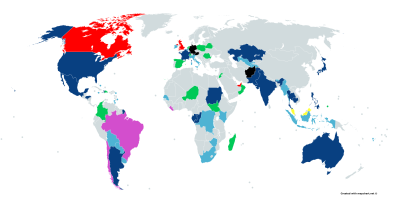
The implementation of upper houses varies dramatically across the globe, showcasing diverse approaches to legislative design. The United States Senate is a powerful example, granting equal representation to all states, irrespective of population, and possessing significant legislative and oversight powers. In contrast, the United Kingdom's House of Lords, while historically powerful, now primarily consists of appointed life peers and has limited power to block legislation. Canada's Senate is appointed by the Governor General on the advice of the Prime Minister, intended to provide regional representation and a sober second thought, though its effectiveness has been debated. Australia's Senate is directly elected, with proportional representation ensuring a broader spectrum of political views.
These examples highlight that the 'upper house' is not a monolithic concept; its powers, composition, and influence are tailored to the specific historical, political, and social context of each nation, demonstrating the adaptability and varied applications of the bicameral model.
See also
Frequently Asked Questions
What is an upper house in a government?+
Why do some countries have two houses instead of one?+
How are members of an upper house chosen?+
What is the main job of an upper house compared to a lower house?+
How has the role of upper houses changed over time?+
Based on content from Wikipedia · Licensed under CC BY-SA 4.0