

University of Manchester
Images

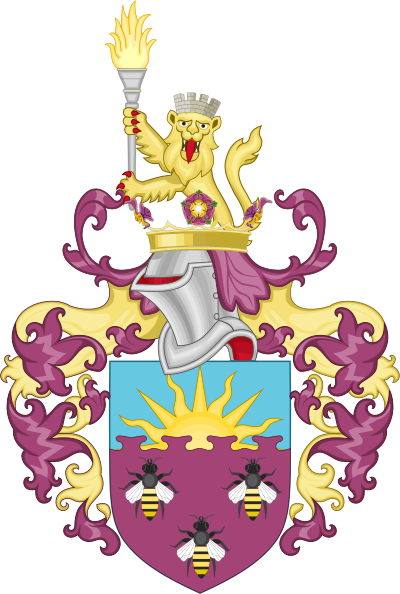
Shield of the University of Manchester






Forging Knowledge
The University of Manchester stands as a beacon of higher education in the United Kingdom, a product of the late 19th-century civic university movement. Its official foundation year is recognized as 1824, stemming from the Manchester Mechanics' Institution, which championed the belief that scientific literacy was crucial for societal progress and innovation. This institution aimed to equip working individuals with scientific knowledge relevant to their trades, fostering practical application and advancement.
Alongside this, Owens College, established in 1851, grew into the Victoria University of Manchester. The current University of Manchester was officially formed in 2004 through the merger of the Victoria University of Manchester and the University of Manchester Institute of Science and Technology (UMIST), institutions that had collaborated closely for decades. This union created a comprehensive university with a deep historical foundation, blending scientific and technological expertise with broader academic disciplines, ready to tackle the challenges of the 21st century.
A Crucible of Nobel Laureates
The University of Manchester's profound impact on the world is perhaps best illustrated by its extraordinary cohort of 26 Nobel laureates. This remarkable number, encompassing both past and present students and staff, places the university among the elite global institutions for scientific discovery. These laureates have made seminal contributions across various fields, from physics and chemistry to medicine and peace, fundamentally altering our understanding of the universe and improving human lives.
The university's commitment to research excellence is further evidenced by its membership in prestigious academic alliances like the Russell Group and the N8 Group, which facilitate collaboration and resource sharing among leading research-intensive universities. This environment cultivates groundbreaking work, ensuring Manchester remains at the forefront of scientific and intellectual advancement.
The Scale of Ambition
The sheer scale of interest in the University of Manchester is staggering. It ranks as the third-largest university in the UK by total enrollment, a testament to its broad appeal and comprehensive offerings. What truly sets it apart is its popularity among prospective students; it receives over 92,000 undergraduate applications annually, making it the most sought-after university in the UK by volume of applications.
This immense interest underscores the university's strong reputation for academic quality, cutting-edge research, and vibrant student life. It signifies a dynamic community where ambitious students from diverse backgrounds converge, eager to learn, contribute, and shape their futures within a world-class academic setting.
Guardians of Culture and Cosmic Watchers
Beyond its academic prowess, the University of Manchester is a custodian of significant cultural and scientific heritage. It owns and operates a remarkable array of institutions that enrich both the academic community and the public. These include the Manchester Museum, housing vast collections of natural history and human culture; the Whitworth art gallery, celebrated for its extensive collection of art and design; and the John Rylands Library, a stunning neo-Gothic building holding rare books and manuscripts.
Furthermore, the university manages the Jodrell Bank Observatory, a UNESCO World Heritage Site. This iconic radio telescope has played a crucial role in radio astronomy and space exploration, symbolizing humanity's quest to understand the cosmos. These assets highlight the university's multifaceted role in preserving, interpreting, and advancing human knowledge and culture.
See also
Based on content from Wikipedia · Licensed under CC BY-SA 4.0