

United States House of Representatives
Images

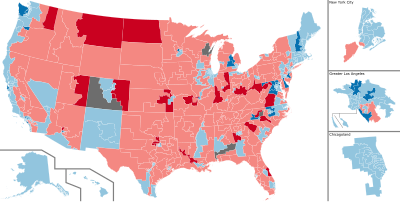
Members of the 119th United States House of Representatives




The Foundation of Representative Democracy
The United States House of Representatives stands as the lower chamber of the bicameral U.S. Congress, a fundamental pillar of American governance established by Article One of the Constitution. Its design reflects a commitment to direct representation, with members elected by the populace to serve two-year terms. This short tenure ensures a constant connection to the will of the people and encourages responsiveness to evolving public sentiment.
The House's composition is meticulously determined by state population, a principle of proportional representation that has been a source of both strength and contention throughout American history. The initial vision was to create a body that was more directly accountable to the citizenry than the Senate, which was originally chosen by state legislatures. This direct election mechanism, evolving from restricted suffrage to universal adult suffrage, underscores the House's role as the most immediate voice of the American people in the federal government.
Evolution of Representation and Membership
Since its inception in 1789, the House has undergone significant transformations in its size and the scope of its representation. The number of voting members was fixed at 435 by the Apportionment Act of 1911 and later capped by the Reapportionment Act of 1929, a number that has remained constant except for a brief period following the admission of Alaska and Hawaii. This fixed size, despite population growth, has led to an increasing number of constituents per representative, raising ongoing debates about the ideal size of the chamber.
Beyond the voting members, the House also includes non-voting delegates and a resident commissioner representing U.S. territories and the District of Columbia. These non-voting members participate in debates and committee work, offering valuable perspectives from their jurisdictions, though they cannot vote on final passage of legislation. This expansion of representation reflects a growing understanding of the diverse populations within the United States.
Exclusive Powers and Legislative Dominance
The House of Representatives wields several exclusive powers that are critical to the functioning of the U.S. government. Most notably, it holds the sole power to initiate all revenue bills, a significant check on the executive and judicial branches and a testament to its role as the chamber closest to the purse strings of the nation. This power ensures that any new taxes or spending proposals must first be debated and approved by the representatives of the people.
Furthermore, the House possesses the power of impeachment, allowing it to formally accuse federal officials, including the President, of high crimes and misdemeanors. In the rare event that no presidential candidate secures a majority in the Electoral College, the House is tasked with electing the President. These distinct authorities highlight the House's vital role in oversight, fiscal responsibility, and the ultimate accountability of public officials.
The Dynamics of the Chamber
The operational dynamics of the House are largely shaped by its two-party system. The majority party, holding more seats, controls the legislative agenda, selects committee chairs, and elects the Speaker of the House. The Speaker is a powerful figure, presiding over debates, influencing the flow of legislation, and serving as a national spokesperson for their party.
The minority party, while in opposition, plays a crucial role in scrutinizing legislation, offering amendments, and providing alternative policy proposals. This structured competition between parties, while sometimes leading to partisan gridlock, is intended to foster robust debate and ensure that a wide range of viewpoints are considered. The rules and procedures of the House are designed to manage this complex environment, facilitating the passage of legislation while allowing for thorough deliberation.
The House as a Forum for National Discourse
The House of Representatives is more than just a legislative body; it is a vital forum for national discourse and a reflection of the diverse American populace. Its members, representing districts across the nation, bring a wide array of experiences, perspectives, and constituent concerns to the floor. The debates that occur within its chambers, though often contentious, are essential for shaping public opinion and forging consensus on complex issues.
The constant cycle of elections ensures that representatives remain attuned to the needs and desires of their constituents, making the House a dynamic and ever-evolving institution. Its work directly impacts the lives of all Americans, from economic policy and national security to social issues and environmental regulations, solidifying its position as a cornerstone of American democracy.
See also
Frequently Asked Questions
What is the House of Representatives?+
How many members are in the House?+
Why do representatives only serve two years?+
What special powers does the House have?+
Who picks the Speaker of the House?+
Based on content from Wikipedia · Licensed under CC BY-SA 4.0