

Super Strong Glass!
Images
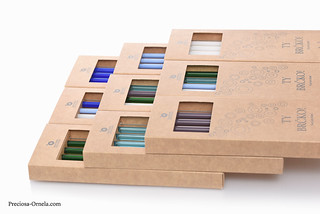
PRECIOSA Glass Straws


Defining Resilience
The term 'unbreakable glass' is a colloquialism rather than a precise scientific descriptor. It refers to glass or glass-like materials engineered to possess significantly higher resistance to fracture and impact than conventional soda-lime glass. True absolute unbreakability is an unattainable ideal in material science; instead, the focus is on enhancing fracture toughness and impact strength to levels that make them practically impervious to common forms of damage.
This involves manipulating the material's microstructure and internal stress states. Understanding this distinction is crucial, as these materials are designed to withstand stresses that would cause standard glass to fail catastrophically, thereby redefining its perceived fragility and expanding its utility.
Evolution of Strength
The journey toward stronger glass is a long one, rooted in centuries of glassmaking experimentation. Early glass was inherently brittle, a limitation that persisted for millennia. Significant advancements began with the development of tempered glass, a process involving controlled thermal or chemical treatments to induce compressive stress on the surface.
This technique, refined over time, dramatically increased impact resistance. The invention of laminated glass, pioneered in the early 20th century, offered another paradigm shift. By bonding two or more glass panes with a polymer interlayer, such as polyvinyl butyral (PVB), laminated glass prevents shattering, holding fragments together upon impact.
These foundational technologies have paved the way for sophisticated composite materials and advanced surface treatments used today.
The Societal and Industrial Imperative for Durable Glass
The drive for 'unbreakable' glass is propelled by critical needs across numerous sectors. In consumer electronics, the ubiquity of smartphones and tablets necessitates screens that can endure daily wear and tear, reducing electronic waste and repair costs. The automotive industry relies on advanced glass for enhanced passenger safety, with laminated windshields being mandatory in many regions for their ability to prevent ejection and maintain structural integrity during collisions.
In architecture and construction, high-strength glass is vital for safety glazing, security applications, and creating aesthetically pleasing yet robust structures like facades and skylights. Beyond safety, these materials contribute to sustainability by increasing product lifespans and reducing the need for frequent replacements, aligning with global efforts towards resource conservation.
Mechanisms of Resilience
The enhanced durability of 'unbreakable' glass stems from fundamental principles in materials science. Tempering, whether thermal or chemical, creates a state of residual compressive stress on the glass surface, which must be overcome before tensile stress can initiate fracture. Thermal tempering involves rapid cooling, while chemical tempering uses ion exchange at high temperatures to replace smaller ions with larger ones in the glass lattice, inducing surface compression.
Lamination, conversely, relies on the adhesive properties of the polymer interlayer. This interlayer absorbs impact energy, deforms plastically, and prevents the propagation of cracks across the entire pane. Advanced formulations may also incorporate specific dopants or alter the glass network structure at a molecular level to intrinsically improve fracture toughness, moving beyond surface treatments to bulk material properties.
Applications and Future Frontiers
The applications of advanced, highly durable glass are extensive and continually expanding. Beyond consumer electronics and automotive safety, they are found in protective eyewear, laboratory equipment, high-pressure viewing ports, and even in specialized applications like bullet-resistant glazing. Future research is exploring novel glass-ceramics and composite materials with even greater strength-to-weight ratios and tailored optical properties.
Innovations in nanotechnology and self-healing materials also hold promise for developing next-generation glass that can not only resist damage but also repair minor imperfections autonomously. The ongoing quest is to push the boundaries of material performance, making glass an even more versatile and indispensable component in technological advancement.
See also
Frequently Asked Questions
What is super strong glass?+
How do scientists make glass that doesn't break?+
Why do cars use super strong glass?+
Can super strong glass help the planet?+
Is super strong glass completely unbreakable?+
Based on content from Wikipedia · Licensed under CC BY-SA 4.0