

UEFA Nations League: The Football Showdown!
Images

UEFA-Nations-League-signage-Enschede-June-2023




The Genesis of a Modern Football Tournament
The UEFA Nations League emerged from a strategic initiative by UEFA to address the perceived shortcomings of the traditional international football calendar, particularly the proliferation of low-stakes friendly matches. Devised to increase revenue streams and provide more meaningful competitive encounters, the tournament was officially launched in September 2018. The core concept was to create a structured league system for all European national teams, fostering regular competition against similarly ranked opponents.
This approach aimed to elevate the quality and intensity of international fixtures, moving beyond mere preparation games. The sport itself is a team ball sport played with feet, requiring 11 players per team on the field, with the objective of scoring by propelling the ball into the opponent's goal, adhering to strict rules regarding ball handling and player conduct.
The Mechanics of Ascent and Descent
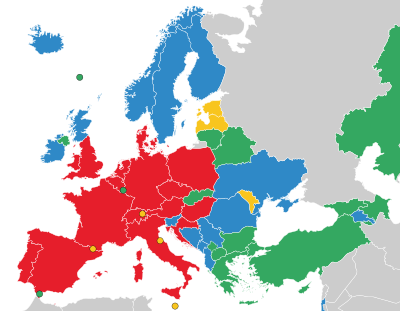
The UEFA Nations League operates on a sophisticated league structure divided into four tiers: Leagues A, B, C, and D. Each league is further subdivided into groups. Teams are seeded into these leagues based on their UEFA coefficient rankings, ensuring a degree of competitive balance.
Throughout the league phase, teams play each other within their groups, accumulating points. The primary driver of excitement and strategic depth is the promotion and relegation mechanism. Group winners in Leagues B, C, and D are promoted to the next higher league for the subsequent edition, while teams finishing last in their groups in Leagues A and B are relegated to the league below.
This system imbues every match with significant consequence, motivating teams to perform at their highest level consistently, not just for silverware but for their league status.
A Chronicle of Champions and Evolving Narratives
The inaugural UEFA Nations League tournament commenced in September 2018, culminating in the finals hosted by Portugal in June 2019. Portugal emerged as the first champions, triumphing over the Netherlands in a closely contested final. The 2021 edition saw France lift the trophy after defeating Spain in the final, with Italy securing third place by beating Belgium.
The 2023 tournament concluded with Spain claiming victory over Croatia in a dramatic penalty shootout. The most recent final in 2025 saw Portugal defeat holders Spain to secure their second title. These outcomes highlight the competitive parity and the emergence of new powerhouses within the European football landscape, demonstrating the tournament's capacity to create compelling narratives and memorable sporting moments.
Strategic Significance
The UEFA Nations League holds considerable strategic importance for European football. It provides a vital pathway for qualification for major tournaments like the UEFA European Championship, offering an alternative route for teams that may not have qualified through the traditional qualifying groups. This dual purpose enhances the value and engagement of the competition.
Furthermore, the league system ensures that teams are consistently playing meaningful matches against opponents of comparable ability, fostering player development and tactical refinement. For UEFA, it represents a successful restructuring of the international calendar, generating substantial revenue and maintaining fan interest throughout the year. The competition has fundamentally altered the dynamics of international football, creating a more engaging and meritocratic system for national teams across Europe.
See also
Based on content from Wikipedia · Licensed under CC BY-SA 4.0