

Tree topping
Images

A Bridge in the Tree Tops
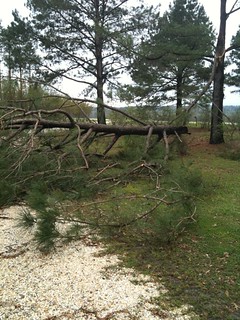


The Anatomy of Tree Topping and Its Historical Context
Tree topping, a practice often referred to by terms such as hat-racking, heading, rounding over, and tipping, involves the indiscriminate removal of a tree's terminal leader or large scaffold branches, leaving behind stubs or small lateral branches incapable of assuming the role of a new leader. Historically, topping may have been employed for various reasons, including reducing tree size for aesthetic purposes, managing clearance for infrastructure like power lines, or even as a method to stimulate coppicing for wood production in certain species.
However, its application as a general tree management technique has been widely discredited by contemporary arboricultural science. The practice fundamentally disrupts a tree's natural growth habit and structural integrity, leading to a cascade of negative physiological responses that compromise its health and longevity. Understanding the historical motivations is crucial to recognizing why this damaging technique persists in some areas despite overwhelming evidence of its detrimental effects.
Physiological Repercussions
The physiological consequences of tree topping are severe and far-reaching. The removal of a significant portion of the tree's crown, which contains the majority of its photosynthetic capacity, places immense stress on the remaining tissues. This drastic reduction in leaf surface area impairs the tree's ability to produce energy, weakening its overall vitality.
Furthermore, the large, unhealed wounds created by topping serve as prime entry points for pathogens, including fungi and bacteria, and pests such as borers. This significantly increases the tree's susceptibility to decay, disease, and infestation, often leading to a shortened lifespan. In response to the severe pruning, trees typically exhibit a vigorous, albeit weak, regrowth of numerous adventitious shoots, commonly known as water sprouts or suckers, from the cut surfaces.
These shoots are often poorly attached to the underlying wood, making them brittle and prone to failure, thus creating a new set of structural hazards that topping was sometimes intended to prevent. This creates a detrimental cycle of damage and weak regrowth.
Examining Alternatives
The perceived benefits of tree topping, such as reducing tree size or mitigating risk, are largely illusory when compared to the damage inflicted. Modern arboriculture offers a suite of scientifically validated techniques that achieve similar goals without compromising tree health. 'Reduction pruning,' for instance, involves cutting branches back to a suitable lateral branch that is at least one-third the diameter of the removed branch. This method preserves the tree's natural form, encourages strong regrowth, and maintains structural integrity. 'Thinning' selectively removes branches to improve light penetration and air circulation, reducing wind resistance and enhancing overall tree health.
For clearance issues, 'limbing up' or 'crown raising' can be employed to lift the lower canopy. These methods are designed to work with the tree's natural growth patterns, promoting resilience and longevity. The choice of alternative techniques depends on the specific tree species, its condition, and the desired outcome, but all are vastly superior to the destructive practice of topping.
Ecological and Economic Implications of Modern Arboriculture
Beyond the direct impact on individual trees, the widespread adoption of proper arboricultural practices, as opposed to topping, has significant ecological and economic benefits. Healthy, well-maintained trees contribute to urban biodiversity, provide essential ecosystem services such as air purification and stormwater management, and enhance property values. Topped trees, conversely, often require more frequent, costly interventions due to their weakened state and the hazards posed by their unstable regrowth.
They are less aesthetically pleasing and provide reduced ecological benefits. Investing in professional tree care, including proper pruning and avoiding topping, represents a long-term strategy that fosters healthier urban forests, reduces future maintenance costs associated with storm damage and disease, and preserves the environmental and aesthetic contributions of trees to our communities. The shift towards science-based arboriculture is not just about tree health; it's about sustainable urban planning and responsible environmental stewardship.
See also
Frequently Asked Questions
What is tree topping?+
Why do people sometimes cut trees this way?+
How does tree topping hurt a tree?+
Are there safer ways to trim a tree?+
Will a tree that has been topped fall down?+
Based on content from Wikipedia · Licensed under CC BY-SA 4.0