

Toy Story
Images

Toy Story : 4. Dita Doll Lost a Contact Lens


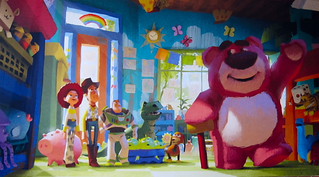

Pioneering the Digital Age of Animation
Toy Story, released in 1995, stands as a monumental achievement not just in animation but in the history of cinema. It was the first feature-length film to be entirely computer-animated, a feat that required immense technical innovation and artistic vision. Pixar Animation Studios, then a relatively small company, pushed the boundaries of what was thought possible with digital technology.
The film's creation involved developing sophisticated software and rendering techniques to bring characters and environments to life with unprecedented detail and fluidity. This technological leap transformed the animation industry, shifting the paradigm from traditional hand-drawn methods to digital workflows that would become the standard for decades to come. The visual fidelity, character expressiveness, and dynamic camera movements were revolutionary, setting a new benchmark for animated storytelling and visual effects.
Narrative Depth
Beneath its vibrant, playful surface, Toy Story delves into surprisingly complex themes. The central conflict between Woody, an outdated pull-string cowboy, and Buzz Lightyear, a state-of-the-art space ranger, explores anxieties about obsolescence and the fear of being replaced. Woody's initial jealousy stems from a primal need for relevance and affection from his owner, Andy.
This narrative arc highlights the emotional landscape of toys, driven by their core purpose: to be played with. The film masterfully balances humor and heart, exploring themes of friendship, loyalty, and the acceptance of change. The script, refined through multiple iterations, ultimately focused on the toys' profound desire for connection, making their hopes, fears, and actions deeply relatable, even to human audiences.
This emotional resonance is key to the film's enduring appeal.
A Critical and Commercial Tsunami
The impact of Toy Story was immediate and profound. Premiering in 1995, it shattered box office records, grossing over $363 million worldwide and becoming the second-highest-grossing film of its release year. Critically, it received universal acclaim, lauded for its groundbreaking animation, sharp screenplay, memorable score by Randy Newman, and exceptional voice performances, particularly from Tom Hanks as Woody and Tim Allen as Buzz Lightyear.
The film earned three Academy Award nominations, including the first-ever nomination for Best Original Screenplay for an animated film, alongside nominations for Best Original Song and Best Original Score. It also received a Special Achievement Academy Award for its technical innovation. This widespread recognition solidified its status as a landmark film, celebrated for both its artistic merit and its technical prowess.
The Enduring Franchise and Cultural Significance
The success of Toy Story was not a singular event but the genesis of a massive multimedia franchise. It spawned four highly successful sequels, a spin-off film, and numerous short features, each building upon the beloved characters and universe. The film's cultural significance was further recognized in 2005 when it was selected for preservation in the United States National Film Registry by the Library of Congress, an honor bestowed upon films deemed 'culturally, historically, or aesthetically significant.' This designation underscores its lasting impact on filmmaking and popular culture.
Toy Story demonstrated the viability and artistic potential of CGI, inspiring a generation of filmmakers and fundamentally altering the landscape of animated entertainment, proving that digital tools could be used to tell stories with profound emotional depth and universal appeal.
Go deeper
Frequently Asked Questions
What makes Toy Story special in movie history?+
Why did Woody feel jealous of Buzz Lightyear?+
How did Toy Story change the way movies are made?+
When was Toy Story released and how well did it do?+
Are there other movies or shows that came from Toy Story?+
Based on content from Wikipedia · Licensed under CC BY-SA 4.0