

Topographic map
Images

Topographic map of Tohoku, Japan
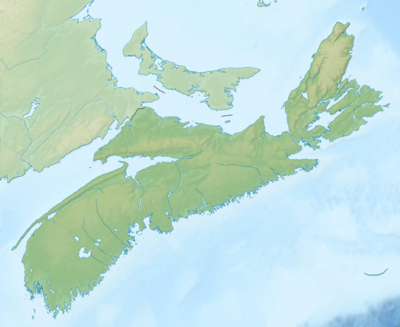


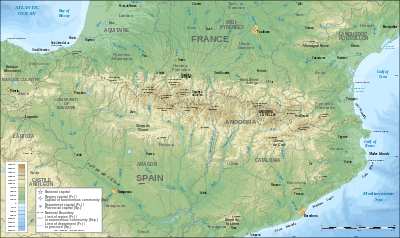


The Quantitative Representation of Relief
Topographic maps are distinguished by their quantitative representation of relief, primarily achieved through the use of contour lines. These lines, connecting points of equal elevation, provide a precise method for visualizing the three-dimensional topography of an area on a two-dimensional medium. The contour interval, the vertical distance between successive contour lines, is a critical parameter that dictates the level of detail and the perceived steepness of the terrain.
Closely spaced contour lines indicate a steep gradient, signifying rapid changes in elevation, while widely spaced lines denote a gentle slope or relatively flat terrain. Historically, various methods were employed, but contour lines became the standard for their accuracy and information density. Beyond relief, these maps systematically depict a wide array of natural features, including hydrography (rivers, lakes, coastlines) and vegetation cover, alongside man-made elements such as infrastructure, buildings, and administrative boundaries.
This comprehensive portrayal makes them indispensable for detailed spatial analysis and planning.
Evolution of Topographic Mapping
The history of topographic mapping is a testament to humanity's drive for accurate spatial understanding. Early efforts relied on rudimentary surveying techniques, often involving triangulation and leveling over vast distances, a process that was labor-intensive and prone to cumulative errors. The development of more sophisticated instruments, such as theodolites and later tacheometers, significantly improved accuracy and efficiency.
The advent of aerial photography in the early 20th century revolutionized mapping, allowing for the capture of vast amounts of terrain data from above. Photogrammetry, the science of making measurements from photographs, became a cornerstone of topographic map production. In the digital age, Geographic Information Systems (GIS) and remote sensing technologies, including satellite imagery and LiDAR (Light Detection and Ranging), have further transformed the field.
These technologies enable the creation of highly detailed digital elevation models (DEMs) and the rapid generation of topographic maps, often published as standardized map series based on common geodetic frameworks and national grid systems.
Distinguishing Topographic Maps
Topographic maps occupy a specific niche within the broader spectrum of cartography, differentiated from other map types by their primary focus and data representation. Unlike planimetric maps, which depict only horizontal positions of features and lack elevation data, topographic maps explicitly represent relief. They are also distinct from chorographic maps, which cover larger geographical regions at smaller scales and tend to generalize features.
Thematic maps, while valuable, focus on a single topic or variable (e.g., population density, climate zones) and do not typically provide the detailed topographical information characteristic of topographic maps. Although in popular usage, any map showing elevation might be casually referred to as 'topographic,' technically, a true topographic map is characterized by its large scale, detailed representation of both natural and artificial features, and quantitative depiction of relief, usually through contour lines, all underpinned by a rigorous geodetic framework.
The Multifaceted Applications of Topographic Maps in Modern Society
The utility of topographic maps extends far beyond simple navigation. In civil engineering and urban planning, they are fundamental for site selection, infrastructure design (roads, dams, pipelines), and land-use management, helping to mitigate risks associated with slope stability and water runoff. Geologists and environmental scientists rely on them for studying landforms, understanding geological processes, mapping soil types, and assessing hazards like landslides and erosion. Emergency services and disaster management teams use topographic maps for planning evacuation routes, coordinating rescue efforts, and understanding terrain during natural disasters.
Furthermore, they are essential tools for military operations, resource exploration (mining, oil, gas), and recreational activities such as hiking, mountaineering, and off-road vehicle use. The detailed information they provide empowers informed decision-making across a vast range of disciplines and activities, underscoring their enduring importance in our technologically advanced world.
See also
Frequently Asked Questions
What is a topographic map?+
How do contour lines show how steep a hill is?+
Why are topographic maps useful for hiking?+
How did people make topographic maps before computers?+
What technology helps make modern topographic maps?+
Based on content from Wikipedia · Licensed under CC BY-SA 4.0