

Titanium
Images
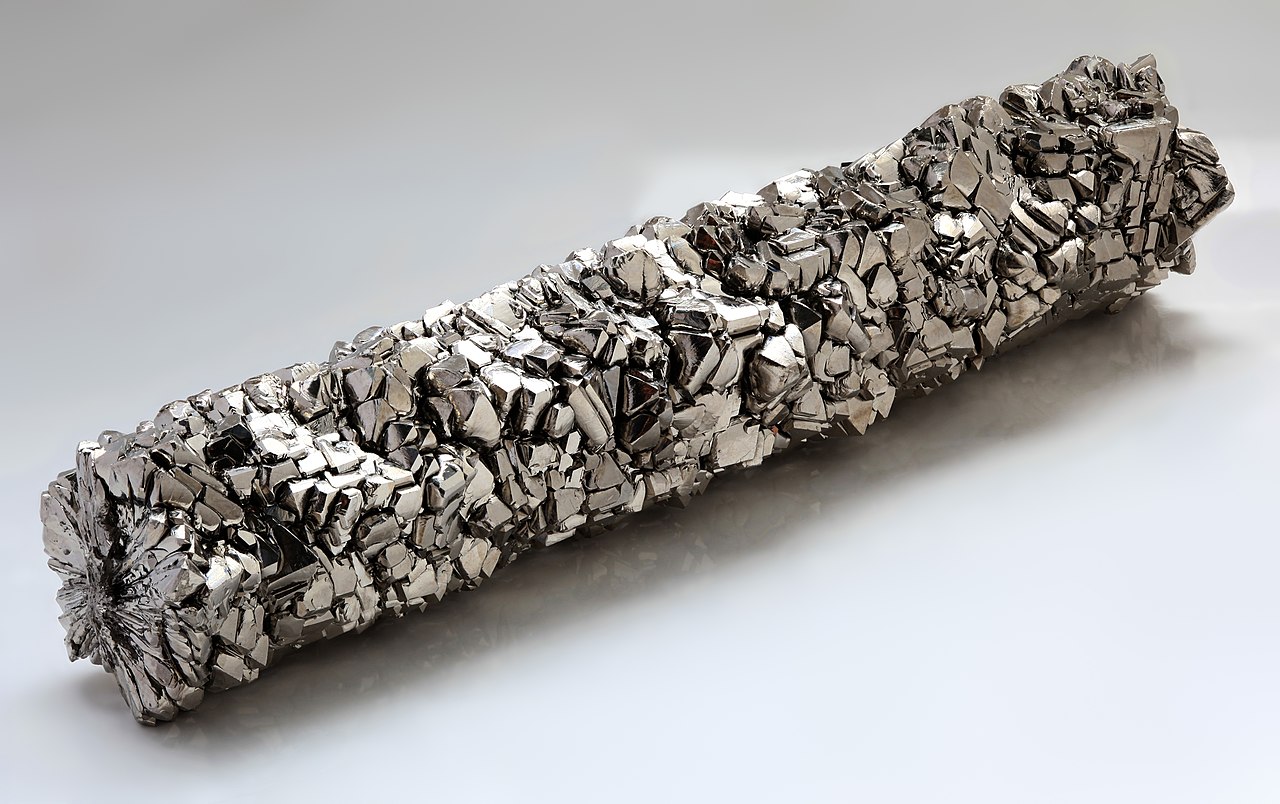
Titanium


From Obscurity to Indispensability
Titanium (Ti), atomic number 22, is a transition metal celebrated for its remarkable combination of properties. Its discovery in 1791 by William Gregor, who identified it in the mineral menaccanite (later identified as ilmenite), marked the beginning of a long journey to harness its potential. For over a century, the extreme difficulty in isolating pure titanium, primarily due to its reactivity at high temperatures, limited its practical application.
The Kroll process, developed in the 1940s, finally enabled efficient and cost-effective production of titanium sponge, paving the way for its widespread industrial adoption. This breakthrough was critical for industries demanding high-performance materials, transforming titanium from a scientific curiosity into a strategic element.
The Intrinsic Advantages
Titanium's allure lies in its exceptional strength-to-weight ratio, often exceeding that of many steels while being approximately 45% lighter. This characteristic is paramount in weight-sensitive applications. Its high tensile strength and fatigue resistance ensure longevity and reliability under stress.
Crucially, titanium exhibits outstanding corrosion resistance, particularly in oxidizing environments. This is attributed to the spontaneous formation of a tenacious, passive titanium dioxide (TiO2) surface layer. This oxide film is chemically inert, preventing corrosive agents from attacking the underlying metal.
Furthermore, titanium possesses a high melting point and maintains its strength at elevated temperatures, making it suitable for demanding thermal environments. Its non-magnetic nature is also a beneficial attribute in specific technological contexts.
Ubiquitous Applications
The aerospace sector is a primary consumer of titanium alloys, utilizing them extensively in airframes, engine components (like compressor blades and discs), and landing gear, where weight reduction directly translates to fuel efficiency and increased payload capacity. In the automotive industry, titanium finds use in high-performance vehicles for components such as exhaust systems, engine valves, and suspension parts, contributing to both performance and durability. The medical field heavily relies on titanium's biocompatibility and corrosion resistance for implants.
Orthopedic implants, including hip and knee prostheses, dental implants, and surgical instruments, are commonly made from titanium alloys because the human body readily accepts them, and they can withstand the rigors of physiological stress without degradation. Beyond these, titanium is employed in marine engineering, chemical processing equipment, sporting goods, and even consumer electronics for its durability and aesthetic appeal.
Metallurgical Mastery
Titanium itself is rarely used in its pure form; instead, it is alloyed with other elements like aluminum, vanadium, molybdenum, and tin to enhance specific properties. For instance, Ti-6Al-4V is a widely used alpha-beta alloy known for its excellent balance of strength, toughness, and weldability. The processing of titanium is complex due to its high melting point and reactivity.
Techniques like vacuum arc remelting (VAR) and electron beam melting (EBM) are employed to produce high-purity titanium ingots. Forming titanium often requires specialized methods, such as forging, rolling, or casting, often at elevated temperatures, to achieve desired shapes and microstructures. Understanding these metallurgical principles is key to unlocking titanium's full potential for advanced engineering solutions.
Titanium's Future Frontiers
The ongoing research into titanium focuses on developing new alloys with even superior properties, such as enhanced creep resistance or improved fracture toughness. Additive manufacturing (3D printing) is revolutionizing how titanium parts are made, allowing for complex geometries and on-demand production, particularly beneficial for aerospace and medical applications. Furthermore, efforts are being made to improve the sustainability of titanium production, which is currently energy-intensive. Recycling titanium scrap and developing more efficient extraction and processing methods are crucial for reducing its environmental footprint.
As technology advances, titanium's role is expected to grow, driven by its unparalleled combination of strength, lightness, and resilience.
Go deeper
Frequently Asked Questions
What is titanium and why is it special?+
How did people learn to use titanium?+
Where do we find titanium in everyday life?+
Why is titanium good for medical implants?+
How is titanium made into useful shapes?+
Based on content from Wikipedia · Licensed under CC BY-SA 4.0