

The Big Bang: How Everything Started!
Images

Plaque for Aikavaellus

The Genesis Event
The Big Bang theory posits that the universe originated from an extremely hot, dense state, often referred to as a singularity, approximately 13.8 billion years ago. This was not an explosion in pre-existing space, but rather the rapid expansion of spacetime itself. The earliest moments are characterized by extreme conditions where our current laws of physics break down.
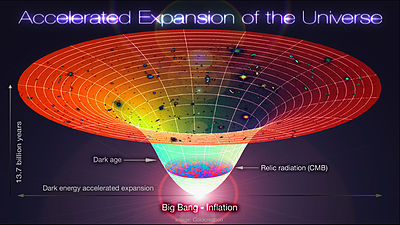
A crucial, though hypothetical, phase immediately following the initial expansion is cosmic inflation. This period of exponential growth, lasting for a tiny fraction of a second, is thought to have smoothed out initial irregularities, explaining the remarkable homogeneity and flatness of the observable universe. Inflation also provides a mechanism for generating the primordial density fluctuations that would later seed the formation of large-scale structures like galaxies.
The Primordial Soup
As the universe expanded and cooled, fundamental particles began to interact. Within the first few minutes, a process known as Big Bang nucleosynthesis occurred, where protons and neutrons fused to form the nuclei of light elements, primarily hydrogen (deuterium), helium, and trace amounts of lithium. The predicted abundances of these elements remarkably match observations, serving as a cornerstone of the Big Bang model.
For the next few hundred thousand years, the universe remained an opaque plasma of charged particles and photons. Around 380,000 years after the Big Bang, the universe cooled sufficiently for electrons to combine with nuclei, forming neutral atoms. This event, called recombination, decoupled matter from radiation, allowing photons to travel freely.
This released light is what we observe today as the Cosmic Microwave Background (CMB) radiation.
The Cosmic Dark Ages and the Dawn of Structure
Following recombination, the universe entered a period known as the 'Cosmic Dark Ages,' as there were no stars or other luminous objects. However, the slight density variations imprinted during inflation and amplified by gravity began to draw matter together. Over hundreds of millions of years, these overdense regions collapsed, forming the first stars (Population III stars) and eventually the first galaxies.
These early stars were massive, short-lived, and composed almost entirely of hydrogen and helium. Their explosive deaths (supernovae) synthesized heavier elements and dispersed them into the intergalactic medium, enriching it and paving the way for subsequent generations of stars and planetary systems. The formation of galaxies and larger cosmic structures like galaxy clusters is a direct consequence of these initial density fluctuations.
The Big Bang's Enduring Significance and Modern Relevance
The Big Bang theory provides the overarching cosmological framework, explaining the observed expansion of the universe, the abundance of light elements, and the existence of the CMB. Its significance lies in its ability to unify diverse astronomical observations into a coherent narrative of cosmic evolution. Modern cosmology continues to refine and test this model.
For instance, the discovery of dark matter and dark energy, which constitute the vast majority of the universe's mass-energy content, has led to the Lambda-CDM (ΛCDM) model, an extension of the Big Bang theory that incorporates these enigmatic components. Understanding the Big Bang is crucial for comprehending our place in the cosmos, the processes that led to the formation of stars and planets, and the ultimate fate of the universe.
Observational Pillars
The Big Bang theory is not merely a theoretical construct; it is robustly supported by multiple lines of observational evidence. Edwin Hubble's discovery in the late 1920s that galaxies are systematically receding from us, with their recession velocity proportional to their distance (Hubble's Law), provided the first strong evidence for an expanding universe. The Cosmic Microwave Background (CMB) radiation, discovered serendipitously by Penzias and Wilson in 1964 and meticulously mapped by missions like COBE, WMAP, and Planck, is perhaps the most compelling evidence.
Its near-perfect blackbody spectrum and tiny temperature fluctuations (anisotropies) precisely match the predictions of the Big Bang model, revealing the imprint of primordial density variations. Furthermore, the observed abundances of light elements (hydrogen, helium, lithium) in the universe align with the predictions of Big Bang nucleosynthesis, providing quantitative validation of the early universe's conditions.
See also
Frequently Asked Questions
What was the Big Bang and when did it happen?+
Why did the universe start to cool and form atoms?+
How did the first stars and galaxies form?+
What is the Cosmic Microwave Background and why is it important?+
What are dark matter and dark energy in the Big Bang story?+
Based on content from Wikipedia · Licensed under CC BY-SA 4.0