

Thomas Harriot
Images

Mulier ex Virginia (titel op object) Klederdracht van vrouwen uit verschillende landen (serietitel), RP-P-OB-11.540


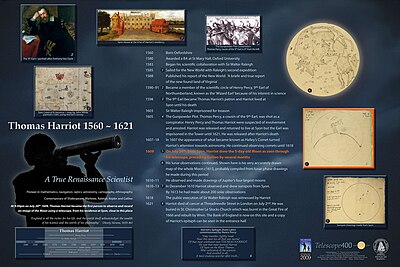


The Unsung Architect of Binary and Lunar Cartography
Thomas Harriot (c. 1560–1621) stands as a figure whose profound intellectual contributions were obscured by his reluctance to publish. Educated at Oxford, Harriot’s intellectual trajectory diverged into practical applications and theoretical exploration. His journey to Roanoke Island in 1585, accompanying Sir Ralph Lane’s expedition, was not merely an adventure but a critical ethnographic mission.
Harriot’s fluency in the Carolina Algonquian language, learned from figures like Manteo and Wanchese, allowed for unprecedented inter-cultural exchange and detailed documentation. His seminal work, 'The Briefe and True Report of the New Found Land of Virginia' (1588), offered a comprehensive account of the region's flora, fauna, and native societies, serving as a vital resource for subsequent English colonization efforts. Beyond his ethnographic work, Harriot’s scientific acumen was extraordinary.
He is credited with developing binary notation and arithmetic decades before Leibniz, a system fundamental to modern digital computation. This work, rediscovered in the 20th century, places him at the forefront of mathematical innovation, highlighting a significant gap in historical scientific recognition.
Pioneering Astronomical Observation and Optical Theory
Harriot's astronomical achievements are particularly remarkable, especially his early use of the telescope. On August 5, 1609, approximately four months before Galileo Galilei published his own lunar observations, Harriot meticulously drew the Moon's surface. These drawings, based on telescopic viewing, revealed topographical features such as craters and mountains, challenging the prevailing Aristotelian view of perfect celestial spheres.
This early work in lunar cartography predates similar, more widely recognized efforts and underscores Harriot's observational prowess. Furthermore, Harriot conducted significant research into the theory of refraction, investigating how light bends as it passes through different media. This theoretical work laid groundwork for understanding optics, lenses, and the very nature of vision, impacting fields ranging from navigation to the design of scientific instruments.
His deep engagement with mathematics, including advanced algebra and geometry, provided the rigorous foundation for these diverse scientific inquiries.
Navigational Science and the Introduction of New World Crops
Beyond theoretical science, Harriot made significant contributions to practical navigation. His work with advanced mapping techniques, often in collaboration with cartographers like John White, was crucial for maritime exploration during the Age of Discovery. Understanding celestial movements and the principles of optics, Harriot’s insights likely improved methods for determining latitude and longitude, essential for long-distance sea voyages.
His role extended to the introduction of New World crops to Europe. He is often credited with bringing the potato to the British Isles. While the potato’s journey to widespread adoption was complex, Harriot's involvement marks a significant moment in the Columbian Exchange, fundamentally altering European agriculture and diet.
This dual focus on theoretical understanding and practical application exemplifies Harriot's comprehensive approach to knowledge.
The Conundrum of Unseen Genius
The primary reason Thomas Harriot remains relatively obscure is his profound aversion to publishing his findings. While he produced a vast corpus of work across multiple disciplines, only 'The Briefe and True Report' saw print during his lifetime. His extensive manuscripts, filled with revolutionary mathematical concepts and astronomical observations, were largely confined to private study and correspondence.
This self-imposed obscurity meant that many of his discoveries, such as binary arithmetic and early telescopic lunar drawings, were independently rediscovered or attributed to others centuries later. His later years were spent under the patronage of the 9th Earl of Northumberland, continuing his studies in relative seclusion. The posthumous rediscovery of his papers has gradually reshaped our understanding of 17th-century science, revealing Harriot as a visionary thinker whose intellectual legacy, though delayed, is now increasingly recognized for its foundational importance.
See also
Frequently Asked Questions
Who was Thomas Harriot?+
What did Thomas Harriot do with a telescope?+
How did Thomas Harriot help people learn about Native Americans?+
Did Thomas Harriot bring the potato to Britain?+
What is binary notation and why is it important?+
Based on content from Wikipedia · Licensed under CC BY-SA 4.0