

The Wealth of Nations
Images
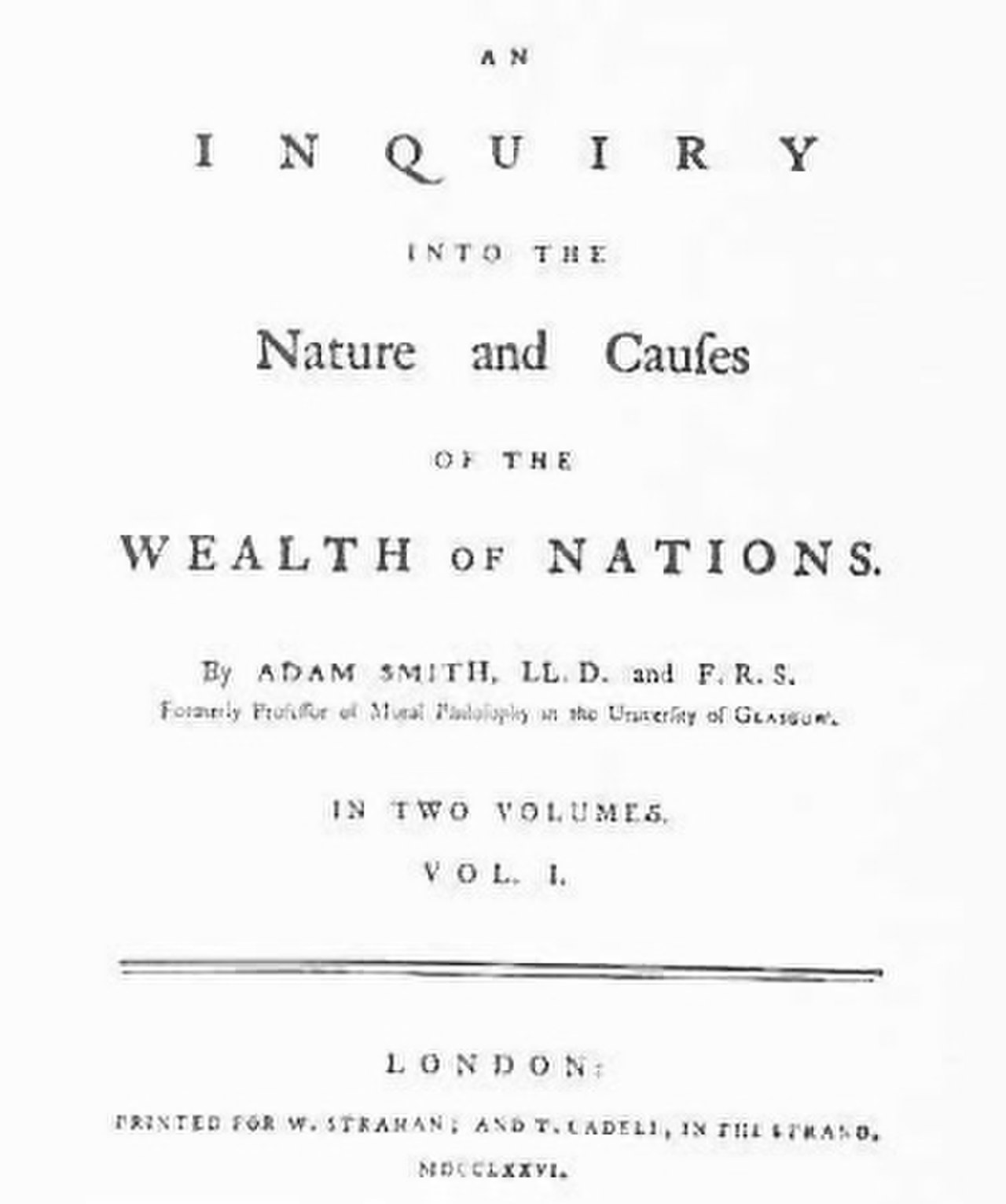
The Wealth of Nations
Foundations of Classical Economics
Adam Smith's 'An Inquiry into the Nature and Causes of the Wealth of Nations,' published in 1776, fundamentally shifted economic thought away from the prevailing mercantilist doctrine. Mercantilism posited that national wealth was measured by the accumulation of precious metals, achieved through a positive balance of trade (exporting more than importing) and government intervention. Smith countered this by asserting that a nation's true wealth lay in its productive capacity – the annual labor and output of its people.
He argued that economic growth stemmed not from hoarding gold, but from increasing productivity through the division of labor and the expansion of markets. This paradigm shift laid the groundwork for classical economics, emphasizing individual liberty and limited government intervention in economic affairs.
The Engine of Productivity
Smith's detailed analysis of the division of labor, famously illustrated by the pin factory example, remains a cornerstone of economic theory. He meticulously explained how breaking down production into specialized, repetitive tasks dramatically enhances efficiency. This specialization leads to increased dexterity for workers, saves time by eliminating the need to switch between different tools and tasks, and encourages the invention of machinery that can automate specific processes.
The cumulative effect is a massive increase in output per worker, driving down costs and making goods more accessible. This concept underscores the importance of human capital development and efficient production processes in generating national wealth.
The 'Invisible Hand' and the Self-Regulating Market
The metaphor of the 'invisible hand' is perhaps Smith's most enduring contribution, describing how individuals pursuing their own economic self-interest, within a framework of competition and property rights, inadvertently promote the overall welfare of society. Smith argued that the pursuit of profit motivates entrepreneurs to produce goods and services that consumers desire, allocate resources efficiently, and innovate. This decentralized decision-making process, driven by market signals like prices, acts as an 'invisible hand' guiding economic activity towards socially beneficial outcomes, often more effectively than central planning.
This principle champions laissez-faire economics, advocating for minimal government interference in market operations.
The Case for Laissez-Faire and Free International Trade
Smith was a staunch advocate for laissez-faire policies, believing that governments should primarily focus on national defense, administering justice, and providing essential public works that private enterprise could not adequately supply. He argued that excessive government regulation, monopolies, and protectionist trade policies stifled competition, hindered innovation, and ultimately reduced national wealth. His arguments for free international trade were particularly potent, positing that nations should specialize in producing goods where they possess a comparative advantage and engage in voluntary exchange.
This global division of labor, he contended, leads to greater efficiency, lower prices for consumers, and a more robust global economy, benefiting all participating nations.
Enduring Legacy and Modern Relevance
'The Wealth of Nations' has had a profound and lasting impact on economic thought and policy worldwide. Its principles continue to inform debates on globalization, market regulation, and the role of government in the economy. While modern economics has evolved significantly, incorporating insights from behavioral economics, game theory, and macroeconomics, Smith's foundational ideas about the power of markets, specialization, and free trade remain remarkably relevant.
His work serves as a critical reference point for understanding the historical development of economic systems and continues to inspire discussions about how to foster sustainable prosperity and economic growth in the 21st century.
See also
Frequently Asked Questions
What is "The Wealth of Nations" about?+
Why did Adam Smith say that a country's wealth comes from people working, not from gold?+
How does breaking up work into small tasks help make more products?+
What does the "invisible hand" mean in simple words?+
Why does Adam Smith think governments should not interfere too much with businesses?+
Based on content from Wikipedia · Licensed under CC BY-SA 4.0