

The Moody Blues: Rock Stars Who Mixed Music!
Images

Metallic Moody Blues Demi Parure Set




Genesis of Innovation
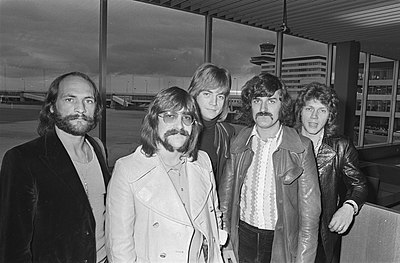
The Moody Blues emerged from Birmingham, England, in May 1964, initially as a quintet steeped in the British beat and R&B scene. Their early sound, characterized by the raw energy of bands like The Beatles and The Rolling Stones, quickly garnered attention. Their first major success arrived with the UK No. 1 and US Top 10 single 'Go Now' in late 1964/early 1965, a soulful R&B-infused track that showcased their burgeoning talent.
However, the band's trajectory was far from static. Following the departure of Denny Laine and Clint Warwick in 1966, the remaining members, Graeme Edge, Mike Pinder, and Ray Thomas, strategically recruited Justin Hayward and John Lodge. This pivotal lineup shift marked the beginning of a profound artistic evolution, setting the stage for their groundbreaking foray into new musical territories.
The band's ability to adapt and reinvent themselves was a key factor in their longevity and influence.
The 'Days of Future Passed' Revolution
The late 1960s witnessed a seismic shift in popular music, and The Moody Blues were at the vanguard of this psychedelic revolution. Their 1967 masterpiece, 'Days of Future Passed,' stands as a monumental achievement, a daring and successful fusion of rock instrumentation with the grandeur of classical music, performed in collaboration with the London Festival Orchestra. This wasn't merely an embellishment; it was a profound integration that created a rich, multi-layered sonic tapestry.
The album is widely regarded as a landmark in music history, often cited as one of the first truly successful concept albums, weaving a narrative through its tracks and exploring themes of a day in the life. This innovative approach firmly established The Moody Blues as pioneers of art rock and progressive rock, influencing generations of musicians to push the boundaries of genre.
A Prolific Period
The period following 'Days of Future Passed' saw The Moody Blues release a remarkable string of six more studio albums, solidifying their status as titans of progressive rock. Albums such as 'In Search of the Lost Chord' (1968), 'On the Threshold of a Dream' (1969), 'To Our Children's Children's Children' (1969), 'A Question of Balance' (1970), 'Every Good Boy Deserves Favour' (1971), and 'Seventh Sojourn' (1972) were not just commercially successful but critically acclaimed for their artistic depth and thematic coherence.
These records yielded a treasure trove of FM radio hits that remain iconic: 'Nights in White Satin,' a hauntingly beautiful ballad that transcended its initial release to become a perennial classic; 'Tuesday Afternoon,' an uplifting ode to simple pleasures; 'Question,' a politically charged anthem; 'The Story in Your Eyes,' a poignant reflection on perception; 'Isn't Life Strange,' a philosophical musing; and 'I'm Just a Singer (In a Rock and Roll Band),' a declaration of artistic identity.
Their music consistently explored profound themes, inviting listeners into introspective journeys.
Evolution, Legacy, and Rock and Roll Hall of Fame Recognition
After a hiatus in 1974, The Moody Blues reconvened in 1977, though Mike Pinder departed the following year, replaced by Yes keyboardist Patrick Moraz. The 1980s saw the band embrace a more synth-pop-oriented sound, achieving significant chart success with hits like 'Gemini Dream,' 'The Voice,' 'Your Wildest Dreams,' and 'I Know You're Out There Somewhere.' Notably, 'Your Wildest Dreams' made The Moody Blues the first act to achieve its first three Top 10 singles in the United States across three different decades, a testament to their enduring appeal.
The band continued to evolve, with Moraz departing in 1991 and Ray Thomas in 2002. Though album releases ceased after 2003, they remained active touring artists throughout the 2000s and beyond, reuniting for special events until the retirement of Graeme Edge in 2018, the last original member. Their immense impact is underscored by worldwide sales of over 70 million albums, including 18 platinum and gold LPs, and their well-deserved induction into the Rock and Roll Hall of Fame in 2018, cementing their legacy as true innovators.
See also
Frequently Asked Questions
What made The Moody Blues special in rock music?+
How did The Moody Blues start and become famous?+
Why is the album "Days of Future Passed" important?+
Who joined the band after 1966 and why?+
What are some famous songs by The Moody Blues?+
Based on content from Wikipedia · Licensed under CC BY-SA 4.0