

Tevatron
Images

Tevatron




Engineering the Extremes
The Tevatron was a marvel of engineering, a 3.9-mile (6.3 km) circumference synchrotron accelerator designed to collide beams of protons and anti-protons at extremely high energies. Its operational heart lay in its 774 dipole superconducting magnets, cooled to 4.2 Kelvin (-269 degrees Celsius) using liquid helium. These magnets were crucial for bending the particle beams around the ring, guiding them at energies up to 1 TeV (Tera-electronvolt) per beam.
The acceleration process involved radiofrequency cavities that provided the energy kicks, boosting the particles to their final energy of 980 GeV (Giga-electronvolts) per beam, resulting in a center-of-mass collision energy of up to 1.96 TeV. The beams were injected from a series of pre-accelerators, including the Main Ring, which itself was a significant accelerator. Two major experiments, CDF and DØ, were situated at interaction points around the ring, housing massive, complex detectors – some as tall as a 6-story building – designed to reconstruct the trajectories, energies, and identities of the myriad particles produced in these high-energy collisions.
The sheer scale and precision required to maintain stable beams and collect data were unprecedented.
A Legacy Forged in Discovery
Inaugurated in 1983 and undergoing upgrades that significantly boosted its energy and luminosity, the Tevatron became a cornerstone of experimental particle physics for nearly three decades. Its most celebrated achievement was the independent discovery of the top quark by the CDF and DØ collaborations in 1995. The top quark, with a mass approximately 173 times that of the proton, was the last fundamental fermion predicted by the Standard Model to be found.
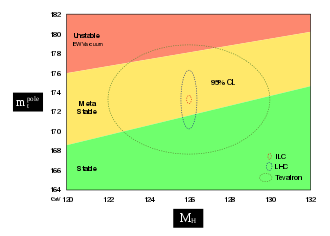
Its discovery was a monumental validation of the model's predictive power. Beyond the top quark, the Tevatron provided incredibly precise measurements of the properties of the W and Z bosons, further solidifying the electroweak theory. It also conducted extensive searches for new physics, including supersymmetry and extra dimensions, and played a vital role in precisely measuring the mass of the Higgs boson, setting crucial constraints that guided future research at the Large Hadron Collider (LHC).
Decommissioning and Impact
The Tevatron ceased operations on September 30, 2011, marking the end of an era in particle acceleration. The decision to shut down was driven by a combination of factors, including the increasing energy reach of the LHC at CERN and the significant operational costs associated with maintaining such a large facility. However, the scientific legacy of the Tevatron is far from over.
The vast datasets collected during its operational life continue to be analyzed, yielding new insights and pushing the boundaries of our understanding. The technological advancements pioneered for the Tevatron, particularly in superconducting magnet technology, cryogenics, vacuum systems, and detector instrumentation, have had a lasting impact, influencing subsequent accelerator projects and finding applications in fields such as medical imaging (MRI) and fusion energy research. The Tevatron stands as a testament to human ingenuity and our relentless pursuit of fundamental knowledge.
Beyond the Standard Model
While the Tevatron's direct experimental program concluded, its influence on the future direction of particle physics is undeniable. The precise measurements it provided, especially concerning the properties of known particles like the W boson and the Higgs boson, have set stringent benchmarks for theoretical models. Any deviation from these precise measurements could signal the presence of new, undiscovered particles or forces.
The Tevatron's extensive searches for phenomena beyond the Standard Model, even if they didn't yield direct discoveries, placed important limits on the masses and interaction strengths of hypothetical particles like those predicted by supersymmetry. This information is invaluable for guiding the experimental strategies of current and future colliders, including the LHC. The Tevatron's data continues to be a rich resource for exploring subtle anomalies and refining our understanding of the fundamental laws of nature, ensuring its scientific relevance for years to come.
Go deeper
Frequently Asked Questions
What was the Tevatron and where was it located?+
How did the Tevatron make particles move so fast?+
Why was the Tevatron famous for discovering the top quark?+
When did the Tevatron stop working and why?+
How are the Tevatron's inventions useful today?+
Based on content from Wikipedia · Licensed under CC BY-SA 4.0