

Tesla, Inc.
Images

Elon Musk #ElonMusk




Genesis and Evolution
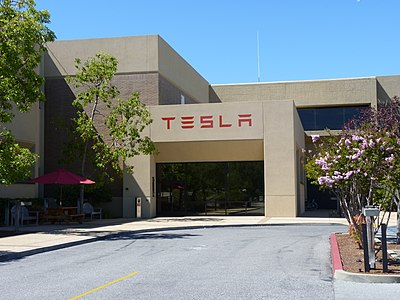
Tesla, Inc., originally incorporated as Tesla Motors in July 2003, was founded by Martin Eberhard and Marc Tarpenning with the explicit goal of demonstrating that electric vehicles (EVs) could outperform gasoline-powered cars. The company's name honors the pioneering Serbian-American inventor Nikola Tesla, whose work laid foundational principles for modern alternating current (AC) electrical systems.
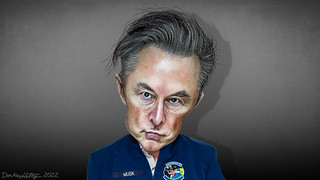
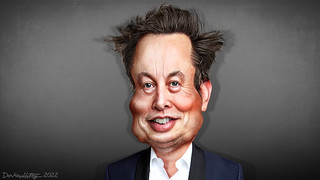
A pivotal moment occurred in February 2004 when Elon Musk led Tesla's initial funding round, injecting crucial capital and taking on the role of chairman. His leadership intensified in 2008 when he became CEO, steering the company through its most formative years. The launch of the Tesla Roadster in 2008 was a landmark achievement, proving that EVs could be high-performance sports cars, not just utilitarian vehicles.
This success set the stage for subsequent models: the luxury Model S sedan (2012), the versatile Model X SUV (2015), the mass-market Model 3 sedan (2017), and the popular Model Y crossover (2020). More recently, Tesla has expanded into commercial vehicles with the Tesla Semi truck (2022) and the distinctive Cybertruck pickup (2023), showcasing a broad spectrum of electric mobility solutions.
Beyond Automotive
Tesla's strategic vision extends significantly beyond its automotive division, aiming to create a holistic sustainable energy ecosystem. The company designs, manufactures, and sells stationary battery energy storage solutions, ranging from residential Powerwall units capable of backing up homes during outages to grid-scale Megapack systems that stabilize electrical networks. This diversification is complemented by their solar energy products, including traditional solar panels and innovative solar shingles that integrate seamlessly into building aesthetics while generating clean electricity.
By combining electric vehicles with renewable energy generation and storage, Tesla seeks to provide consumers and utilities with comprehensive solutions that reduce reliance on fossil fuels. This integrated approach positions Tesla not just as an automaker, but as a multifaceted clean energy technology company driving systemic change.
Technological Prowess and Performance Benchmarks
The allure of Tesla vehicles lies in their advanced technological integration and exceptional performance metrics. Electric motors provide instant torque, enabling rapid acceleration that often surpasses comparable internal combustion engine vehicles. For instance, many Tesla models can achieve 0-60 mph in under 3 seconds, placing them in supercar territory.
The interior design philosophy emphasizes minimalism, with large central touchscreens serving as the primary interface for vehicle controls, navigation, entertainment, and connectivity. Tesla is also a leader in developing and deploying advanced driver-assistance systems (ADAS), such as Autopilot and Full Self-Driving (FSD) capabilities, which aim to enhance safety and convenience through features like adaptive cruise control, lane keeping, and automated parking. The company's commitment to over-the-air (OTA) software updates allows vehicles to continuously improve and gain new functionalities post-purchase, a paradigm shift from traditional automotive models.
Market Dominance, Valuation, and Societal Scrutiny
Tesla's market capitalization has positioned it among the world's most valuable companies, consistently ranking as the most valuable automaker since July 2020. The company achieved a historic $1 trillion valuation between October 2021 and March 2022, a testament to investor confidence in its disruptive potential. In 2024, Tesla commanded a leading share of the global battery electric vehicle market, underscoring its industry influence.
However, Tesla's rapid ascent has not been without controversy. The company has faced significant scrutiny, including lawsuits, boycotts, and government investigations, stemming from allegations related to whistleblower retaliation, worker rights violations (such as sexual harassment and anti-union activities), safety defects leading to numerous recalls, and controversial public statements by its CEO. Issues surrounding the overpromising of autonomous driving capabilities and product release timelines have also drawn criticism, highlighting the challenges inherent in pushing technological boundaries at an unprecedented pace.
The Broader Implications of Tesla's Model
Tesla's impact reverberates beyond its financial metrics and product lines. The company has fundamentally altered consumer perception of electric vehicles, transforming them from niche curiosities into desirable, high-performance alternatives. By successfully demonstrating the viability and appeal of EVs, Tesla has spurred significant investment and innovation across the entire automotive industry, accelerating the global transition away from fossil fuel-dependent transportation.
Furthermore, its push into renewable energy storage and generation addresses critical aspects of the energy crisis, offering scalable solutions for grid stability and distributed power. The company's direct-to-consumer sales model and its emphasis on software updates also challenge traditional industry structures. While its ambitious goals and sometimes unconventional practices generate debate, Tesla's role as a catalyst for change in both transportation and energy sectors is undeniable, prompting a reevaluation of how we power our lives and move across the planet.
See also
Frequently Asked Questions
What is Tesla, Inc.?+
Why did Elon Musk join Tesla?+
How fast can a Tesla car go from 0 to 60 miles per hour?+
What kinds of cars does Tesla make?+
What other products does Tesla offer besides cars?+
Based on content from Wikipedia · Licensed under CC BY-SA 4.0