

Terrestrial Television: TV Magic from the Sky!
Images

Digital-tv-box från Nokia


The Physics and Engineering of Over-the-Air Broadcasting
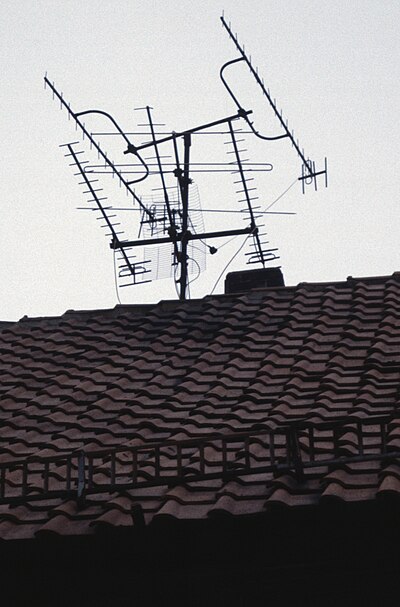
Terrestrial television operates on the principle of transmitting electromagnetic waves from ground-based transmitters to receivers equipped with antennas. The signals are broadcast within specific frequency bands, primarily the Very High Frequency (VHF) and Ultra High Frequency (UHF) ranges, typically between 52 and 600 MHz. These frequencies are chosen for their ability to carry modulated audio and video information effectively.
The nature of these radio waves dictates their propagation characteristics: they travel predominantly by line of sight. This physical limitation means that reception is generally constrained by the visual horizon, usually within a radius of 64–97 kilometers (40–60 miles) from the transmitter. However, atmospheric phenomena like tropospheric ducting can refract these waves, enabling signals to travel significantly greater distances under specific conditions.
The design of antennas, both transmitting and receiving, is crucial for efficient signal capture and conversion into viewable content, a testament to applied physics and electrical engineering.
A Century of Evolution
The history of terrestrial television is a narrative of technological innovation and adaptation. Experimental broadcasts commenced in the late 1920s, notably by the BBC, utilizing mechanical scanning systems. These early efforts, while groundbreaking, suffered from poor image resolution, limiting public appeal.
The true advent of widespread television broadcasting occurred post-World War II with the transition to electronic scanning technologies, which offered vastly superior picture quality. Initially, television networks mirrored the structure of radio, with local affiliates broadcasting content from national networks. The grayscale era dominated until the 1960s, marking the significant transition to color television.
The subsequent decades saw the emergence of alternative delivery methods like cable television in the 1950s and later, Direct Broadcast Satellite (DBS) and Internet Protocol Television (IPTV), fundamentally altering the media landscape and challenging terrestrial broadcasting's dominance.
The Enduring Significance and Global Footprint
Despite the proliferation of digital and internet-based media, terrestrial television retains significant global importance. It serves as a vital, often free, source of information and entertainment for billions worldwide, particularly in regions with limited access to advanced infrastructure. In 2020, an estimated 1.6 billion people relied on terrestrial broadcasts for at least some of their television viewing, with markets like Indonesia demonstrating its continued widespread use.
Beyond accessibility, terrestrial television plays a critical role in emergency broadcasting. During natural disasters or widespread infrastructure failures that disrupt cable and internet services, over-the-air broadcasts often remain operational, providing essential public safety announcements and news. This resilience underscores its foundational role in media distribution and public communication, acting as a robust fallback system.
Navigating the Modern Media Ecosystem
The rise of cable television in the latter half of the 20th century began a gradual decline in terrestrial viewership in developed nations. By 2018, only about 14% of US households relied solely on antennas. The subsequent emergence of Over-The-Top (OTT) streaming services via the internet has further fragmented the audience.
However, terrestrial television is not static; it has undergone its own digital transition. Analog broadcasts have largely been replaced by digital terrestrial television (DTT), which offers improved picture and sound quality, more efficient use of spectrum, and additional features. This digital shift ensures that terrestrial broadcasting can continue to compete and coexist within the complex, multi-platform media environment, demonstrating its adaptability and enduring relevance as a core component of the broadcast infrastructure.
See also
Based on content from Wikipedia · Licensed under CC BY-SA 4.0