

Terracotta: Awesome Baked Earth!
Images

China-7154 - Terracotta Army




![African Mahogany-Terracotta [Wine tasting area]](https://live.staticflickr.com/5106/5621505925_acc68ecab8.jpg)
The Materiality and Versatility of Terracotta
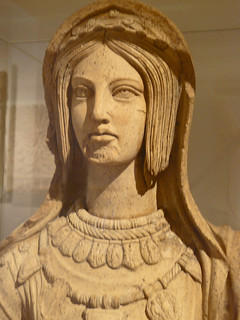
Terracotta, derived from the Italian for 'baked earth,' is a non-vitreous ceramic characterized by its relatively low firing temperatures. This process results in a material that is typically porous, allowing for breathability and water absorption, a property crucial for its use in planters and drainage pipes. Unlike stoneware or porcelain, which are fired at higher temperatures to become impermeable, terracotta retains a certain earthiness and tactile quality.
Its color palette commonly ranges from warm browns and oranges to reds, influenced by iron content in the clay, though it can also be glazed or painted. This inherent versatility allows terracotta to be molded into intricate sculptures, functional vessels, and robust architectural components. In art history, the term 'terracotta' is often specifically applied to objects like figurines and loom weights not made on a potter's wheel, distinguishing them from wheel-thrown earthenware, highlighting a nuanced classification based on object type rather than solely material.
A Chronicle of Creation
The use of terracotta dates back to the Neolithic period, making it one of humanity's oldest manufactured materials. Its accessibility and ease of manipulation allowed early civilizations to develop sophisticated artistic and utilitarian objects. In ancient China, the Qin Dynasty's Terracotta Army, comprising thousands of life-sized figures, stands as a monumental testament to the material's sculptural potential and the organizational power of its creators.
Ancient Greece and Rome employed terracotta extensively for votive figurines, architectural ornamentation such as antefixes and revetments that adorned temples, and for practical applications like water pipes and roof tiles. The widespread adoption of terracotta across diverse cultures, from the Mediterranean to East Asia, underscores its fundamental role in the development of art, technology, and urban infrastructure, providing a tangible link to our ancient past.
Enduring Significance
The enduring appeal of terracotta lies in its unique blend of aesthetic qualities and practical functionality. In contemporary art, sculptors continue to explore its expressive potential, appreciating its warm tones and the direct connection it offers to the creative process. Architecturally, terracotta remains a valuable building material, used for facade cladding, decorative tiles, and structural elements, offering durability, fire resistance, and a distinctive visual character.
Its natural insulating properties also contribute to energy efficiency in buildings. Beyond art and architecture, terracotta's porous nature makes it ideal for horticultural applications, promoting healthy plant growth. The material's historical depth, combined with its continued relevance in modern design and construction, solidifies its position as a timeless and significant medium.
The Transformative Process
The creation of terracotta is a meticulous process that transforms raw clay into a durable ceramic. It begins with the careful selection and preparation of clay, often a mix of different types to achieve desired plasticity and firing characteristics. The clay is then shaped by hand or using molds, allowing for both organic forms and precise replication.
This shaping stage is critical, as it dictates the final appearance and function of the piece. Once formed, the objects undergo drying to remove excess moisture, preventing cracking during firing. The subsequent firing in a kiln is the pivotal step.
Terracotta is fired at temperatures typically ranging from 900°C to 1200°C (1650°F to 2200°F), though it is considered low-fired compared to stoneware or porcelain. This firing process induces irreversible chemical and physical changes, vitrifying the clay particles to a degree that makes the object hard and permanent, yet retaining its characteristic porosity. The specific temperature, duration, and atmosphere within the kiln all influence the final color and properties of the terracotta.
Terracotta's Place in the Material World
Terracotta occupies a unique niche within the broader category of ceramics. While often used interchangeably with 'earthenware,' the term 'terracotta' can also carry specific connotations in art history and archaeology, sometimes referring to objects shaped by hand rather than on a potter's wheel, or specifically to red-colored wares. This distinction highlights how the material's identity is intertwined with its form and historical context.
Its relationship to other ceramics like stoneware (fired at higher temperatures, less porous) and porcelain (vitrified, translucent) is defined by its firing temperature and resulting porosity. Understanding these differences is key to appreciating why terracotta excels in certain applications, such as architectural cladding or planters, where its breathability and earthy aesthetic are paramount, while other ceramics are chosen for their impermeability and strength.
Go deeper
Based on content from Wikipedia · Licensed under CC BY-SA 4.0