

Tata Sabaya
Images
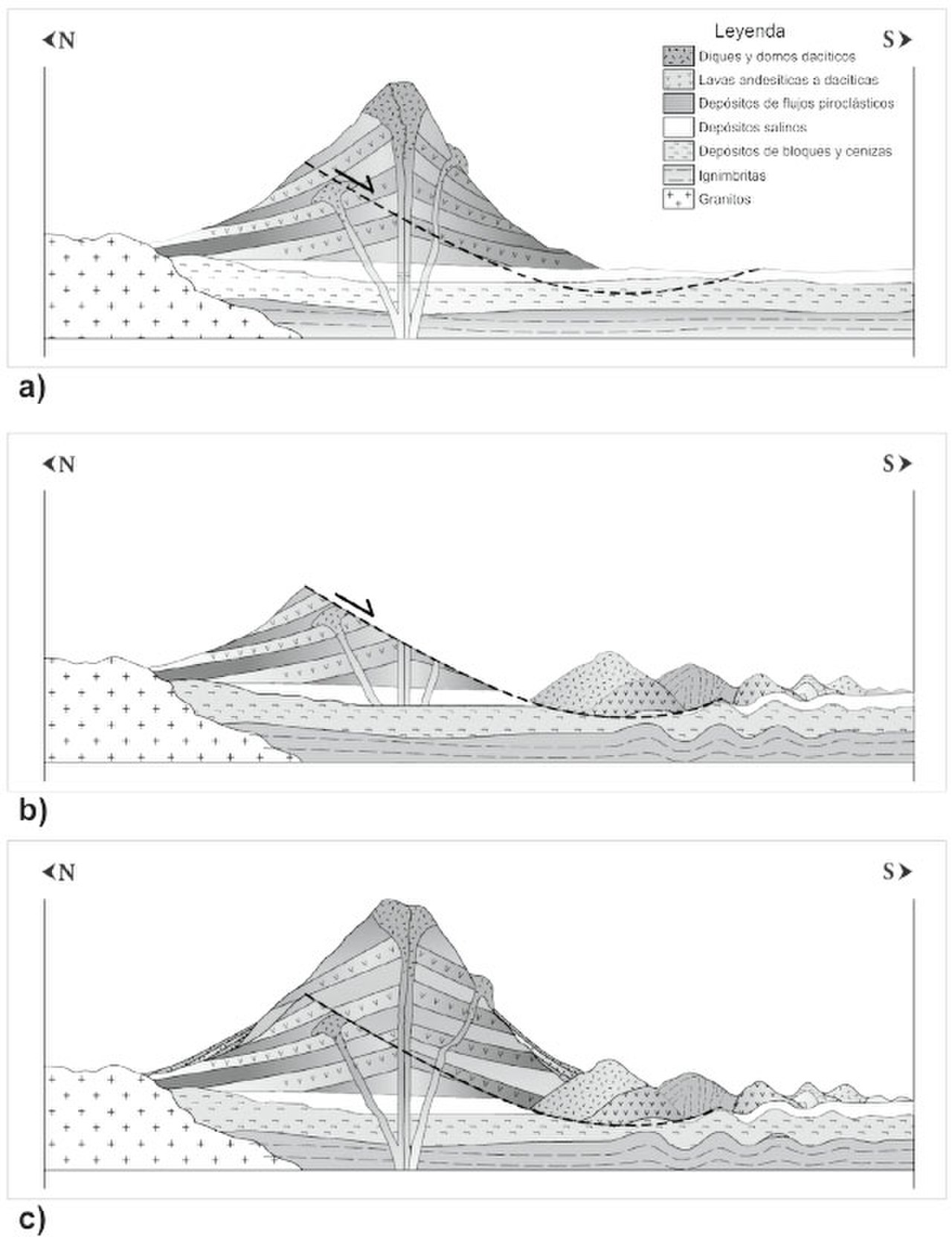
File:Tata Sabaya evolution.jpg

Geodynamic Setting and Volcanic Architecture
Tata Sabaya is a prominent stratovolcano situated at an elevation of 5,430 meters (17,810 ft) within the Central Volcanic Zone (CVZ) of the Andes Mountains in Bolivia. The CVZ is one of several volcanic belts in the Andes, characterized by distinct gaps of quiescence between them. This region's volcanic activity is a direct consequence of the subduction of the oceanic Nazca Plate beneath the continental South American Plate.
Tata Sabaya's edifice is primarily composed of andesitic rocks, typical of arc volcanism, and its formation is influenced by its position along a crustal lineament separating older Precambrian crust to the north from younger Mesozoic-Cenozoic crust to the south. This geological boundary likely controlled the ascent of magma, contributing to the volcano's specific location and structure.
Chronology of Volcanic Activity and Catastrophic Events
The Andes have experienced prolonged volcanic activity, with significant ignimbritic volcanism during the Miocene epoch. Tata Sabaya itself has a history marked by both effusive and explosive events, as well as dramatic structural failures. The most significant documented event is the catastrophic collapse of its southern flank during the latest Pleistocene, approximately 12,000 to 12,360 years before present.
This massive debris avalanche, estimated to have a volume of 6 ± 1 cubic kilometers, inundated the paleolake covering the Salar de Coipasa basin. Following this collapse, the resulting scar was partially filled by subsequent, more recent volcanic activity, including lava flows and lava domes. The most recent eruption is dated to about 6,000 years before present, indicating a period of relative quiescence since then.
Tectonic Drivers and Magmatic Processes
The ongoing subduction of the Nazca Plate beneath the South American Plate is the fundamental driver of volcanism in the CVZ, including Tata Sabaya. As the Nazca Plate descends into the mantle wedge, dehydration melting occurs, generating magma that rises through the overriding continental crust. The composition of this magma, predominantly andesitic, reflects the interaction between mantle-derived melts and the crustal lithosphere.
The specific alignment of Tata Sabaya along a crustal boundary suggests that pre-existing structural weaknesses may have facilitated magma ascent and eruption. Understanding these subduction-related processes is crucial for assessing the volcanic hazards associated with the entire CVZ.
Environmental Context and Modern Relevance
Tata Sabaya is located in a high-altitude, arid region of Bolivia, characterized by sparse population density and a stark, rugged landscape. The proximity to the Salar de Coipasa, one of the world's largest salt flats, adds a unique geographical dimension. While Tata Sabaya is not currently considered an active threat in terms of imminent eruption, its history of large-scale flank collapse serves as a critical case study for understanding landslide hazards associated with stratovolcanoes globally.
The study of such events informs geological hazard assessments and mitigation strategies in volcanic regions. Furthermore, the geological history of Tata Sabaya contributes to our broader understanding of Andean orogenesis and the long-term evolution of volcanic arcs.
Geographical and Geological Data
Tata Sabaya's imposing stature and geological history make it a subject of interest for geologists and geographers. Its formation through repeated eruptions and a significant collapse event provides valuable insights into volcanic geomorphology and hazard evolution. The volcano's composition, primarily andesitic, is consistent with other volcanoes in the CVZ, reflecting the dominant magma types generated in this subduction zone.
The detailed dating of its collapse and subsequent eruptions allows for a more precise reconstruction of its volcanic past, contributing to the overall geological understanding of the Bolivian Andes.
See also
Frequently Asked Questions
What is Tata Sabaya?+
How did Tata Sabaya become so tall?+
Why did Tata Sabaya's southern side collapse?+
Is Tata Sabaya still active?+
Where is Tata Sabaya located?+
Based on content from Wikipedia · Licensed under CC BY-SA 4.0