

Tank
Images
Tank
Genesis of the Tank
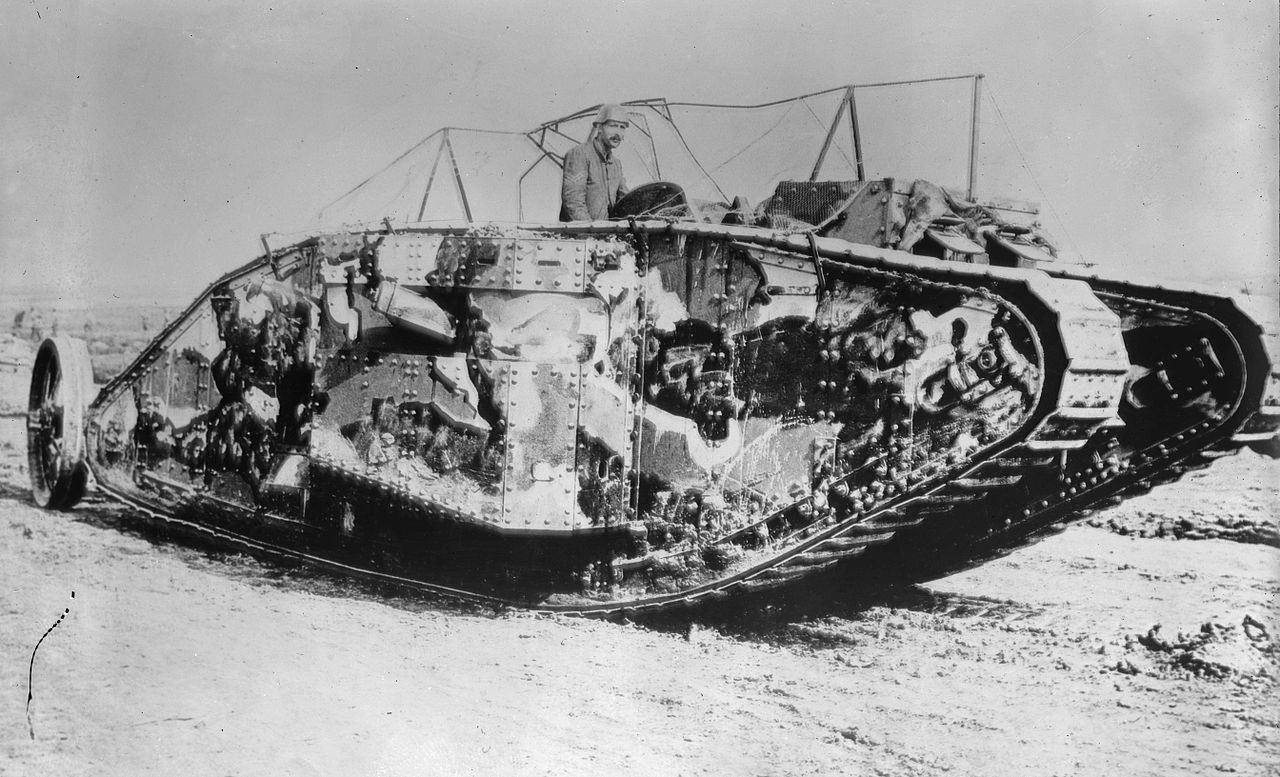
The invention of the tank was a direct response to the brutal realities of trench warfare during World War I. The static nature of the conflict, characterized by machine guns, barbed wire, and artillery, created a deadly no-man's-land that infantry could not cross. Military strategists sought a vehicle that could overcome these obstacles, offering protection and mobility. Early designs, like the British 'Little Willie' and the subsequent Mark I, were experimental, drawing inspiration from agricultural tractors and naval vessels.
They featured rudimentary armor, a rhomboidal shape to cross trenches, and were initially steered by two men operating clutches. The first combat deployment of tanks by the British at the Battle of the Somme in 1916, though limited in success, demonstrated their potential to break through enemy lines and provide mobile firepower. This marked a paradigm shift in military technology, introducing a new dimension to land warfare that would profoundly influence future conflicts.
Technological Arms Race
The interwar period and World War II saw an intense technological arms race in tank design. Early tanks were often lightly armored and armed, designed for reconnaissance or infantry support. However, the development of faster, more powerful engines and improved metallurgy allowed for the creation of heavier, more heavily armed tanks.
Concepts like 'blitzkrieg' emphasized the use of fast-moving armored formations, leading to tanks like the German Panzer IV and the Soviet T-34, which combined speed, armor, and firepower effectively. Post-war developments focused on increasing firepower with larger caliber guns (e.g., 105mm and 120mm smoothbore cannons), enhancing armor protection through composite materials and reactive armor, and improving crew survivability with advanced fire control systems and NBC (Nuclear, Biological, Chemical) protection.
The evolution continues today with tanks incorporating advanced sensors, networked communication, and active protection systems.
Strategic Significance
Tanks remain a cornerstone of modern military doctrine, serving as the primary offensive weapon system for many armies. Their ability to combine heavy firepower, robust protection, and strategic mobility makes them ideal for conducting decisive operations. In offensive roles, tanks act as the 'tip of the spear,' breaking through enemy defenses, suppressing anti-tank threats, and exploiting breakthroughs.
They are crucial for deep battle operations, enabling rapid advances into enemy territory. In defensive roles, tanks provide formidable firepower and a mobile strongpoint, capable of repelling enemy assaults and conducting counterattacks. Their presence can significantly influence enemy decision-making, acting as a powerful deterrent.
While advancements in anti-tank weaponry have necessitated continuous improvements in tank design, the fundamental role of the tank as a heavily armored, mobile gun platform endures.
Operational Mechanics
The operation of a modern main battle tank (MBT) is a complex symphony of engineering and human skill. The powerplant, typically a multi-fuel turbine engine or a high-performance diesel engine, generates hundreds or even thousands of horsepower to propel a vehicle weighing upwards of 60 tons. This power is transmitted through a sophisticated drivetrain to the tracks, which are engineered for durability and traction across varied terrains.
Armor protection is a multi-layered system, often incorporating advanced composite materials, spaced armor, and explosive reactive armor (ERA) to defeat incoming threats. The main armament, a high-velocity cannon, is stabilized to allow for accurate firing while on the move. Advanced fire control systems integrate laser rangefinders, thermal imagers, and ballistic computers to ensure precision targeting, even against fast-moving targets at long ranges.
The crew of 3-4 soldiers (commander, gunner, driver, and sometimes a loader) must be highly trained to operate these complex systems efficiently under extreme stress.
The Tank in Contemporary Warfare and Future Prospects
In contemporary conflicts, tanks continue to play a vital role, though their deployment is often integrated with other military assets like infantry, artillery, and air support. The effectiveness of tanks can be challenged by asymmetric warfare tactics, urban environments, and advanced anti-tank guided missiles (ATGMs). However, ongoing technological advancements aim to mitigate these challenges.
Future tanks are likely to feature even more sophisticated active protection systems (APS) designed to intercept incoming projectiles, advanced sensor suites for enhanced situational awareness, and potentially unmanned turrets to further enhance crew survivability. The concept of robotic or remotely operated combat vehicles also presents a potential evolution. Despite these changes, the core principles of armored warfare – overwhelming firepower, robust protection, and strategic mobility – suggest that the tank, in some form, will remain a significant element of land power for the foreseeable future.
Go deeper
Frequently Asked Questions
What is a tank?+
Why were tanks invented?+
How did tanks help in World War I?+
What makes modern tanks different from old ones?+
What is the role of a tank in battles today?+
Based on content from Wikipedia · Licensed under CC BY-SA 4.0