

Table Salt: The Sparkly Seasoning!
Images

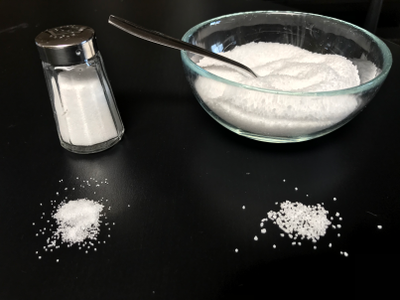
Table salt with salt shaker V1

![Renown table salt [back]](https://live.staticflickr.com/8172/8009650235_afb4066bd5_n.jpg)

![305/365 - 07/30/10 [365 Days @ 50mm] - Table Salt](https://live.staticflickr.com/4153/4844909517_8a03407f09_n.jpg)


!['R.S.V.P.' table salt [back]](https://live.staticflickr.com/8301/8009650431_87b6904c39_n.jpg)
!['R.S.V.P.' table salt [front]](https://live.staticflickr.com/8435/8009658540_2350acd6c9_n.jpg)

The Genesis and Global Reach of Sodium Chloride
Sodium chloride (NaCl) is far more than a culinary staple; it is a fundamental chemical compound that has profoundly influenced human civilization and continues to be indispensable in modern life. Its origins trace back to the geological formation of the Earth, with vast deposits of rock salt (halite) formed from the evaporation of ancient oceans and inland seas. The extraction of these deposits, alongside the solar evaporation of seawater, has been a cornerstone of human industry for millennia.
Historically, salt's value was immense, not only for its role in food preservation – a critical factor in enabling long-distance travel, military campaigns, and survival through lean seasons – but also as a form of currency. Trade routes, such as the Via Salaria in ancient Rome, were established specifically for salt transport, underscoring its economic and strategic importance. The control of salt resources often dictated the rise and fall of settlements and empires, highlighting its pivotal role in societal development and the establishment of early economies.
Its ubiquity today belies its historical scarcity and the immense effort once required to obtain it.
The Biological Imperative
At a biological level, sodium chloride is essential for the survival and proper functioning of virtually all life forms. The ions, sodium (Na+) and chloride (Cl-), play critical roles in maintaining cellular homeostasis and facilitating physiological processes. Sodium ions are the primary extracellular cations, crucial for regulating osmotic pressure and fluid balance within the body.
They are also vital for the transmission of nerve impulses and the contraction of muscles, acting as the electrical charge carriers that allow these functions to occur. Chloride ions, on the other hand, are the main extracellular anion and are integral to maintaining acid-base balance. They are a key component of hydrochloric acid in the stomach, which is necessary for the digestion of food and the elimination of pathogens.
While indispensable, the human body requires only modest amounts of sodium and chloride. Excessive intake, particularly of sodium, is linked to significant health concerns, including hypertension, cardiovascular disease, and kidney problems, underscoring the delicate balance required for optimal health.
Industrial Alchemy
Beyond its role in sustenance and biology, sodium chloride is a foundational raw material for a vast array of industrial processes. The chlor-alkali process, an electrochemical method, is one of the most significant industrial applications of salt. This process electrolyzes brine (a concentrated salt solution) to produce chlorine gas (Cl2), sodium hydroxide (NaOH, also known as caustic soda), and hydrogen gas (H2).
These products are themselves vital industrial chemicals. Chlorine is used in water purification, the production of plastics (like PVC), solvents, and disinfectants. Sodium hydroxide is essential for manufacturing paper, textiles, soaps, detergents, and aluminum.
Furthermore, salt is used in metal refining, as a flux in metallurgy, and in the production of dyes and rubber. Its ability to lower the freezing point of water also makes it indispensable for de-icing roads and airport runways, ensuring safety and maintaining transportation networks during winter months.
Salt's Diverse Applications
The applications of sodium chloride extend into numerous practical and specialized fields. Its hygroscopic nature, meaning it absorbs moisture from the air, is leveraged in certain industrial drying processes. In agriculture, salt can be used to control pests and as a nutrient supplement for livestock.
The pharmaceutical industry utilizes purified salt for the creation of sterile saline solutions, which are critical for intravenous fluid replacement, wound irrigation, and as a carrier for medications. These solutions mimic the salt concentration of bodily fluids, making them biocompatible. In the food industry, salt's preservative qualities are paramount, extending the shelf life of products like cured meats, fish, and fermented foods by creating an environment hostile to microbial growth.
Its role in flavor enhancement and texture modification in baking, cheese making, and other food processing applications is equally significant. Even in the realm of environmental science, salt plays a role in water softening and as a component in some remediation techniques.
See also
Frequently Asked Questions
What is table salt made of?+
Why was salt so valuable in ancient times?+
How does salt help our bodies?+
What happens if we eat too much salt?+
What are some ways salt is used besides cooking?+
Based on content from Wikipedia · Licensed under CC BY-SA 4.0