

Systema Naturae: The Super Sorter!
Images

Siberian-Finnish Goshawk, Burns, Oregon


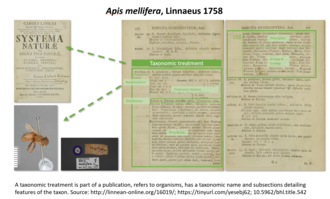




The Genesis of Order
Carl Linnaeus's 'Systema Naturae,' first published in 1735, stands as a monumental achievement in the history of science. It was not merely a catalog but a radical reordering of how humanity perceived and studied the natural world. Linnaeus, a Swedish botanist, zoologist, and physician, sought to bring order to the burgeoning chaos of biological knowledge.
At the time, descriptive Latin names for organisms were often lengthy, inconsistent, and prone to ambiguity. Linnaeus, building upon the work of earlier naturalists like the Bauhin brothers, championed and rigorously applied binomial nomenclature. This system assigns each species a unique, two-part Latin name, comprising the genus and the specific epithet (e.g., 'Canis lupus' for the wolf).
This innovation provided a concise, universally understood language for scientific discourse, effectively creating a shared global lexicon for life. The 10th edition of 'Systema Naturae' (1758) is particularly significant, serving as the official starting point for zoological nomenclature, meaning names published before this date are generally not considered valid under current rules.
A Hierarchical Framework
Linnaeus's genius extended beyond nomenclature to the very structure of biological classification. 'Systema Naturae' introduced a hierarchical system that organized life into nested ranks, moving from broad categories to specific ones. He initially divided nature into three kingdoms: Regnum Animale (Animal Kingdom), Regnum Vegetabile (Plant Kingdom), and Regnum Lapideum (Mineral Kingdom). Within these, he established classes, orders, genera, and species.
This tiered approach provided a logical framework for understanding the relationships between organisms and for placing newly discovered species. For instance, the class Mammalia was defined by characteristics such as giving birth to live young and nursing them with milk. This systematic organization was crucial for the development of evolutionary biology, as it provided the foundational structure upon which later scientists would map phylogenetic trees and explore the interconnectedness of all life forms.
The 12th edition (1766–1768) represented Linnaeus's final, most comprehensive revision of his system.
Enduring Impact and Modern Relevance
The legacy of 'Systema Naturae' is profound and continues to resonate in contemporary science. Binomial nomenclature remains the international standard for naming species, ensuring clarity and consistency across disciplines and borders. This system is fundamental to fields ranging from ecology and conservation biology to medicine and genetics.
Accurate species identification, facilitated by Linnaean taxonomy, is critical for understanding biodiversity, monitoring environmental health, and managing natural resources. For example, identifying invasive species or tracking the spread of diseases relies heavily on precise taxonomic classification. Furthermore, while Linnaeus's original classification was based on observable physical characteristics, it laid the groundwork for modern phylogenetic studies that use genetic data to reconstruct evolutionary histories.
The principles of systematic organization and naming introduced by Linnaeus have proven remarkably robust, adapting and evolving with new scientific discoveries, underscoring the enduring power of his foundational work.
Beyond the Book
While 'Systema Naturae' was a revolutionary step, the field of taxonomy has continued to evolve. Linnaeus's system, though brilliant for its time, was primarily based on morphology (physical form). As scientific understanding advanced, particularly with the advent of evolutionary theory and molecular biology, the need arose to incorporate evolutionary relationships into classification.
Modern taxonomy, while still utilizing Linnaean ranks and binomial nomenclature, increasingly relies on genetic data (DNA sequencing) to determine how species are related. Works like Johann Friedrich Gmelin's expanded edition (1788–1793) continued to build upon Linnaeus's foundation, reflecting new discoveries. Today, the International Code of Zoological Nomenclature (ICZN) and the International Code of Nomenclature for algae, fungi, and plants (ICN) govern the naming of organisms, ensuring that Linnaeus's principles of clear, consistent naming are upheld, even as the underlying basis for classification shifts towards evolutionary history.
Go deeper
Frequently Asked Questions
What is Systema Naturae and why is it important?+
How does binomial nomenclature work?+
Why did Linnaeus divide nature into kingdoms?+
When did the 10th edition of Systema Naturae become the official starting point for animal names?+
How does Systema Naturae help us today?+
Based on content from Wikipedia · Licensed under CC BY-SA 4.0