

Syringe
Images

Syringe


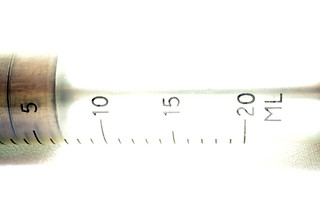


The Genesis and Evolution of the Syringe
The concept of injecting fluids predates the modern syringe by centuries, with early methods employing hollow reeds, animal bladders, and even hollowed bones. However, the true revolution in fluid delivery began in the mid-19th century. The development of the hypodermic syringe, credited to Charles Pravaz and Alexander Wood around 1853, marked a pivotal moment.
Their designs, featuring a glass barrel and a metal piston, allowed for unprecedented control over the volume and speed of injection. This innovation was crucial for the effective administration of newly discovered anesthetics and pain relievers, transforming surgical procedures and patient care. Early syringes were often reusable and required meticulous sterilization, a testament to the challenges faced by medical practitioners before the advent of disposable medical supplies.
The subsequent refinement of materials, precision manufacturing, and the introduction of disposable syringes have further enhanced safety and efficacy, making the syringe a ubiquitous and indispensable tool in global healthcare.
The Physics and Mechanics of Syringe Operation
At its core, a syringe operates on fundamental principles of fluid dynamics and pressure. The barrel, typically made of glass or medical-grade plastic, acts as a chamber for the fluid. The plunger, a piston designed for a snug fit within the barrel, is the actuator.
When the plunger is withdrawn, the volume within the barrel increases, generating a negative pressure or partial vacuum. This pressure differential draws the fluid into the barrel through the needle or nozzle. Conversely, when the plunger is depressed, the volume decreases, creating positive pressure that expels the fluid.
The needle, a hollow tube with a sharp, beveled tip, facilitates penetration of tissues or containers and directs the fluid flow. The precise control afforded by the plunger allows for accurate dosage measurement, critical for therapeutic efficacy and patient safety. Factors like plunger friction, needle gauge, and fluid viscosity all influence the force required and the flow rate achieved.
Indispensable Roles in Modern Medicine and Diagnostics
The syringe is arguably one of the most critical instruments in contemporary medicine. Its primary function is the administration of parenteral medications – drugs delivered via routes other than the digestive tract. This includes vaccines, which are foundational to public health and disease eradication efforts, as well as antibiotics, hormones, chemotherapy agents, and emergency medications like epinephrine.
The rapid absorption of injectable drugs into the bloodstream or muscle tissue allows for quicker therapeutic effects compared to oral administration. Furthermore, syringes are indispensable for diagnostic procedures. Venipuncture, the process of drawing blood using a syringe and needle, is a cornerstone of laboratory diagnostics, enabling the assessment of a vast array of physiological markers, from blood cell counts and glucose levels to enzyme activity and pathogen detection.
The ability to collect precise fluid samples also extends to cerebrospinal fluid aspiration and joint fluid analysis.
Beyond Healthcare
While healthcare represents the most prominent application, the precision and control offered by syringes make them invaluable in numerous scientific and industrial fields. In research laboratories, scientists rely on syringes for accurate titration, sample preparation, chromatography, and the precise introduction of reagents in chemical reactions. They are used in analytical chemistry for calibrating instruments and in biology for cell culture and microinjection.
In manufacturing, syringes can be employed for dispensing adhesives, lubricants, or specialized coatings with high accuracy. Even in fields like 3D printing, specialized syringe-like mechanisms are used for extruding materials. The versatility of the syringe lies in its ability to manage and deliver fluids with a level of control that is difficult to replicate with other simple tools, making it a fundamental component in many advanced technological processes.
Challenges, Innovations, and the Future of Syringes
Despite their widespread use, syringes present ongoing challenges, primarily related to safety and waste. Needle-stick injuries pose a significant risk to healthcare workers, potentially transmitting infectious diseases. The environmental impact of disposable plastic syringes is also a growing concern.
In response, significant innovation has occurred. Safety-engineered syringes, featuring retractable needles or shields, have been developed to mitigate needle-stick risks. Advances in materials science are leading to more sustainable and biodegradable syringe components.
Furthermore, the development of pre-filled syringes and auto-disable syringes (which cannot be reused after a single injection) enhances both safety and convenience. The future may also see greater integration of smart technologies, such as sensors for real-time monitoring of injection depth or dosage, further refining the syringe's role in precision medicine.
See also
Frequently Asked Questions
What is a syringe?+
How does a syringe work?+
Where did syringes come from?+
Why are syringes important for medicine?+
Are syringes safe to use?+
Based on content from Wikipedia · Licensed under CC BY-SA 4.0