

Synthesizer
Images
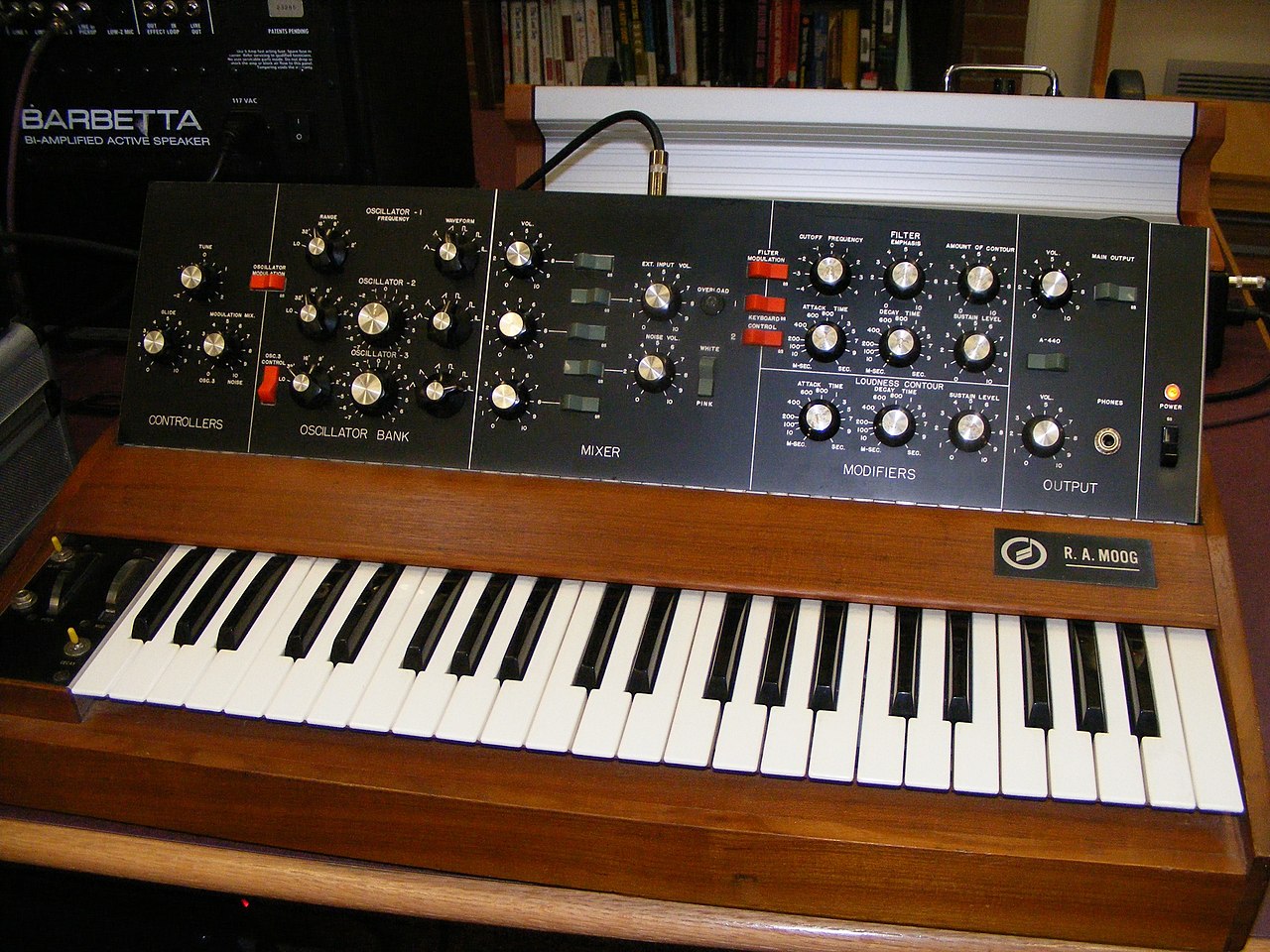
Synthesizer


Genesis of Electronic Timbre
The synthesizer's lineage traces back to early 20th-century electronic instruments like the Telharmonium and Theremin, but its modern form truly emerged in the mid-20th century. The 1950s saw the development of large-scale modular systems, most notably the RCA Mark II Sound Synthesizer, which was more akin to a programmable electronic music studio than a portable instrument. These behemoths, often requiring dedicated power and cooling, were the domain of academic institutions and research labs.
The subsequent invention of voltage-controlled oscillators (VCOs) and filters (VCFs) by figures like Robert Moog and Don Buchla in the 1960s marked a paradigm shift. These innovations allowed for real-time performance and a more intuitive, modular approach, making synthesizers accessible to musicians and composers, thus moving them from experimental curiosities to vital tools for artistic expression and laying the groundwork for entire genres of music.
The Architecture of Synthesis
Synthesizers construct sound through a process of signal generation and manipulation. At their core are oscillators, which produce fundamental waveforms such as sine, square, sawtooth, and triangle waves. These raw tones are then sculpted by filters, which attenuate or boost specific frequency ranges, thereby altering the timbre-making a sound brighter, darker, or more resonant.
Amplifiers, often controlled by an envelope generator, manage the sound's amplitude over time, defining its attack, decay, sustain, and release (ADSR) characteristics. This ADSR envelope dictates how a sound begins, holds its level, and fades away, crucial for emulating natural instruments or creating entirely novel sonic textures. Further modulation sources, like Low-Frequency Oscillators (LFOs), can introduce periodic changes to pitch, amplitude, or filter cutoff, adding movement and life to the sound, from subtle vibrato to complex, evolving timbres.
Sonic Revolutionaries
The synthesizer's impact extends far beyond mere musical instrumentation; it has fundamentally reshaped sonic culture. In music, it birthed and defined genres like electronic dance music (EDM), synth-pop, industrial, and ambient, while becoming an integral element in rock, jazz, and hip-hop. Film and game sound design owe a significant debt to synthesizers for creating immersive, otherworldly, or suspenseful soundscapes that enhance narrative and emotional impact. The ability to precisely craft and recall sounds has also revolutionized music production, enabling complex arrangements and sonic experimentation previously impossible.
Furthermore, the evolution of digital signal processing (DSP) and software synthesizers has democratized sound creation, placing powerful tools in the hands of creators worldwide, fostering continuous innovation in sonic art and technology.
From Analog Warmth to Digital Precision
The evolution of synthesizers can be broadly categorized into analog and digital eras. Analog synthesizers, prevalent until the late 1970s and early 1980s, generate sound using electronic circuits with components like transistors and capacitors. They are often lauded for their 'warmth' and organic character, attributed to the subtle imperfections and interactions within these analog systems.
The advent of digital technology brought about digital synthesizers, which use microprocessors and algorithms to create sounds. This led to greater stability, programmability, and the ability to create more complex and varied sounds, including sampling. Hybrid synthesizers combine elements of both, while modern software synthesizers leverage powerful computer processing to emulate classic analog gear or create entirely new synthesis methods like physical modeling or granular synthesis, offering unparalleled sonic flexibility and accessibility.
The Synthesizer's Place in Modern Sonic Innovation
Today, synthesizers are more diverse and powerful than ever. While analog hardware synthesizers have seen a resurgence due to their unique sonic qualities, digital and software synthesizers dominate much of modern music production. Virtual instruments running on computers can emulate virtually any sound, from vintage analog synths to complex orchestral arrangements.
Advanced synthesis techniques like wavetable, FM, and granular synthesis allow for intricate sound design, pushing the boundaries of what is sonically possible. Furthermore, the integration of synthesizers into broader digital audio workstations (DAWs) means they are central to nearly every aspect of contemporary music creation, film scoring, and sound design, continuing to be a driving force for sonic innovation and artistic exploration across all media.
Go deeper
Frequently Asked Questions
What is a synthesizer and how does it make music?+
How did synthesizers change from huge machines to instruments musicians can play?+
What parts do a synthesizer have to make a sound?+
Why are analog synthesizers called "warm"?+
How do synthesizers help in movies and video games?+
Based on content from Wikipedia · Licensed under CC BY-SA 4.0