

Survivorship Bias: The Sneaky Trick Our Brains Play!
Images

I'm a survivor, I'm gonna make it, I will survive, keep on survivin'


The Illusion of Success
Survivorship bias is a pervasive cognitive error that arises from concentrating exclusively on entities that have successfully navigated a selection process, while neglecting those that have failed. This selective focus leads to a distorted perception of reality, as the data set is inherently incomplete. We tend to attribute success to inherent qualities or strategies of the survivors, overlooking the myriad of factors, including sheer chance, that contributed to their survival and the demise of others.
For instance, when analyzing the performance of companies, excluding those that have gone bankrupt creates an overly optimistic view of market viability. Similarly, studying only living languages can lead to an underestimation of linguistic diversity loss. This bias can foster a false sense of causality, where correlation between observed traits of survivors and their success is mistaken for causation, ignoring the possibility that these traits are merely coincidental or that the failures were due to factors unrelated to these traits.
Understanding this bias is crucial for developing a more nuanced and accurate understanding of complex systems and outcomes.
A Historical Trajectory
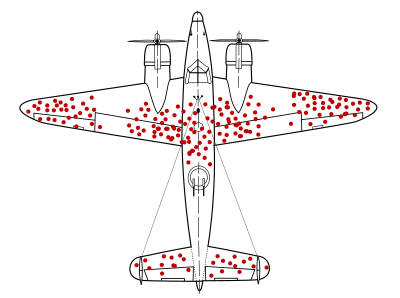
The recognition of survivorship bias has a long and impactful history, with its principles being applied long before the term was formally coined. A seminal example, often cited, involves the analysis of bomber aircraft during World War II. Military strategists observed returning planes and noted the locations of bullet damage. The initial inclination was to reinforce these damaged areas, assuming they were the most vulnerable.
However, statistician Abraham Wald astutely identified the survivorship bias at play. He argued that the planes observed were precisely those that had survived the attacks. Therefore, the bullet holes indicated areas where a plane could sustain damage and still return.
Conversely, areas that were undamaged on the returning planes were likely critical points; if hit there, the aircraft would have been lost. This insight led to a strategic shift in reinforcing the 'unmarked' areas, demonstrating a profound application of understanding what is not seen. This historical case underscores how survivorship bias can lead to counterintuitive but ultimately more effective solutions when properly identified and addressed.
The Pervasive Impact
The significance of survivorship bias extends far beyond academic curiosity; it has tangible and often detrimental effects on decision-making across various domains. In finance, analyses of market performance that omit failed companies can create unrealistic expectations for new ventures. In medicine, studying only patients who have recovered from a disease might obscure the side effects or ineffectiveness of certain treatments for a broader population.
In the realm of personal development, focusing solely on highly successful individuals can lead to a misapprehension of the effort, luck, and resilience required for achievement, potentially discouraging those who face initial setbacks. Recognizing survivorship bias is essential for fostering critical thinking, enabling us to question assumptions, seek out counterexamples, and make more informed, realistic judgments. It encourages a more robust and evidence-based approach to problem-solving and strategic planning by acknowledging the full spectrum of outcomes, not just the triumphant ones.
Mitigating the Bias
Actively combating survivorship bias requires a conscious and systematic effort to seek out and analyze the 'missing' data. This involves moving beyond readily available success stories to investigate the reasons for failure. In research, this might mean actively searching for studies on failed experiments or companies that did not succeed, rather than solely relying on published successes.
It also involves questioning the representativeness of any sample being studied. For instance, when evaluating a particular strategy, one should consider not only those who adopted it and succeeded but also those who tried it and failed, and why. This might involve conducting qualitative research to understand the experiences of those who did not 'survive' the selection process.
By deliberately looking for the counterexamples and the reasons behind them, we can build a more comprehensive and accurate model of reality, leading to more robust conclusions and more effective strategies.
Beyond the Obvious
Survivorship bias manifests in countless everyday scenarios. Consider the popular narrative around entrepreneurship; the media often highlights unicorn startups, creating an impression that rapid, massive success is common. This overlooks the vast majority of startups that fail, often due to market saturation, poor funding, or flawed business models.
In the context of historical analysis, focusing only on surviving artifacts or texts can lead to incomplete understandings of past societies. In the digital age, algorithms can inadvertently perpetuate survivorship bias by prioritizing popular or trending content, potentially burying less visible but equally valuable information. Understanding this bias is crucial for navigating information critically, whether it's evaluating investment opportunities, understanding historical events, or even interpreting social media trends.
It encourages a deeper, more analytical approach to information, pushing us to look beyond the surface and consider the full spectrum of possibilities and outcomes.
See also
Frequently Asked Questions
What is survivorship bias?+
Why do people think only the survivors are successful?+
How did survivorship bias help fix bomber planes in World War II?+
What can happen if we ignore companies that went bankrupt when looking at business success?+
Are there other places where survivorship bias can mislead us?+
Based on content from Wikipedia · Licensed under CC BY-SA 4.0