

Sun Bear
Images

Sun-bear


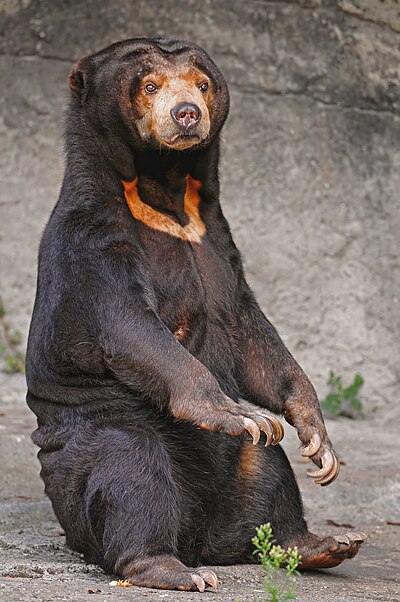


The Miniature Marvel of Ursidae
The sun bear, scientifically designated as Helarctos malayanus, stands as a testament to evolutionary diversity within the Ursidae family. It is the smallest extant bear species, a characteristic that profoundly influences its ecological niche and behavior. Physically, it is stockily built, measuring approximately 70 cm at the shoulder and weighing between 25 to 65 kg.
Its morphology is distinctly adapted for its environment: short, jet-black fur (though variations in color exist), large paws, strongly curved claws, small rounded ears, and a short snout. The most iconic feature is the vivid orange to cream-colored chest patch, a defining trait that earns it the common name 'sun bear' and serves as a unique identifier. This patch's function is debated, possibly playing a role in communication or thermoregulation, though its primary significance is visual recognition.
Arboreal Adaptations and Nocturnal Tendencies
Helarctos malayanus exhibits remarkable adaptations for an arboreal lifestyle, making it the most tree-dwelling of all bear species. Its inward-turned front feet and powerful forelimbs equipped with large, sharp claws are perfectly suited for climbing, allowing it to navigate the forest canopy with agility. This arboreal proficiency enables sun bears to utilize trees for resting, sleeping, and even sunbathing, often at heights of 2 to 7 meters above the ground.
While primarily diurnal, meaning active during the day, there is evidence suggesting a shift towards nocturnality in areas with significant human presence, a behavioral plasticity that likely serves as a survival mechanism to avoid conflict. Their solitary nature is typical, though pairs, particularly mothers with cubs, are observed. The absence of hibernation is attributed to the year-round availability of food resources within their tropical range.
A Diverse Diet Fueling Year-Round Activity
The sun bear's omnivorous diet is a critical factor in its ecological role and its ability to thrive without hibernating. Its long, slender tongue is a specialized tool for extracting invertebrates, such as ants and termites, from their nests, a primary food source. Honey is another highly prized food item, leading to frequent raids on beehives. Beyond insects and honey, their diet is supplemented by a variety of plant materials, including seeds and numerous fruit species, contributing essential nutrients and energy.
This varied diet also includes occasional consumption of small vertebrates like birds and deer. This dietary flexibility allows them to exploit diverse food resources throughout the year, negating the need for a dormant winter period.
Geographic Distribution and Conservation Imperatives
The geographic range of the sun bear is extensive, spanning across the tropical forests of Southeast Asia. Its distribution extends from northeastern India and Bangladesh in the west, through mainland Southeast Asia including Myanmar, Thailand, Laos, Cambodia, and Vietnam, down to the Malay Peninsula, Borneo, and Sumatra in Indonesia and Malaysia.
This wide distribution, however, masks a precarious conservation status. Sun bears are listed as Vulnerable on the IUCN Red List, facing severe threats from habitat destruction, primarily driven by deforestation for agriculture, palm oil plantations, and logging. Illegal hunting for their gallbladders (used in traditional medicine) and other body parts, as well as the pet trade, further exacerbates population declines.
Human-wildlife conflict, particularly when bears raid farms and orchards, also contributes to their dwindling numbers. Population estimates suggest a decline of at least 35% since the 1990s, underscoring the urgent need for robust conservation strategies, habitat protection, and anti-poaching efforts to ensure the survival of this unique species.
See also
Frequently Asked Questions
What does a sun bear look like?+
Why do sun bears have a bright chest patch?+
How do sun bears climb trees?+
What do sun bears eat?+
Are sun bears safe?+
Based on content from Wikipedia · Licensed under CC BY-SA 4.0