

Sum
Images

Dim Sum from Din Tai Fung, L.A.
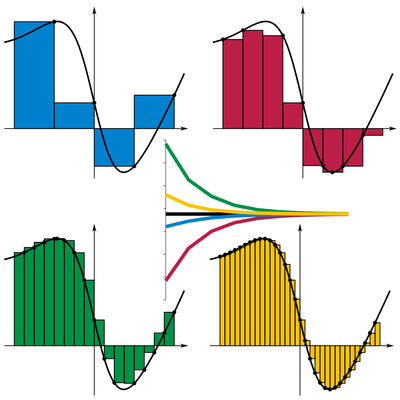


The Sum
The concept of a sum, representing the result of addition, is a bedrock principle in mathematics. It’s not merely an arithmetic operation but a fundamental building block upon which more complex mathematical structures are erected. In set theory, the union of disjoint sets can be seen as a conceptual analogue to summation, where the cardinality of the combined sets equals the sum of their individual cardinalities.
In abstract algebra, the operation of addition is defined within various algebraic structures like groups, rings, and fields, where the 'sum' takes on specific meanings dictated by the structure's axioms. The very definition of natural numbers, as proposed by Peano axioms, relies on a successor function, which implicitly underpins the operation of addition and thus the concept of a sum. Understanding the sum is therefore crucial for grasping concepts from basic arithmetic to advanced calculus and number theory, serving as a universal language for combining quantities.
Echoes of Antiquity
The human need to aggregate quantities is ancient, predating formal mathematical notation. Early civilizations in Mesopotamia and Egypt developed rudimentary methods for addition, often using tally marks or physical objects to manage resources and trade. The development of positional numeral systems, particularly the Hindu-Arabic system, revolutionized the calculation of sums.
Algorithms for addition, involving carrying over digits based on place value, became standardized and were disseminated through trade and scholarship. Greek mathematicians like Euclid explored number theory, laying groundwork for understanding additive properties. The Renaissance and Enlightenment periods saw further formalization, with mathematicians like Newton and Leibniz integrating summation into calculus and other advanced fields.
This historical journey highlights how the simple act of finding a sum has evolved from basic counting to a sophisticated tool essential for scientific and technological progress.
The Indispensable Role of Summation in Science and Technology
The significance of the sum extends far beyond the classroom, permeating every facet of modern science and technology. In physics, sums are used to calculate total forces acting on an object, the total energy in a system, or the cumulative effect of many small changes. In statistics and data analysis, sums are fundamental for calculating means, variances, and other descriptive statistics, allowing us to understand large datasets. Computer science relies heavily on summation for algorithms, particularly in areas like array processing, signal analysis, and machine learning, where operations are often performed on vast collections of data.
Financial modeling, economic forecasting, and engineering design all depend on the accurate and efficient calculation of sums to predict outcomes, manage resources, and ensure the integrity of complex systems. The ability to sum effectively is a critical skill in virtually every quantitative field.
Algorithmic Approaches to Summation
The process of calculating a sum has evolved from manual methods to highly sophisticated algorithms executed by computers. Manual addition, using place value and carrying, is the foundational algorithm taught to children. For larger numbers or repeated additions, mathematicians developed techniques like summation notation (using the Greek letter Sigma, Σ) to concisely represent sums of series.
In computer science, summation is often implemented using loops that iterate through a collection of numbers, adding each element to an accumulator variable. Efficiency becomes paramount for very large datasets, leading to optimizations like parallel processing or specialized hardware instructions. The underlying principle remains the same: systematically combining individual values to arrive at a single, comprehensive total, a task now performed at incredible speeds by modern computing.
Beyond Simple Addition
While the basic sum is straightforward, the concept extends into advanced mathematical domains. Infinite series, for example, involve the sum of an unending sequence of numbers. Understanding whether such an infinite sum converges to a finite value (like π/4 for the Leibniz formula for π) or diverges is a central topic in calculus.
In linear algebra, vector addition is a form of summation, where components are added individually. The dot product and cross product are also operations that involve sums of products or differences. Furthermore, the integral in calculus can be understood as the limit of a sum of infinitesimally small rectangles, a concept known as Riemann summation.
These advanced applications demonstrate that the fundamental idea of 'sum' is a versatile tool that underpins much of higher mathematics.
See also
Based on content from Wikipedia · Licensed under CC BY-SA 4.0