

Subgiant Stars: Almost Giants!
Images
Subgiant



The Subgiant Branch
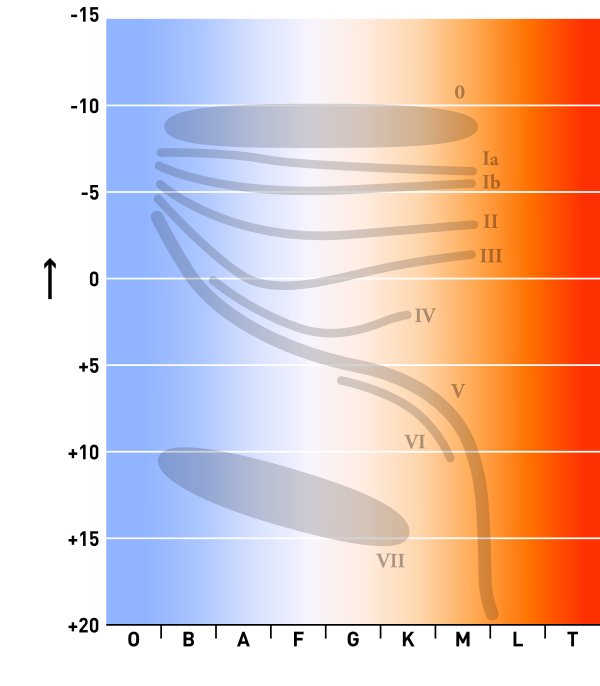
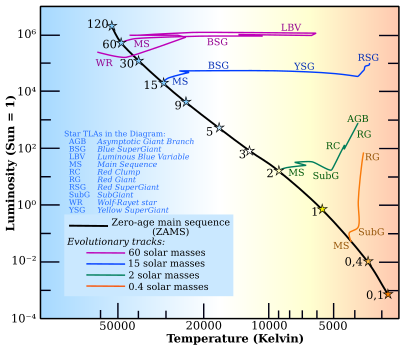
The subgiant phase, often represented on the Hertzsprung-Russell (H-R) diagram as the subgiant branch, marks a pivotal evolutionary transition for stars with initial masses similar to or greater than our Sun. Following the exhaustion of hydrogen fuel in their core, these stars enter a phase characterized by the contraction of the helium core and the ignition of hydrogen fusion in a surrounding shell. This shell burning is significantly more vigorous than core burning, leading to a substantial expansion of the star's outer envelope.
Consequently, the star's radius increases, and its luminosity rises, placing it above the main sequence on the H-R diagram. However, it has not yet reached the immense size and luminosity of a full-fledged red giant. This phase is critical because it signifies the star's departure from its stable main-sequence existence and sets the stage for subsequent evolutionary paths, including the eventual helium core flash (for lower-mass stars) or direct helium core burning (for more massive stars).
The duration and specific characteristics of the subgiant phase are highly dependent on the star's initial mass and chemical composition.
Internal Dynamics and Energy Generation in Subgiants
The physics governing a subgiant star is a complex interplay of gravity, nuclear reactions, and energy transport. As the helium core contracts under gravity, its temperature and density increase, eventually reaching the threshold for hydrogen shell fusion. This shell burning is a key driver of the star's expansion.
The energy generated in the shell pushes the outer layers outward, causing the star's radius to increase by a factor of several. Simultaneously, the star's surface temperature decreases as the energy is spread over a larger area, leading to a shift in its spectral type and color. The luminosity of the subgiant increases because the outward expansion more than compensates for the slight decrease in surface temperature.
Understanding the precise rate of shell burning and the efficiency of energy transport through the star's convective envelope is crucial for accurately modeling this phase. This internal restructuring is a fundamental aspect of stellar evolution, dictating the star's future trajectory.
Subgiants as Cosmic Chronometers and Evolutionary Probes
Subgiant stars play an indispensable role in observational astrophysics, particularly in determining the ages of star clusters. The 'subgiant branch' on the H-R diagram of a cluster provides a sensitive age indicator. Stars of different masses evolve off the main sequence and ascend the subgiant branch at predictable rates.
By identifying the point on the H-R diagram where stars are transitioning to the subgiant phase, astronomers can infer the cluster's age with remarkable accuracy. This technique is fundamental to building a timeline of galactic evolution, understanding star formation rates, and studying the chemical enrichment of galaxies over cosmic time. Furthermore, the study of subgiants allows for rigorous testing of stellar evolution models.
Discrepancies between theoretical predictions and observational data for subgiants can highlight areas where our understanding of stellar physics needs refinement, such as convection, rotation, or magnetic fields.
Observational Signatures and Future Research Directions
Subgiant stars are observable across a wide range of wavelengths, with their increased luminosity making them detectable even at significant distances. Spectroscopic analysis reveals their surface chemical composition and temperature, while photometric measurements provide their brightness. Missions like Gaia have revolutionized our ability to precisely measure the positions, distances, and motions of billions of stars, including many subgiants, providing unprecedented data for stellar population studies.
Future research will likely focus on refining our understanding of the internal processes within subgiants, particularly the dynamics of shell burning and convection, and their impact on stellar rotation and mass loss. Investigating subgiants in binary systems can also provide valuable constraints on stellar models. As exoplanet detection becomes more sophisticated, understanding the evolution of stars into their subgiant and giant phases is also critical for assessing the long-term habitability of planetary systems.
See also
Frequently Asked Questions
What is a subgiant star?+
Why do subgiant stars get bigger?+
How long does a star stay a subgiant?+
Where can we see subgiant stars on a diagram?+
Why do scientists study subgiant stars?+
Based on content from Wikipedia · Licensed under CC BY-SA 4.0