

Subdwarf Stars: Tiny Stars with Big Secrets!
Images
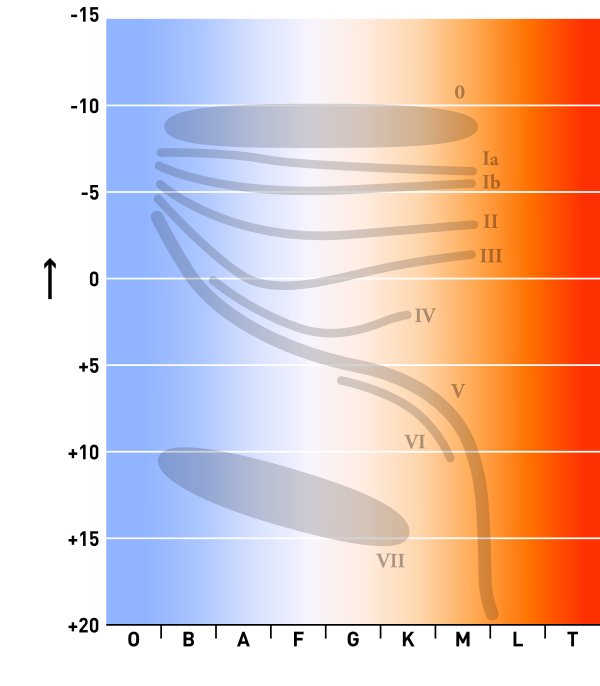
Subdwarf


Defining the Subdwarf
Subdwarfs represent a distinct stellar population characterized by their significantly lower luminosity compared to main-sequence stars of the same spectral type. This classification is primarily based on their spectral features, particularly the strength of certain absorption lines. For instance, subdwarf stars of spectral type G, K, and M exhibit spectral lines that are weaker than those found in their main-sequence counterparts (like our Sun).
This indicates a lower surface gravity and/or a lower atmospheric temperature for a given spectral type, but crucially, they are still fusing hydrogen in their cores, distinguishing them from post-main-sequence evolutionary phases like white dwarfs. Their absolute magnitude is typically 1.5 to 2 magnitudes fainter than that of a typical main-sequence star. This dimness is a direct consequence of their composition and evolutionary history, making them challenging to observe but invaluable for astrophysical research.
Galactic Archaeology
The study of subdwarfs is a cornerstone of galactic archaeology, providing direct evidence of the Milky Way's early formation and chemical evolution. Subdwarfs are predominantly found in the galactic halo and in globular clusters, which are ancient, gravitationally bound collections of stars that formed during the early stages of galactic assembly. These environments are crucial because they have experienced minimal subsequent chemical enrichment from supernovae.
Consequently, the stars within them, including subdwarfs, retain a chemical signature from the primordial interstellar medium. The low metallicity (abundance of elements heavier than helium) observed in subdwarfs is a key indicator of their age, suggesting they formed from gas clouds that had undergone very few generations of stellar nucleosynthesis. Their presence in the halo also points to their role in the early accretion events that built up the galaxy's structure.
Cosmological Significance
The profound significance of subdwarf stars lies in their ability to act as both cosmic chronometers and recorders of primordial chemical conditions. Their extremely low metallicity is a direct fingerprint of the early universe, predating the significant enrichment by successive generations of massive stars. By analyzing the abundance patterns of various elements in subdwarf spectra, astronomers can reconstruct the nucleosynthetic processes that occurred in the very first stars (Population III stars) and early stellar populations.
Furthermore, their ages, often determined through stellar evolution models and comparisons with globular cluster ages, place them among the oldest known objects in the universe. This makes them vital for calibrating cosmological models, understanding the timeline of galaxy formation, and tracing the history of heavy element production in the cosmos. Studying their distribution and kinematics also sheds light on the dynamical history of the galactic halo.
Stellar Nucleosynthesis and Subdwarf Evolution
Subdwarf stars generate energy through the proton-proton chain reaction, the primary fusion process in stars with masses similar to or less than the Sun. This process converts hydrogen into helium in their cores. However, their lower mass and temperature mean that the rate of fusion is significantly slower than in more luminous stars.
This slower rate of energy generation, combined with their smaller physical size, results in their characteristic low luminosity and lower surface temperature. The scarcity of heavy elements in their atmospheres affects opacity and energy transport within the star, contributing to their cooler surface temperatures and thus their spectral appearance. While they are still on the main sequence, their evolutionary path is dictated by their initial low metallicity, which influences their internal structure, lifespan, and eventual fate, making them distinct from their more metal-rich counterparts.
Subdwarf Populations and Related Stellar Types
Subdwarfs are not a single monolithic group but rather represent a continuum of stellar properties, often categorized by their spectral types and metallicity. The most well-studied are the metal-poor subdwarfs (sd) found in the halo and globular clusters. Related stellar types include the extremely metal-poor (EMP) stars, which are even more deficient in heavy elements and are considered even older, potentially direct descendants of Population III stars.
White dwarfs, while often discussed in the context of stellar evolution, represent a later evolutionary stage where fusion has ceased, and they are cooling remnants, unlike active subdwarf stars. The study of subdwarfs also intersects with research on the formation of the first galaxies and the initial mass function of stars in the early universe.
See also
Frequently Asked Questions
What are subdwarf stars?+
Why are subdwarf stars dimmer than regular stars?+
Where can we find subdwarf stars?+
How old are subdwarf stars?+
Do subdwarf stars still produce energy?+
Based on content from Wikipedia · Licensed under CC BY-SA 4.0