

Street Art: Art That's All Around!
Images

Street Art In Limerick City


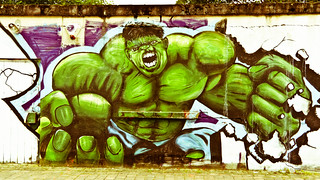


The Semiotics of the Sidewalk
Street art is fundamentally visual art executed in public locations, prioritizing visibility and accessibility. It exists in a complex relationship with terms like 'independent art,' 'post-graffiti,' 'neo-graffiti,' and 'guerrilla art,' each highlighting different facets of its creation and intent. A primary distinction from its graffiti predecessors lies in its messaging and conceptualization.
While early graffiti often focused on territorial claims or personal tags, street art frequently aims to provoke contemplation, social commentary, or aesthetic enhancement, making its purpose more readily decipherable to a broader audience. The critical issue of permission also delineates its practice; whereas graffiti is predominantly illicit, street art can range from unauthorized interventions to officially sanctioned murals and commissions, blurring the lines between vandalism and public art.
From Subversive Mark-Making to Urban Aesthetics
The trajectory of street art is a compelling narrative of cultural evolution. Its roots are deeply embedded in the graffiti movement that emerged in urban centers like Philadelphia and New York in the late 20th century, often serving as a form of counter-cultural expression and a challenge to established norms. As the practice matured, artists began to explore a wider array of techniques and intentions beyond simple tagging.
This evolution saw the rise of 'post-graffiti' and 'neo-graffiti' styles, which incorporated more sophisticated artistic elements and thematic depth. The shift towards street art signifies a move from mere assertion of presence to a more nuanced dialogue with the urban environment and its inhabitants, increasingly recognized for its potential to revitalize public spaces and contribute to urban identity.
Materiality, Methodology, and Site-Specificity
The artistic toolkit of street art is as diverse as its practitioners. Spray paint remains a dominant medium, enabling rapid application and vibrant chromatic effects. However, artists also employ stencils for precision and reproducibility, wheat-pasted paper installations for large-scale imagery, and even three-dimensional elements that interact with the urban landscape.
A defining characteristic is its inherent site-specificity; street art is conceived not merely on a surface but with the surface and its context. This involves an intimate understanding of the architecture, the surrounding environment, and the social dynamics of the location. The artwork often leverages existing urban features-cracks, windows, architectural lines-integrating them into the piece to create a dialogue between the art and its physical setting, enhancing its impact and meaning.
Street Art as Cultural Catalyst and Social Commentary
Street art functions as a potent cultural force, democratizing artistic expression by removing the barriers of traditional gallery spaces. It transforms the urban fabric into an accessible, open-air museum, fostering civic engagement and a shared aesthetic experience. Beyond beautification, street art frequently serves as a platform for social and political commentary, addressing issues of inequality, gentrification, environmental concerns, and identity.
It can challenge dominant narratives, amplify marginalized voices, and spark critical discourse among the public. The ephemeral nature of much street art also adds to its power, creating moments of unexpected beauty or provocation that resonate deeply within the collective consciousness of a community.
Key Figures and Global Manifestations
While the Wikipedia source does not list specific artists or notable examples, the global impact of street art is undeniable. Artists like Banksy, Shepard Fairey (Obey Giant), and JR have achieved international recognition for their distinct styles and impactful messages. Their work often transcends geographical boundaries, addressing universal themes and sparking dialogue worldwide.
The practice is not confined to any single region; vibrant street art scenes flourish in cities across Europe, North and South America, Asia, and Africa, each developing unique characteristics influenced by local culture, history, and socio-political contexts. This global proliferation highlights street art's enduring power as a medium for communication and cultural expression in the contemporary world.
Go deeper
Based on content from Wikipedia · Licensed under CC BY-SA 4.0