

St Andrew the Great
Images

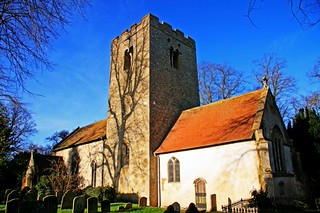
Church of St Andrew the Great - geograph.org.uk - 5024448




Architectural Revival and Enduring Presence
St Andrew the Great stands as a significant example of ecclesiastical architecture within the urban fabric of central Cambridge. Its current structure, dating from a comprehensive rebuilding in 1843, represents a deliberate engagement with the 'late Gothic' style. This period saw a resurgence of interest in medieval architectural forms, often referred to as Gothic Revival.
The choice of this style for a 19th-century church was not merely aesthetic; it was often imbued with symbolic meaning, aiming to connect the present with a perceived golden age of faith and craftsmanship. The designation as a Grade II listed building underscores its importance not just as a place of worship but as a piece of architectural heritage, mandating its preservation and protection. This status ensures that St Andrew the Great contributes to the historical character of Cambridge, offering a tangible link to the city's past while continuing its active ministry.
The building itself, therefore, tells a story of continuity, adaptation, and a deliberate choice to maintain historical architectural traditions in a modernizing world.
Theological Identity and Community Formation
The spiritual life of St Andrew the Great is defined by its 'conservative evangelical tradition' and its participation in the 'Anglican Reform movement'. These affiliations signal a commitment to specific theological tenets, emphasizing the authority of scripture and a particular approach to worship and doctrine within the broader Anglican Communion. The 'conservative' aspect suggests adherence to traditional interpretations of Christian belief and practice, while 'evangelical' points to a focus on personal conversion and the proclamation of the Gospel.
Membership in the 'Anglican Reform movement' further contextualizes its position, aligning it with like-minded churches seeking to uphold certain reformed principles within the Anglican structure. This distinct theological identity shapes the church's mission and its community outreach. The congregation is notably diverse, comprising long-term Cambridge residents, international visitors drawn to the historic city, and a significant contingent of students from the prestigious University of Cambridge.
This demographic mix presents both opportunities and challenges for ministry, requiring an approach that is both rooted in tradition and welcoming to a wide array of backgrounds and perspectives.
St Andrew the Great
The significance of St Andrew the Great extends beyond its architectural merit and theological stance; it functions as a vital cultural and social nexus within Cambridge. In a city renowned for its intellectual prowess and global influence, the church provides a crucial space for spiritual grounding and community cohesion. For students arriving from different countries and cultures, the church offers a sense of belonging and a familiar spiritual home, acting as a counterbalance to the intense academic pressures they face.
It bridges the gap between the transient student population and the established local community, fostering intergenerational and intercultural connections. Furthermore, its central location makes it accessible to all, serving as a point of reference and a place of solace or reflection for anyone passing through. In essence, St Andrew the Great embodies the complex interplay between historical preservation, contemporary faith practice, and the unique academic environment of Cambridge, demonstrating how traditional institutions can remain relevant and dynamic in the 21st century.
The Role of Tradition in a Modern Context
The decision to rebuild St Andrew the Great in a 'late Gothic' style in 1843 was a conscious act of historical engagement. It reflected a broader Victorian fascination with the medieval past, often seen as a period of greater religious devotion and societal order. This architectural choice was not merely an aesthetic preference but a statement about the church's values and its place in the community.
Today, this historical building serves a contemporary congregation with a 'conservative evangelical' outlook. This creates an interesting dynamic: a modern theological perspective housed within a building that deliberately evokes a distant past. The church's participation in the 'Anglican Reform movement' further highlights its commitment to specific doctrinal positions, distinguishing it within the Church of England.
The presence of university students adds another layer, as they bring fresh perspectives and often engage with traditional faith in new ways. St Andrew the Great thus navigates the challenge of maintaining its historical identity and theological integrity while serving a diverse, modern, and intellectually vibrant population.
Contemporary Ministry and Future Relevance
The ongoing ministry at St Andrew the Great is shaped by its location, its architectural heritage, and its theological identity. As a conservative evangelical church in a major university city, it aims to provide a stable spiritual foundation for its members amidst the flux of academic life and the broader societal changes. The church's engagement with both local residents and international students suggests a mission focused on discipleship, community building, and evangelism.
The 'Anglican Reform movement' connection likely influences its approach to theological education and church governance. Looking forward, the relevance of St Andrew the Great will depend on its ability to continue adapting its ministry to meet the evolving needs of its diverse congregation. This includes offering relevant pastoral care, engaging in thoughtful theological discourse, and maintaining its role as a welcoming sanctuary.
Its Grade II listed status ensures its physical presence, but its spiritual and community impact will be determined by the vitality of its ongoing mission and its capacity to connect timeless faith principles with contemporary life in Cambridge.
See also
Frequently Asked Questions
What is St Andrew the Great in Cambridge?+
Why does St Andrew the Great look like an old medieval church?+
What does it mean that St Andrew the Great is a Grade II listed building?+
Who attends services at St Andrew the Great?+
How does St Andrew the Great help students feel at home?+
Based on content from Wikipedia · Licensed under CC BY-SA 4.0