

Spoken Language: Your Voice's Amazing Adventure!
Images

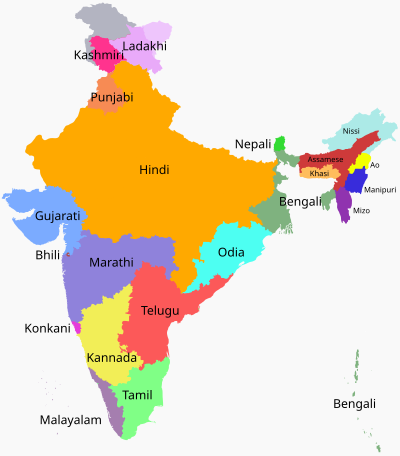
Bima language distribution


The Evolutionary Trajectory of Vocal Communication
Spoken language represents a pinnacle of human evolution, distinguishing our species from all others. Its development was not a singular event but a gradual process, likely evolving from simpler primate vocalizations. The ability to produce a wide range of distinct sounds, coupled with the cognitive capacity for complex syntax and semantics, allowed for unprecedented levels of cooperation, knowledge transfer, and abstract thought.
This evolutionary advantage enabled early humans to form larger, more cohesive social groups, plan intricate strategies for survival, and develop rich cultural traditions that could be passed down through generations. The very architecture of the human brain, with specialized areas like Broca's and Wernicke's, is a testament to the profound impact language has had on our cognitive evolution.
The Biophysics of Articulation and Audition
The production of spoken language is a sophisticated interplay of biological systems. Respiration from the lungs provides the airflow, which is modulated by the larynx. Within the larynx, the vocal folds can be tensed or relaxed, altering their vibration frequency to produce different pitches. Crucially, the supralaryngeal vocal tract – encompassing the pharynx, oral cavity, and nasal cavity – acts as a resonant filter.
The shape of this tract is dynamically altered by the tongue, lips, jaw, and soft palate, allowing for the differentiation of phonemes (the basic sound units of a language). These sound waves then travel through the air and are received by the ear, where they are transduced into neural signals that the brain interprets as speech. This entire process, from neural impulse to sound production and auditory perception, occurs with astonishing speed and precision.
Societal and Cognitive Ramifications of Spoken Discourse
The impact of spoken language extends far beyond mere information exchange; it is intrinsically linked to human cognition and societal structure. It serves as the primary medium for socialization, allowing individuals to internalize cultural norms, values, and beliefs. Language acquisition in early childhood is a critical period for cognitive development, shaping how we perceive the world, form concepts, and solve problems.
Furthermore, the nuances of spoken discourse, including tone, intonation, and rhythm, convey emotional states and social cues that are vital for interpersonal relationships and group cohesion. The ability to engage in complex dialogue facilitates collective decision-making, innovation, and the formation of intricate social hierarchies and institutions that define human civilization.
The Spectrum of Language Modalities
While vocalization is the most prevalent form of human language, it is not the only one. Sign languages, such as American Sign Language (ASL) or British Sign Language (BSL), are fully developed linguistic systems that utilize manual gestures, facial expressions, and body posture. These languages possess their own unique grammars, vocabularies, and semantic structures, demonstrating that the essence of language lies in its capacity for complex symbolic representation and communication, rather than solely in the modality of sound.
The existence and sophistication of sign languages underscore the brain's remarkable plasticity and its ability to adapt communication systems to different sensory and motor channels, enriching our understanding of what constitutes human language.
Spoken Language in the Digital Age
In the contemporary era, spoken language continues to evolve, influenced by digital technologies. Voice assistants, real-time translation, and the proliferation of audio-based social media platforms are reshaping how we interact. While these technologies offer unprecedented connectivity and accessibility, they also present challenges. The reliance on automated speech recognition can lead to biases and inaccuracies, particularly for non-standard dialects or accents.
Furthermore, the shift towards more mediated forms of spoken communication may impact the development of nuanced interpersonal skills. Understanding the ongoing evolution of spoken language requires an appreciation of its historical roots, its biological underpinnings, and its dynamic adaptation to new technological landscapes.
See also
Frequently Asked Questions
How does my voice make different sounds?+
Why is spoken language important for humans?+
What parts of the brain help us speak?+
Are there other ways people talk besides speaking?+
How does talking help us feel connected to others?+
Based on content from Wikipedia · Licensed under CC BY-SA 4.0