

Spiny Dogfish: The Little Shark with Big Spikes!
Images

Antique fish Squalus acanthias (NZ) : Spotted spiny dogfish draw

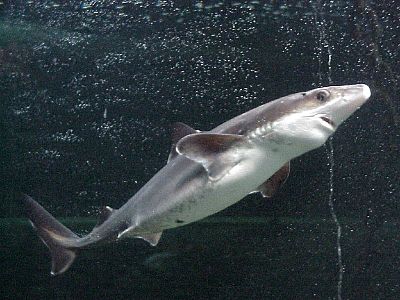


Taxonomy and Global Distribution of *Squalus acanthias*
The spiny dogfish, Squalus acanthias, is a well-known member of the Squalidae family within the order Squaliformes. Its common names, including spurdog and piked dogfish, reflect its distinctive morphology. A key diagnostic feature is the presence of two sharp spines, one preceding each dorsal fin, coupled with the absence of an anal fin.
This species exhibits a remarkable cosmopolitan distribution, inhabiting temperate marine environments across the globe. Its presence spans from shallow, nearshore waters to considerable depths offshore, indicating a high degree of ecological adaptability. It is important to note that taxonomic revisions have led to the identification of distinct species, such as the Pacific spiny dogfish (Squalus suckleyi) in the northern Pacific, underscoring the complexity of species delineation within widely distributed taxa and the ongoing refinement of our understanding of marine biodiversity.
This broad geographic range means Squalus acanthias plays a role in numerous distinct marine ecosystems.
Ecological Niche and Feeding Ecology
As a carnivore, the spiny dogfish occupies a mid-trophic level position in marine food webs. Its diet is diverse, comprising a variety of prey items including small pelagic and demersal fish, cephalopods like squid, and benthic invertebrates such as crustaceans. This opportunistic feeding strategy allows it to exploit available resources across different habitats.
Spiny dogfish often aggregate in large schools, a behavior that likely enhances foraging efficiency by overwhelming prey and may also serve as a collective defense mechanism against larger predators. The energetic demands of maintaining these large aggregations and their predatory lifestyle are significant. Their role as both predator and prey makes them a crucial link in the transfer of energy and nutrients throughout the marine environment, influencing the population dynamics of both their prey species and their own predators.
Life History Traits
A defining characteristic of the spiny dogfish is its exceptionally slow life history strategy, particularly its longevity and late age at maturity. Individuals can live for 25 years or more, with some estimates suggesting lifespans exceeding 50 years. This extended lifespan is coupled with a slow growth rate and a late onset of sexual maturity, which can occur as late as 10-15 years of age in some populations. Reproduction is ovoviviparous, meaning eggs hatch inside the mother, and the pups are born live.
Gestation periods are lengthy, often exceeding 18-22 months, and litter sizes can be substantial. These slow reproductive rates make populations highly vulnerable to overexploitation. Once depleted, recovery is a protracted process, as it takes many years for individuals to reach reproductive age and for new generations to mature and contribute to population growth.
Defensive Adaptations and Conservation Status
The spiny dogfish's primary defense mechanism is the presence of venomous spines anterior to its dorsal fins. These spines can inflict painful wounds, deterring potential predators such as larger sharks and marine mammals. The venom itself, while not typically lethal to large animals, causes significant pain and inflammation, making the spiny dogfish an unappealing meal.
Despite these adaptations, Squalus acanthias faces considerable conservation challenges. Historically, it has been subjected to intense fishing pressure, both as a target species for its meat and fins and as bycatch in fisheries targeting other species. The slow reproductive rate, combined with high fishing mortality, has led to significant population declines in many regions.
Consequently, the conservation status of spiny dogfish varies globally, with many populations listed as vulnerable or endangered, necessitating stringent fisheries management and conservation efforts to ensure their long-term survival.
See also
Frequently Asked Questions
What is a spiny dogfish?+
Where does the spiny dogfish live?+
Why does the spiny dogfish have spines?+
How long does a spiny dogfish live and when does it grow up?+
How does the spiny dogfish reproduce?+
Based on content from Wikipedia · Licensed under CC BY-SA 4.0