

Spectrometer: The Light Detective!
Images

Spectrometer


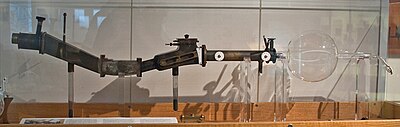
Deconstructing Light
A spectrometer is an instrument designed to measure the properties of light, specifically its intensity as a function of wavelength or frequency. The fundamental principle relies on the interaction of electromagnetic radiation with matter. When light passes through a sample, it can be absorbed, transmitted, or scattered, with the degree of interaction varying significantly across the electromagnetic spectrum.
Similarly, matter can emit light at specific wavelengths when excited. A spectrometer captures this light, disperses it into its constituent wavelengths using a dispersive element (like a prism or diffraction grating), and then detects the intensity of light at each wavelength. This process generates a spectrum, a graphical representation that serves as a unique identifier for the chemical composition, physical state, and even motion of the sample.
The precision and range of wavelengths a spectrometer can analyze determine its specific type and application, from the ultraviolet to the infrared and beyond.
Evolution of Spectral Analysis
The scientific understanding underpinning spectroscopy began with Isaac Newton's demonstration of light dispersion. However, the true power of spectral analysis emerged with the observation of dark absorption lines in the solar spectrum by Joseph von Fraunhofer in the early 19th century. These Fraunhofer lines were later identified by Kirchhoff and Bunsen as the spectral signatures of elements present in the Sun's atmosphere.
This discovery led to the development of emission and absorption spectroscopy, allowing scientists to identify elements remotely. The 20th century saw rapid advancements in spectrometer design, including the invention of the diffraction grating, the development of more sensitive detectors (like photomultiplier tubes and later CCDs), and the miniaturization of instruments. This evolution has transformed spectroscopy from a purely academic pursuit into a ubiquitous analytical tool across virtually every scientific and industrial sector.
The Indispensable Role of Spectrometers in Scientific Inquiry
Spectrometers are indispensable tools due to their ability to provide detailed, non-destructive chemical and physical analysis. In astrophysics, they are critical for determining the elemental composition, temperature, pressure, and velocity of celestial objects, forming the bedrock of our understanding of stellar evolution and cosmology. Environmental monitoring relies heavily on spectrometers to detect pollutants in air and water, assess soil quality, and study atmospheric composition.
In materials science, they are used for quality control, identifying unknown substances, and characterizing novel materials. The pharmaceutical industry employs spectroscopy for drug discovery, quality assurance, and process monitoring. Furthermore, applications extend to forensics for analyzing trace evidence, art conservation for identifying pigments, and even in agriculture for crop monitoring and food safety.
Their versatility and sensitivity make them essential for both fundamental research and practical problem-solving.
Mechanisms of Light Interaction and Detection
Spectrometers operate by exploiting various interactions between light and matter. Absorption spectroscopy measures the wavelengths of light that a substance absorbs. Emission spectroscopy detects the wavelengths of light that a substance emits when excited.
Raman spectroscopy analyzes the inelastic scattering of light, providing information about molecular vibrations. Fluorescence spectroscopy measures the light emitted by a substance after it absorbs light at a shorter wavelength. The choice of technique depends on the sample and the information sought. The dispersed light is then captured by a detector, which converts photons into an electrical signal.
Modern detectors, such as charge-coupled devices (CCDs) or photodiode arrays, offer high sensitivity and rapid data acquisition, enabling real-time spectral analysis. The resulting data is processed by software to generate spectra, which are then interpreted using spectral libraries and theoretical models.
Contemporary Applications and Future Directions
Today, spectrometers are found in diverse fields, from handheld devices used for on-site material identification to complex laboratory instruments and space-based observatories. In industry, they are integral to process analytical technology (PAT) for real-time monitoring and control. Medical diagnostics are increasingly incorporating spectroscopic methods for non-invasive imaging and disease detection.
Emerging applications include hyperspectral imaging, which captures spectral information across a wide range of wavelengths for detailed scene analysis, and the development of portable, low-cost spectrometers for widespread use. Future research focuses on enhancing sensitivity, expanding spectral ranges (e.g., into the terahertz region), improving spatial resolution, and integrating spectrometers with artificial intelligence for automated data interpretation and discovery. The continued miniaturization and cost reduction of spectroscopic technology promise even broader accessibility and impact.
See also
Frequently Asked Questions
What is a spectrometer and how does it work?+
Why do scientists use spectrometers to study stars?+
How can a spectrometer help keep the air and water clean?+
What did Isaac Newton and Joseph von Fraunhofer discover that helped make spectrometers?+
Can spectrometers be used in everyday things like medicine or art?+
Based on content from Wikipedia · Licensed under CC BY-SA 4.0